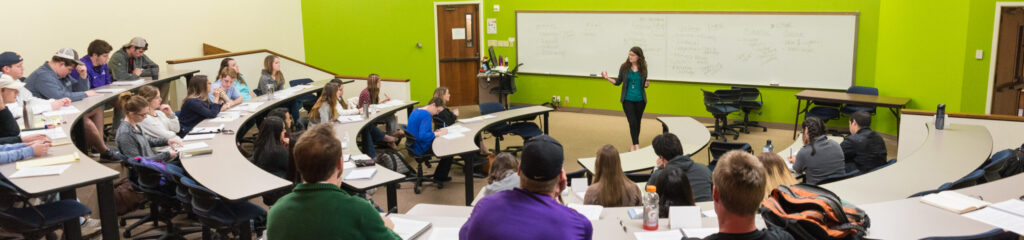
I credit a great deal of my own academic success to the encouragement and support of excellent faculty. Consequently, as an academic, I believe it is my responsibility to bring out the best in my students by making course content relevant, engaging, and experiential in a supportive, Christian learning environment. Below I describe several aspects of my teaching philosophy and how I have attempted to incorporate them into the classroom.
Presenting concepts in a multi-faceted and context-specific manner
I believe in the importance of bringing seemingly abstract business concepts to life and making them tangible. Relatedly, I think it is vital for students to learn about concepts from a variety of different perspectives and angles in order to develop a holistic view. For example, I developed and taught the first sustainability course offered in the College of Business. Frequently, many of the students enrolled in this course have not previously been exposed to this topic area. There are often a variety of viewpoints represented. For instance, there is often an array of political mindsets in the classroom, ranging from conservative to liberal. Therefore, I intentionally designed the course to break down sustainability concepts, which are often abstract in nature, in a way that is relevant to a range of students by providing an array of real-world examples. I also invite guest speakers – representative of a range of sustainability viewpoints and situated in different departments across campus as well as practitioners working in various organization settings – so that students can obtain a multi-faceted view in forming their own perspectives. Below are sample student comments in this regard:
- “I really enjoyed the course with all the useful and important information that was given in the week. I also thought the set-up of the course was done very well by bringing in others’ opinions and going out on field trips.”
- “Provided multiple perspectives and concepts to allow me to freely determine my own role, place, and future efforts according to sustainability. This class gave me great ideas to fully capture the need and value of sustainability.”
Emphasis on experiential learning
I believe strongly in the power of hands-on, applied learning experiences for students. Since beginning my role as an educator, I have gradually worked to integrate experiential learning into my courses as much as possible. For example, in the Strategic Management course students worked in consulting teams to analyze a current strategic issue faced by a local Abilene business and present recommendations directly to the client; the client then chose the winning team. In another example, Dr. Laura Phillips and I had the opportunity to develop Social Enterprise Consulting, a course designed to give students hands-on experience dealing with a real and substantial issue faced by a socially-minded organization. In Spring 2019 and 2020, the class worked with female entrepreneurs in Central Costa Rica. Two ACU Today articles were written about this course, which can be found here (about the first course experience) and here (about the second course experience).
Supportive, Christian learning environment
While I set high standards in my classes, and emphasize these high standards from day one, I desire to create an engaging and supportive environment where students can learn and develop without fear of judgment. I frequently encourage students to interrupt me and ask questions at any time. As well, I regularly incorporate small group discussions where I can circulate among the groups and help students to process and apply the content, as needed. Most importantly, I look for ways to infuse my Christian faith into the classroom, often by beginning class sessions with a devotional thought and playing worship music as students come in and prepare for each class session. In regards to the latter, one student stated the following:
- “She demonstrated her Christ like behavior in her genuine care, her going above and beyond for me and her empathy. She also read a devotional a few mornings out of the semester, prayed over us and played worship music at the beginning of class.”
Continual learning
My ultimate hope for my students is that they will develop a desire and passion for continual learning that extends beyond the completion of course-specific deliverables. I tell my students from day one that I entered higher education because I love to learn and that I learn new things from my students each and every semester. I actively encourage students to bring any and all questions that surface for them to class discussions and I commit to conduct additional research if I do not know the answers to their questions. In this way, I try to model for my students that learning is a life-long pursuit rather than a destination to be reached.
On a related note, I strongly believe that being a good educator entails proactively looking for opportunities to grow and develop. I have actively sought out ways to develop in my role, including, for example, completing the Master Teacher Program, and I continue to expand my knowledge base by actively engaging in a myriad of research projects.
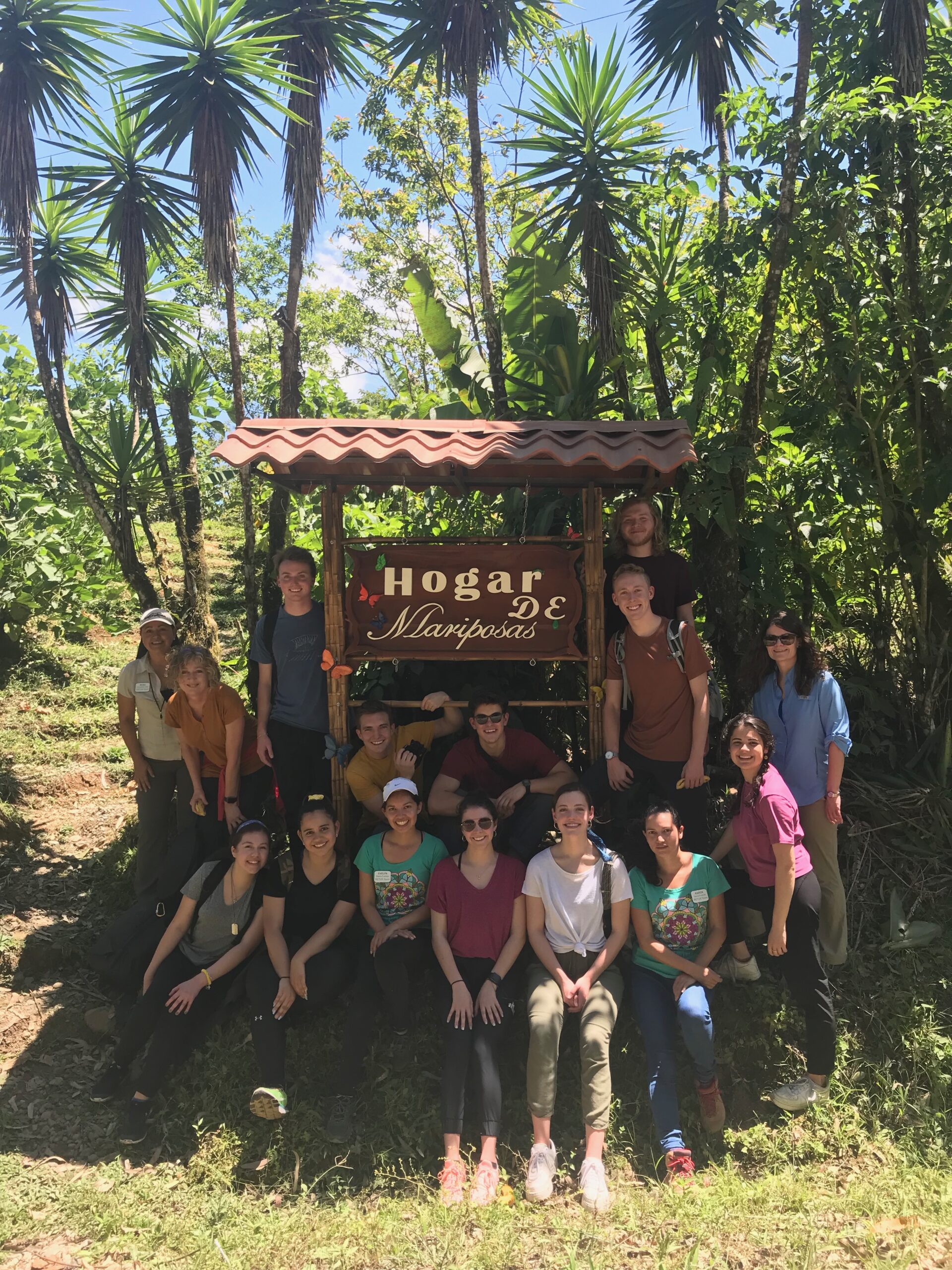
2020 Social Enterprise Consulting class in Turrialba, Costa Rica