Note: italicized words and phrases are found in the original article: Out of Whiteness Race Traitor 03 Spring 1994
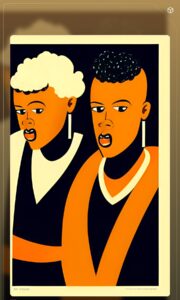
Race, sexuality, and gender are all socially constructed. By that, we mean that race, sexuality, and gender are not inherent within us—they have been constructed through enforced beliefs, policies, and institutions to maintain power structures that benefit the white man who identifies as cisgender and heterosexual. Just because something is a social construction does not mean it is bad, can be ignored, or does not have real consequences. Social constructions can be detrimental when they are enforced to the benefit of the straight white man at the cost of all other individuals. It is heteronormativity and racism that have allowed white men to gain power, status, and wealth through the exploitation of racial, gender, and sexual minorities.
Whiteness arose as a response to the needs of capitalism. Whiteness currently ensures the allegiance of a majority that have protected and advanced the institutions of colonialism and slavery. Heteronormativity, like whiteness, arose to fulfill the repressive needs of this system. The suppression of queerness fulfilled three important functions for capitalism:
- It imposed labor discipline. Men are the workers and the workers are men. As workers, men are expected to devote their time and strength to their labor—to capitalism.
- It ensured the contribution of women’s unwaged “reproductive” labor to the process of capital accumulation. It guaranteed a reliable source of labor by enforcing the societal norm of reproduction and motherhood.
- It established a foundation for male solidarity and collective violence that has been a crucial weapon of enforcement in the maintenance of white supremacy, male supremacy and capitalism. It has led to the establishment of toxic masculinity, where strength and violence are considered manly, thus, pitting this majority group against all others, such that it would uphold white supremacy, male supremacy, and capitalism.
Heteronomativity preserved the nuclear family—a cornerstone in the construction of capitalist relations. It ensured the reproduction of labor power through the unwaged work of the wife, it separated the worker from the larger community of the village and extended family, and compelled the husband to show up promptly for work on Monday if he didn’t want his children to starve. Even if he was not yet an industrial worker himself, the white man in the American South was subject to this same reorganization of his life. Heaped on top of this demand that he repress himself sexually in conformity with the demands of the bourgeois family was the expectation that he participate in the enforcement of the system of slavery and white supremacy.
The enforcement of whiteness and heterosexuality is not passive; Heterosexuality, like whiteness, is enforced with extreme brutality. Even ACU students have expressed a state of “living in fear of being attacked for either being gay or black or for both.” Just as segregation and racism were enforced through ACU policies until 1962, homophobia and transphobia are enforced through ACU’s Sexual Stewardship Policy today.
Heteronormativity and whiteness are parts of the fabric of lies and hypocrisy which need to be unraveled to achieve liberation. Whiteness, heterosexuality, and traditional gender categories are interdependent, and a small tear in the fabric of one can turn into an unpatchabel rip in the whole cloth of oppressive and authoritarian social relations.
The interdependent nature of whiteness and heteronormativity can be seen within the LGBTQ+ “coming out” experience where questioning societal norms is a common thread. Many students on campus in the LGBTQ+ community agreed that in coming to terms with their sexuality and gender identity, they began to question political, racial, and religious understandings as well. Additionally, others described that the intersectionality between the LGBTQ+ community and other minorities led them to question their ideas around race and disability.
It is important for both racial and queer liberation to understand that the oppression of both are linked. Some describe cisgender and heterosexual identities as part of the ideal in whiteness, and in coming out, they were alienated from whiteness.
For those of us who see the revolutionary potential of race treason there are three important things to consider about queer liberation. The first is how the struggle to redefine or destroy the categories of sexuality can inform our efforts to destroy the categories of race (what, for example, might the abolition of whiteness mean for the idea of Blackness?). The second is to understand how the struggle over sexuality that is taking place right now all over the country is shaping much of the terrain on which an attempt to challenge the categories of race in general, and whiteness in particular, will take place. The obstacles that are thrown in the way of that struggle will have to be overcome by us.
As strongly enforced as whiteness and heterosexuality are, they can be overthrown by a small group of defiers. The power in the societal norms of whiteness and heterosexuality rests on the assumption people perceived as white and straight will act accordingly. However, people are increasingly defying societal expectations. This erodes the fictional solidarity within white straight groups and thus destroys the constructions of whiteness and heteronormativity.
It will only take a minority of white people to destroy whiteness because all that is necessary is to cast into doubt that a person who is perceived as white can be counted on to act white. No stronger case can be made for this idea than the experience of the queer liberation movement over the past few years. It has become increasingly difficult in many circles for people to presume that everybody around them is straight, or willing to pretend to be.
Word Bank:
Social Construct – These are societal norms that are not inherent within us. Rather, they have been constructed through enforced beliefs, policies, and institutions to maintain power structures that benefit the majority and harm minorities.
Heteronormativity – The assumption that heterosexuality is the norm. It assumes that gender is binary and that opposite gendered individuals are the best match for each other romantically, sexually, and maritally.
Toxic Masculinity – Masculine stereotypes that are detrimental to men and society. These traits include emotional suppression, homophobia, misogyny, aggression, and dominance.
Cisgender – Describes individual whose gender identity matches their sex assigned at birth.
Transgender – Describes individuals whose gender identity is different than their sex assigned at birth.
Heterosexual(ity) – Sexual attraction only to members of the opposite gender.
Homosexual(ity) – An outdated term used to describe members of the LGBTQ+ community. Low-key a slur.
Queer – A reclaimed slur that is now used an umbrella term used to describe someone who is not straight/cisgender.
“Coming Out” – The process of publicly disclosing one’s gender identity and/or sexuality.