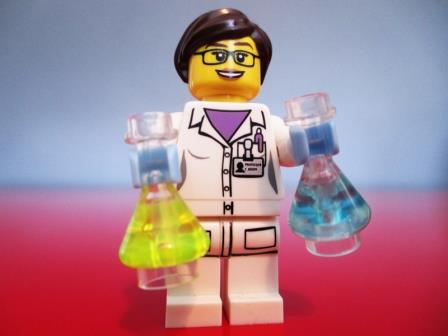
On this past Sunday, LEGO released a significant new minifig: the first female lab scientist made by the toy company. Maia Weinstock writes about the significance of the new figurine in a post on the Scientific American blog, and the release prompts us to reflect on some important questions.
- What gender-stereotypes affect the way we think about scientists?
- Where do these stereotypes come from?
- How have toys, movies, and TV shows reflected, perpetuated, and challenged these stereotypes?
- Have these stereotypes shaped the possible career paths that you imagine for yourself?
3 responses to “LEGO and Science-Stereotypes”
I don’t think there are many stereotypes based on gender in the science world anymore. There used to be, but our society has changed greatly in this matter. Look at the T.V. show Big Bang theory; they have regular women scientist on the show all the time. Jane Goodall is one of the most famous animal scientist, and she’s a women. If there are stereotypes, they are held by people who still believe that women are the weaker sex. But, because this stereotype isn’t shown much any longer, it didn’t affect my decision to become a zoologist.
I think that people tend to think of male scientists as opposed to female scientists because that is the culture we live in. Our culture for many years believed that men were smarter and more capable than women to work in certain professions such as science and we still do. Movies and toys can certainly affect the way we think about gender stereotypes especially with the different toys for girls and boys cars versus dolls. Bill Nye the science guy can make young children think of men when they think of scientists. My career field is social work and it has quite a large number of women in it so gender didn’t really play into my career choice.
generally scientist have always been men. Men untill the last oh 30 years or so have always had the higher and more important jobs. the stereo-type comes from, well the bible. Men were always the ones with the job or the ones working and the most women were stay at home moms. that got passed down to us cause our forefathers were heavy heavy christians and stilled believed in that way of life. I dont know if shows and such are challenging it as much as they are evolving witht the minds of people.these ways or thought have not moved me toward one major more than another at all.