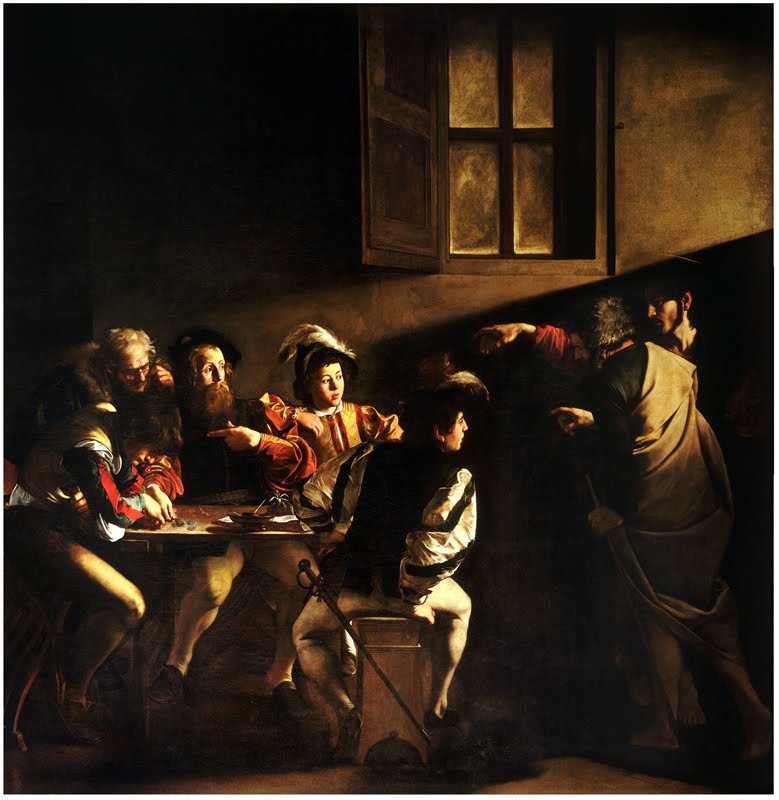
The image above is Caravaggio’s The Calling of Saint Matthew. Jesus, on the right, is pointing to Matthew. Matthew, carousing with this friends, looks a bit stunned to be singled out. His reaction has a “What? You’re talking to me?” quality. This scene occurs in Matthew 9, setting up the confrontation between Jesus and the Pharisees in Matthew’s house where Jesus proclaims: “Go and learn what this means: ‘I desire mercy, not sacrifice.’”
Matthew 9.9-12
As Jesus went on from there, he saw a man named Matthew sitting at the tax collector’s booth. “Follow me,” he told him, and Matthew got up and followed him.
While Jesus was having dinner at Matthew’s house, many tax collectors and “sinners” came and ate with him and his disciples. 11When the Pharisees saw this, they asked his disciples, “Why does your teacher eat with tax collectors and ‘sinners’?”
On hearing this, Jesus said, “It is not the healthy who need a doctor, but the sick. But go and learn what this means: ‘I desire mercy, not sacrifice.’ For I have not come to call the righteous, but sinners.”
QUESTIONS FOR REFLECTION
1. If you were going to do a modern version of The Calling of Saint Matthew where would you place the scene? Who are the “tax collectors and sinners” of our day?
2. When Jesus says “I desire mercy, not sacrifice,” he is quoting from the Old Testament. Do you know who Jesus is quoting and why this might be significant?
3. Jesus uses the phrase “I desire mercy, not sacrifice” one other time in the gospel of Matthew. Can you locate that passage? When you compare these two texts in Matthew, can you see any similarities? Why would Jesus use this Old Testament quotation in both situations?
You can begin your explorations here at Bible Gateway.
<< Back to Spotlight
Spotlight Resources

The Morality of Liberals and Conservatives