by Annie Caire| Summer 2025 |
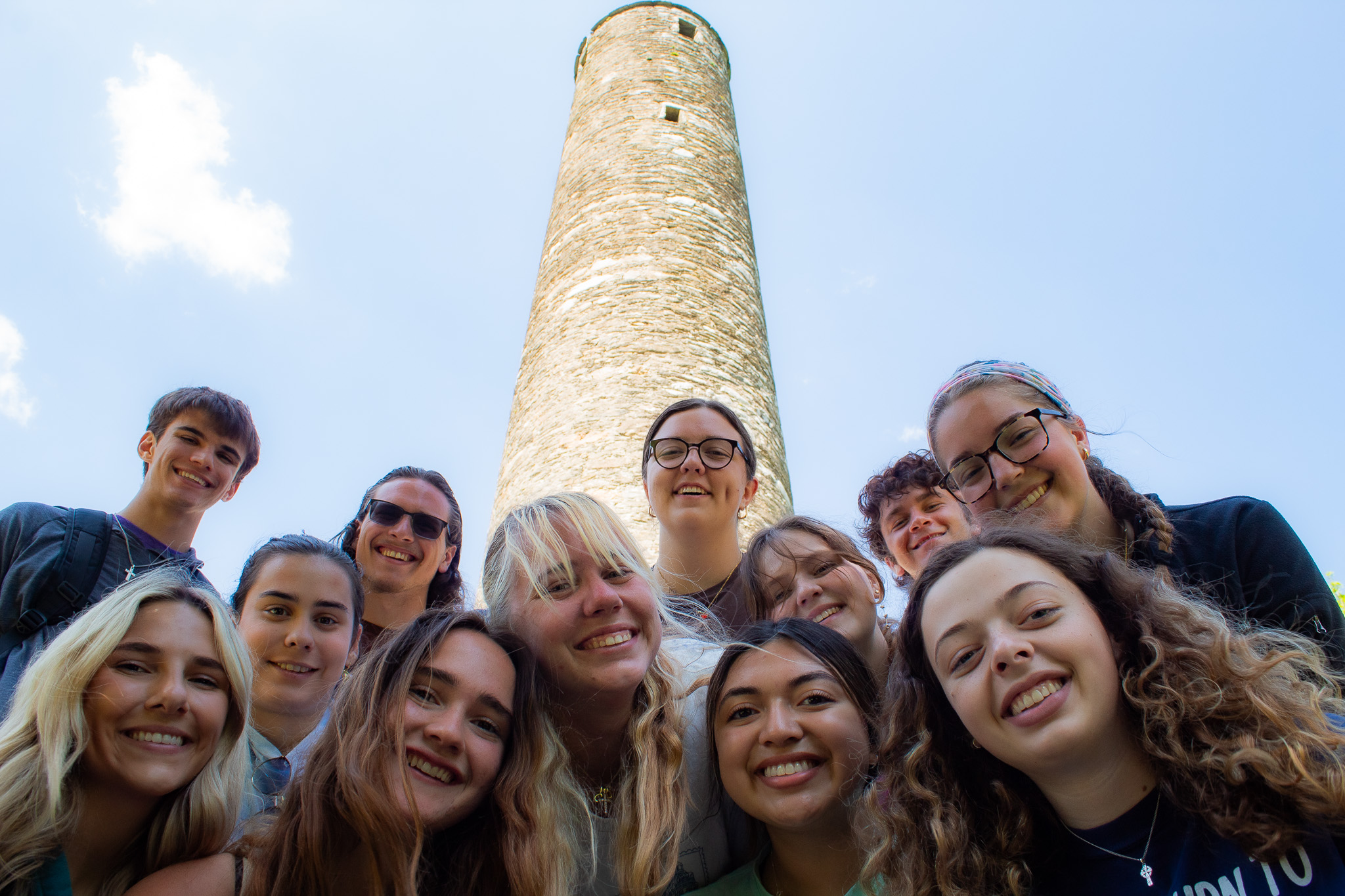
At the end of May, I spent two weeks studying Celtic spirituality in Ireland. Over the duration of the trip, we journeyed to holy and historical landmarks throughout Ireland. I learned about Catholicism and enchantment, and how we, as Protestants, can take steps to experience awe and wonder in our walk with God. Personally, this trip challenged me to respect certain parts of the catholic tradition and implement them into my own life.
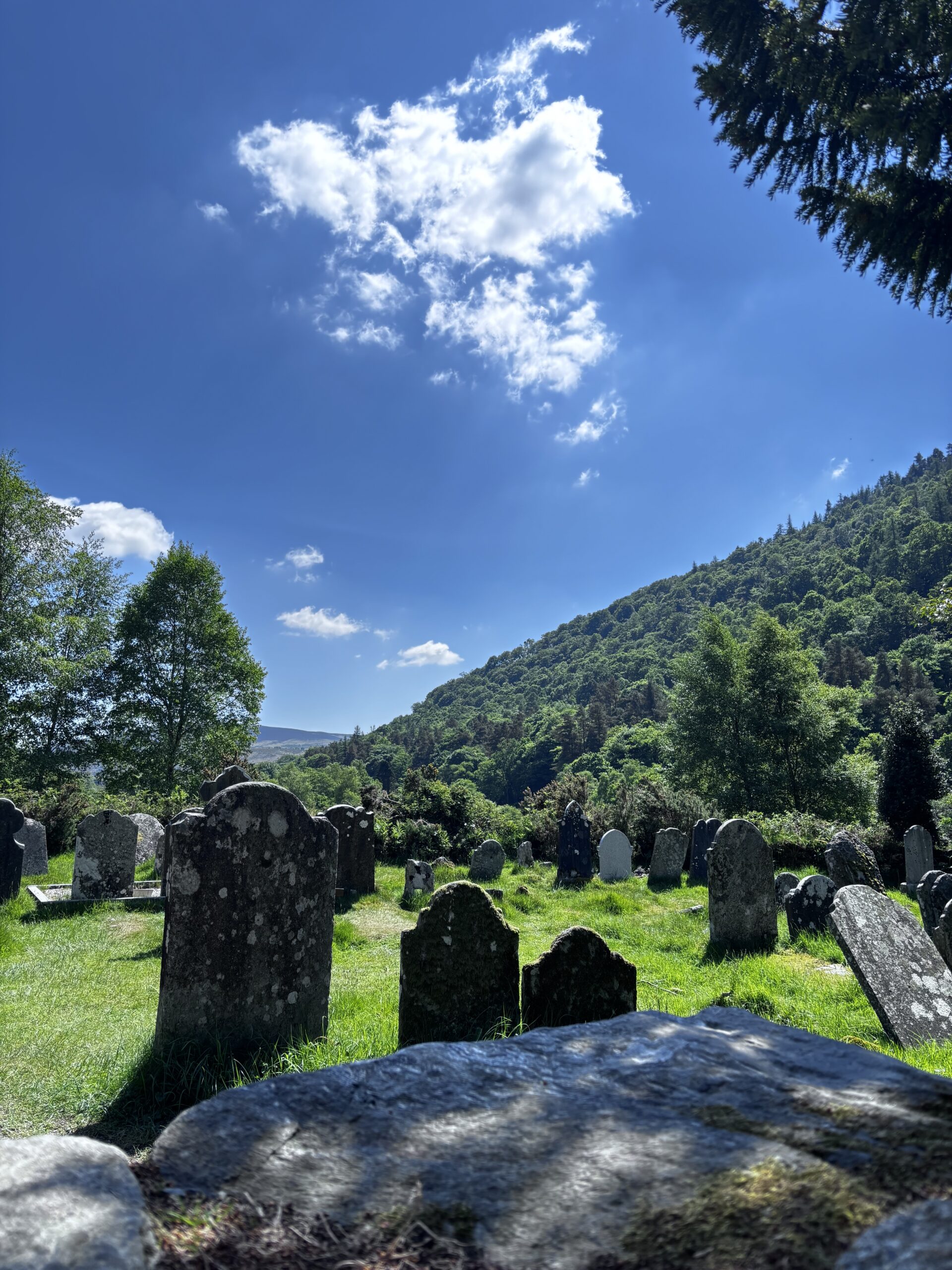
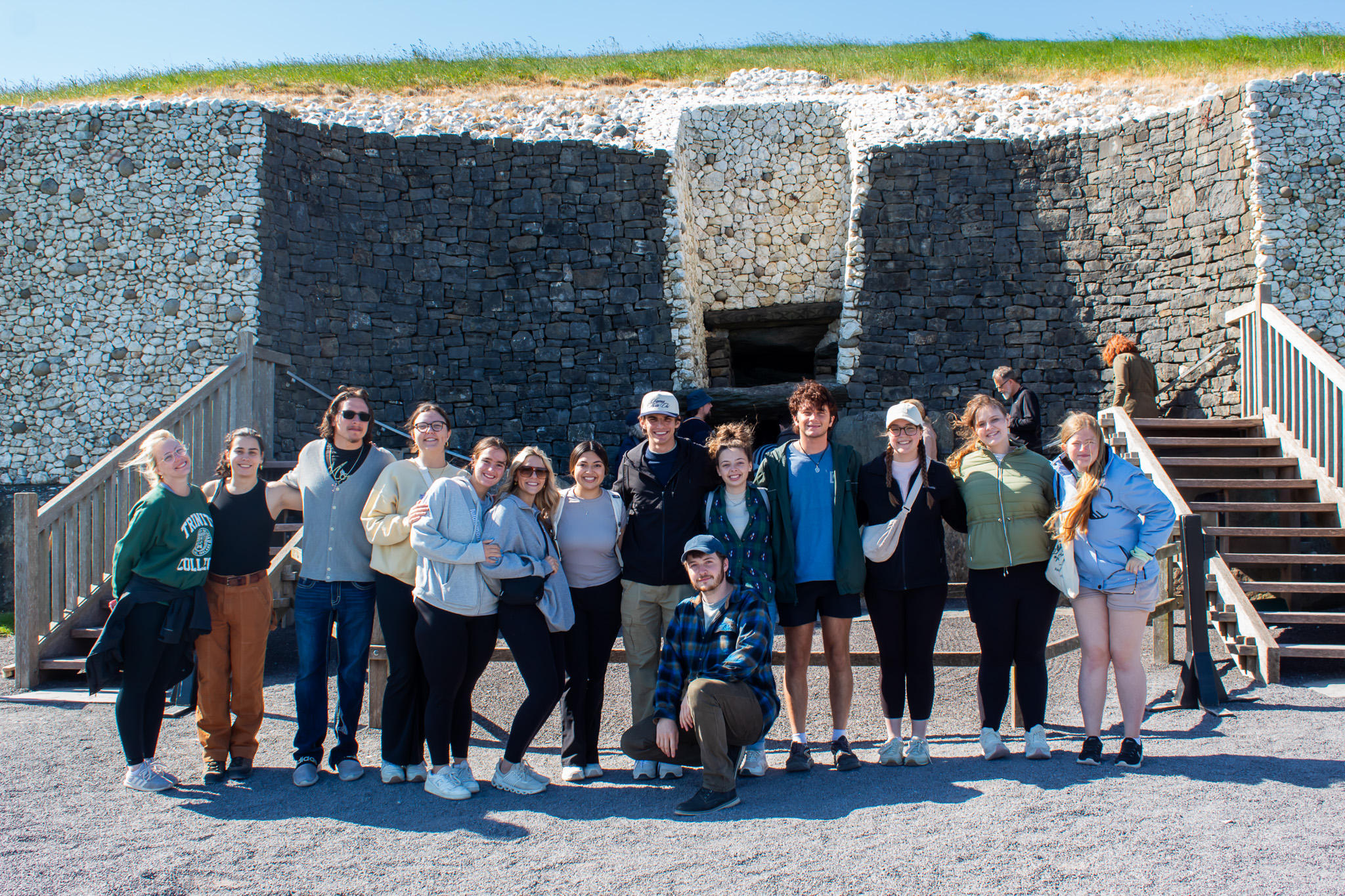
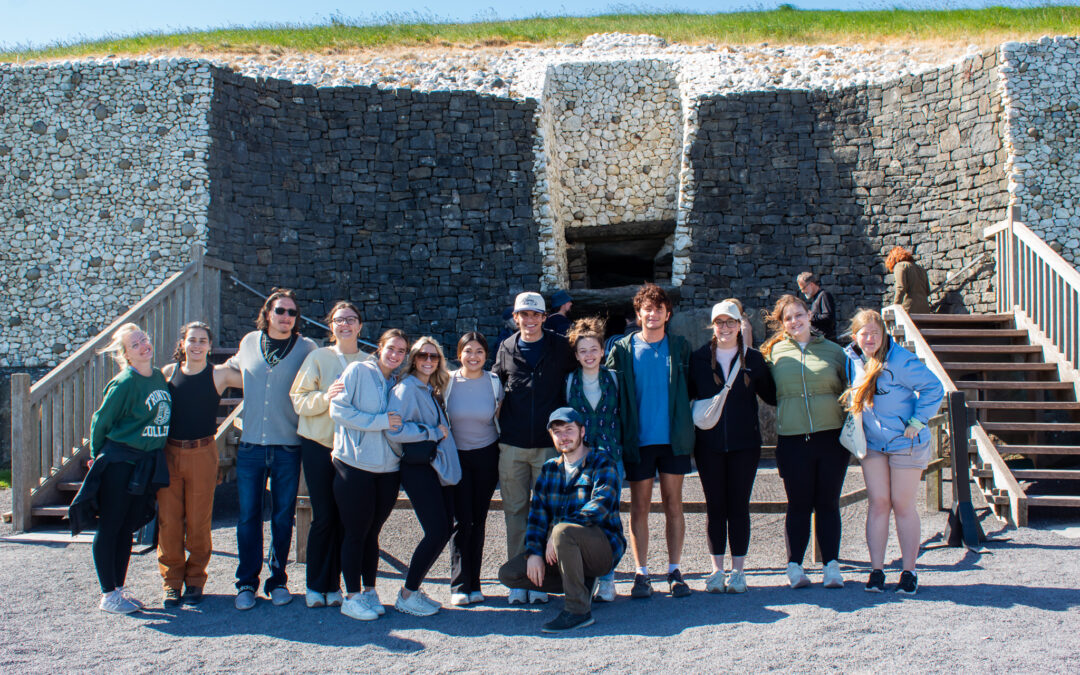
Throughout the trip, I was continuously amazed by the depth of history in Ireland and the historical landmarks we visited. When we visited Clonmacnoise, there was an old path that had been used by pilgrims for over a thousand years. These travelers would come to Clonmacnoise to visit the site where St. Ciaran was buried and pray. Another example of historical depth is the Book of Kells, which was written around 800 AD. It is a manuscript of the gospels, faithfully illuminated by Christians over 1000 years ago. We also visited prehistoric tombs in Knowth. The barrows were older than the pyramids, dating back to 3000 BC.
Experiencing all of this rich history reminded me of God’s overarching plan and control over the whole world and all events past, present, and future. It encourages me to witness how Christians have been faithful for thousands of years, working and toiling and living their lives for God. It inspires me to live my life for the sole purpose of serving the Lord and bringing him glory, because ultimately that is the only thing that will last.
This course has taught me about the challenge many protestants face by rejecting the enchanted aspects of high church and Celtic spirituality. One of the most interesting things I learned in Dr. Beck’s Hunting Magic Eels was that in Catholicism, including Celtic Christianity, “matter matters”. I had never heard this concept before, but through this study abroad experience, I am learning what that means for the Catholic faith and how it could manifest itself in my personal faith.
Catholics believe that God is concentrated in certain spaces, like a cathedral or holy water. Because of this, they see these material substances as having spiritual power. In Celtic Christianity, this includes places like St. Brigid’s Well, where Catholics have gathered for centuries to pray to St. Brigid. The site itself was heavy with the weight of people’s petitions to the patron saint, and the entire area felt sacred. Although I am not comfortable praying to a saint, I love the idea of having somewhere specific to go when I need solace and time to pray.
Moreover, Catholics view the Eucharist as the central aspect of Mass. They also believe in transubstantiation, which states that the bread and wine taken during communion physically transform into the literal body and blood of Christ. Catholics assert that communion is not solely a symbol, but rather is evidence of God’s presence and current miraculous work in our lives today. Although I find no evidence that the bread and wine turn into the body and blood of Christ during the Eucharist, I have learned to appreciate why Catholics find the concept persuasive. It keeps God and his presence as the focal point of the service. Catholics also use beaded necklaces, called rosaries, to count prayers. This creates a very tangible way to practice an essential spiritual discipline. This is very appealing to me as I would love to have something physical I can pull out of my pocket to ground and comfort me in moments of stress.
Overall, studying Celtic Christianity in Ireland has taught me a variety of spiritual disciplines that high churches practice and the underlying intentions behind those practices. After this experience, I would like to enchant my life in Abilene. I would like to study more about the liturgical calendar and possibly obtain some sort of token that I can use for prayer. This trip also led to amazing experiences at different historical and holy sites throughout the country.