Involving undergraduate students in research has been one of my greatest joys in working in the biology department at ACU. Mentoring students in this way is extremely fulfilling work. Most of my undergraduate researchers come to me early in their journey at ACU and continue to work with me until their last semester. I see them transform from bright, young science students who are diffident in their lab skills and critical thinking abilities to more mature students who “own” their projects. They are able to form their own hypotheses, carry out their own experiments, and present them with poise and confidence. They learn how science works and how they can contribute to the field both during their time at ACU and in their upcoming careers. My favorite thank-you note came from Kristen Clemons. She came to me as a McNair scholar in the summer of 2014 who did not really know what she wanted to do with a degree in biology. While in the lab that summer, she learned she had a knack for working in the lab and being able to think through her project. In her note at the end of the summer she wrote, “This experience has shown me that there is no going back. I belong in the lab.” Watching Kristen and others like her grow is incredible and I am thankful that I am a small part of that.
Scholarship at ACU has taken on a new dimension for me. As a graduate student I was an independent worker. I came up with most of the research ideas and carried all of of the experiments out on my own for my own stand-alone project. As a post-doctoral research associate, I worked on a small part of a very large project. Again, I carried out all of my own experiments. Throughout my graduate and post-doctoral research, I carried out all of the experiments myself for several reasons. First of all, it was my responsibility to do the experiments. It was my thesis or dissertation work or the work I was employed to do. Even though I had access to technicians and undergraduates that could help me, I wanted to know that every aspect of my research was carried out exactly how I had planned it. I also did not trust other people to do things the same way that I did. I liked to control everything. At ACU I have included undergraduates in my research and have had to change the way my research is carried out. I have learned that if I spend a lot of time with the undergraduates and teach them well, they are able to successfully carry out the experiments just as well as I can and sometimes even better. I have also learned that I do not have to be involved in every step of every protocol and the research can still be a success.
Another lesson I learned in involving undergraduates in my research is that they are not graduate students taking one or two classes at a time, and they are not post-docs who are motivated to work 60+ hours each week in the lab. Undergraduates do not have time in the fall and spring semesters to work 40 hours in the lab each week. Some of my students would love to be able to do that, but it just is not possible. The summer is evidence of this. Students who work with me in the summer work at least eight hours per day. One student even worked 16 hours one summer day and evening trying to get good results! Expecting undergraduates to spend all of their free time in the lab is absolutely unreasonable. The first year I involved ACU undergraduate students in my lab, I set unreachable research goals and expectations based on the assumption that they would work in the lab just as I had as a graduate student or a post-doctoral researcher. I now know that expecting students to work 5-10 hours per week is reasonable, and I know how to set realistic goals and not be disappointed in the pace of my research.
The effects of the reframing of scholarship has been varied. First, a drawback is that I do not get publications as quickly as I did as a graduate student or post-doctoral researcher. They are also not as high of quality when I do publish them. I have learned to be content with that. The second effect is that I am less intense and results-driven as I was. This is a good thing and what I am most proud of in my research program. I make space and time to teach my students well and mentor them in all areas of life in the lab as a Christian. My greatest success story of a mentoring a student was with Kristen Clemons. I have mentioned Kristen elsewhere in this portfolio. I knew what I did mattered when she called me during her second week of her doctoral program seeking advice on two different topics: which labs she should choose in graduate school to rotate in and whether or not she should start drinking alcohol to be sociable at departmental gatherings.
Many non-ACU professors use students to further their research. I like to think I use my research to further my students.
Despite my controlling nature and high expectations, I have had many great undergraduates work with me in the lab until they graduated.
- Louis Sanchez (September 2016 – present)
- Cody Bly (September 2016 – present)
- Jeffrey Wooliscroft (May 2015 – present)
- David Sanderson (January 2015 – May 2015, continues to contribute samples to the research)
- Grace McNair (September 2014 – November 2015)
- Kristen Clemons (May 2014 – May 2016)
- Kathryn (Katie) Preston (May 2014 – May 2016)
- Sally Hays (September 2013 – May 2014)
- Jacob Woods (June 2013 – May 2015)
- Madeline Peterson (June 2013-May 2014)
- Sally Hays (January 2014 – May 2014)
- Christina Lee (January 2013 – May 2016)
- Kristin Goodwin (July 2012 – May 2013)
- Zackquill (Zack) Morgan (June 2012 – May 2013)
- Kathryn Davis (May 2012 – May 2014)
The majority of my funding over the past few years has been through ACU Pursuit Grants. One of the requirements of the grant is for the funded students to compose reflective blog entries. I am sharing these blogs here as a sample of the students’ voices and their experiences with undergraduate research in my lab. Here are the links to student Pursuit blogs:
- 2015-2016 Pursuit Grant: Jeffrey Wooliscroft
- 2014-2015 Pursuit Grant: Christina Lee and Jacob Woods
- 2013-2014 Pursuit Grant: Kathryn Davis and Christina Lee
- 2012-2013 Pursuit Grant: Kristin Goodwin
Here are a few images of the students and me in the lab and at conferences. These capture both the seriousness and the enjoyment of working together in the lab, and presenting together and winning awards at conferences.
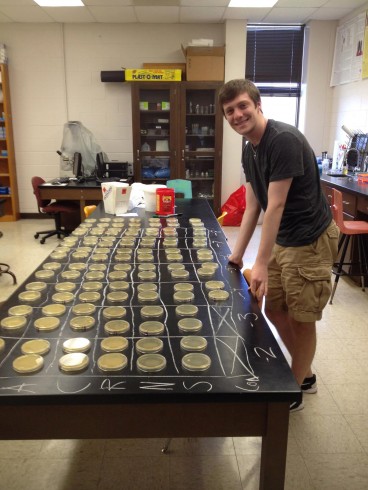
Jeffrey Wooliscroft analyzing antibiotic plates with cave microbes during the summer of 2015.
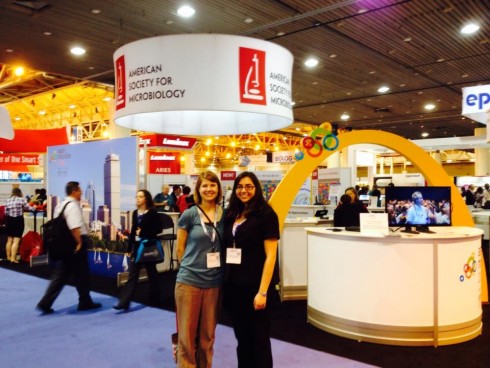
Kristen Clemons and Jennifer Huddleston at the American Society for Microbiology 2015 General Meeting
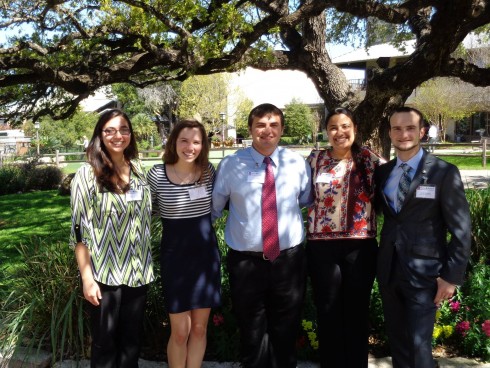
Left to right: Kristen Clemons, Grace McNair, Jacob Woods, Kathryn Preston, and David Sanderson at the Spring 2015 Meeting of Texas American Society for Microbiology. Photographer: Jennifer Huddleston
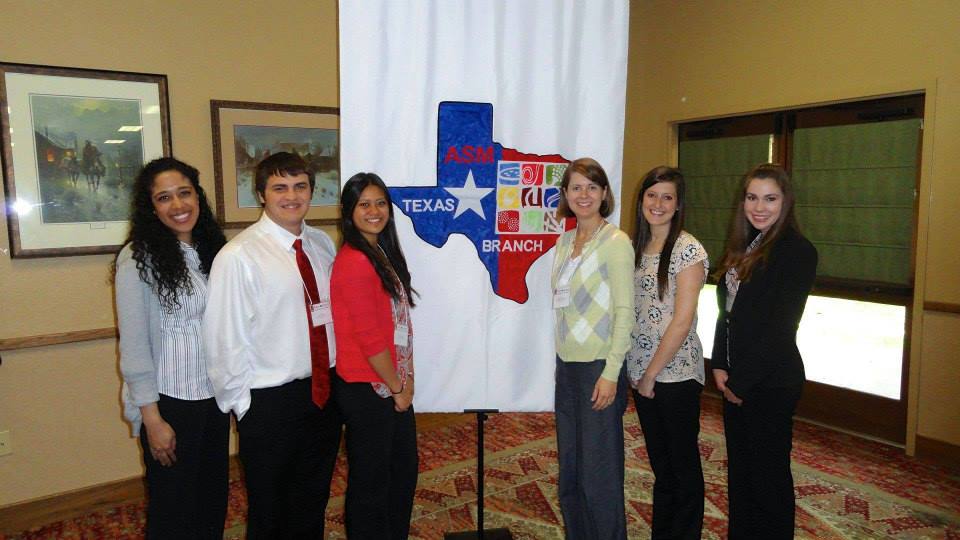
Left to right: Kathryn Davis, Jacob Woods, Christina Lee, Jennifer Huddleston, Sally Hays, Madeline Peterson at the Spring 2014 Meeting of Texas American Society for Microbiology
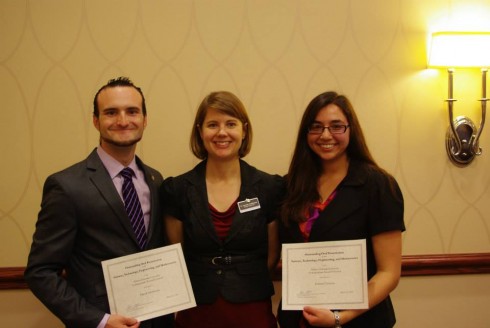
David Sanderson and Kristen Clemons displaying their Outstanding STEM Awards at the 2015 ACU Undergraduate Research Festival.
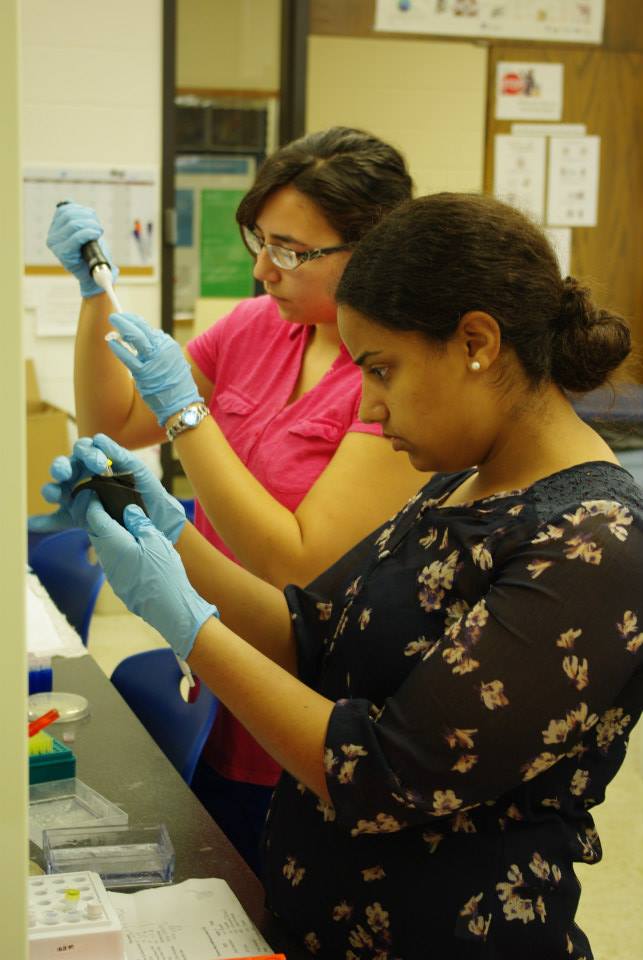
Kristen Clemons and Katie Preston
Kristin Goodwin
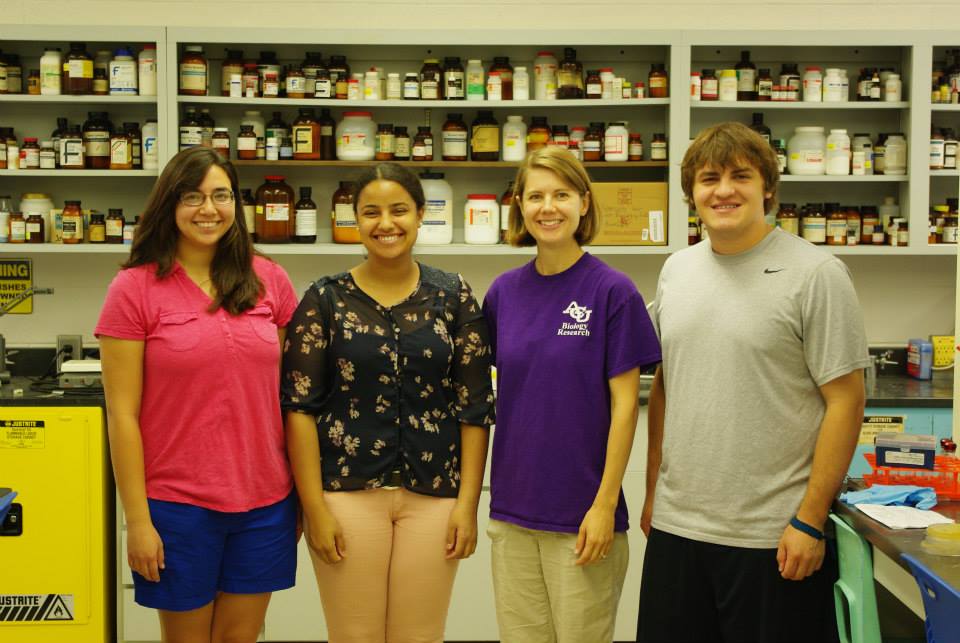
Left to right: Kristen Clemons, Katie Preston, Jennifer Huddleston, Jacob Woods
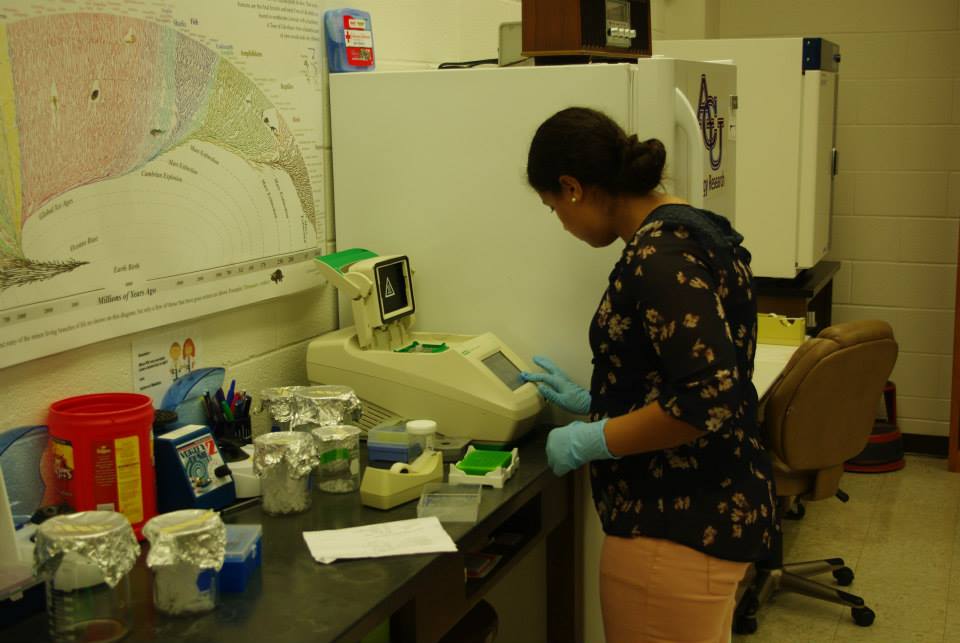
Katie Preston setting up the PCR machine
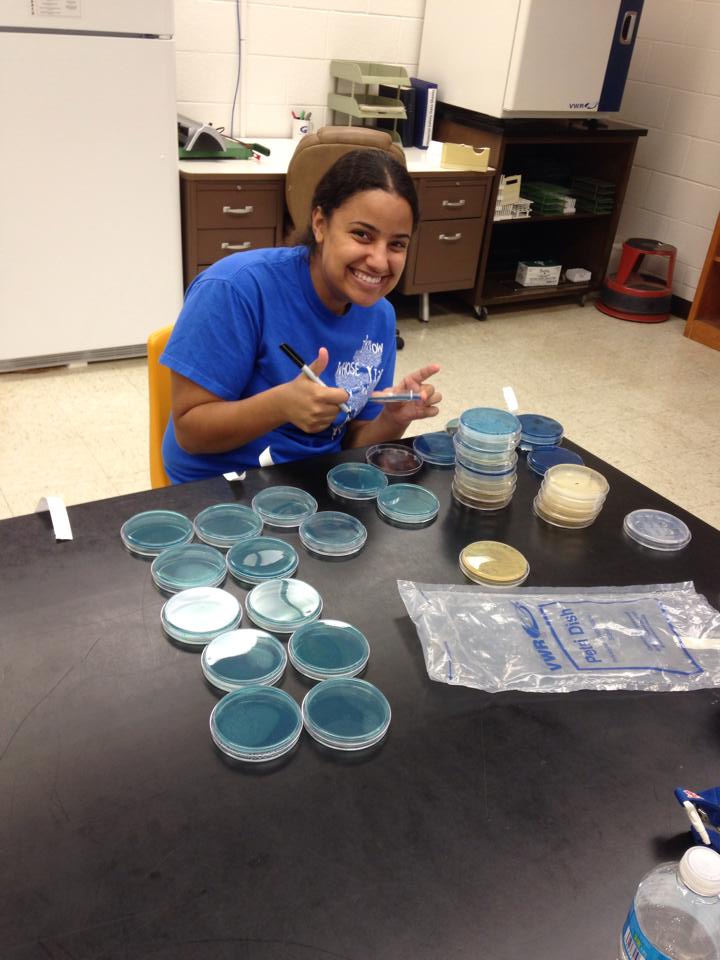
Katie Preston working with Aeromonas blue medium
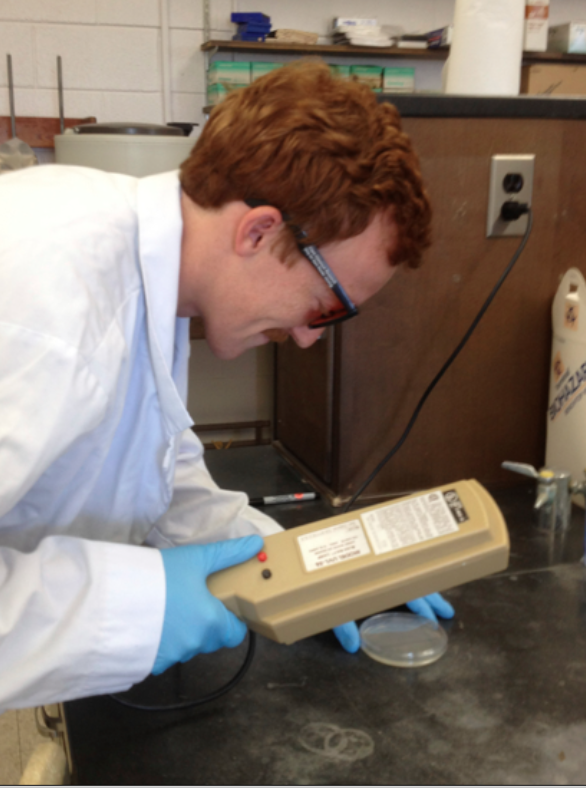
Zach Morgan and UV light treatment
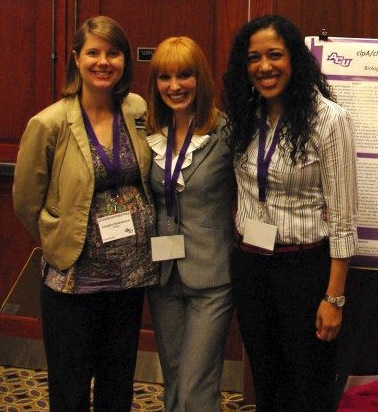
Left to right: Jennifer Huddleston, Kristin Goodwin, Kathryn Davis