One of the real strengths of the teaching and learning environment I’ve found at ACU is the number of colleagues in all departments ready to engage in formal and informal conversations about our shared mission. Since returning in 1999, I have benefited greatly from hallway conversations and programming in the Adams Center, and since 2002 I have sought ways to contribute to this community of practice among the English faculty and colleagues in other departments. Below is a quick overview of some of these collaborations.
COLLABORATION
Coffeehouse Podcast for ENGL 495: Eighteenth-Century Brit Lit 2007
Cameos by Steven Moore, Bill Rankin, Nancy Shankle, Bill Walton, Steve Weathers, Chris Willerton
This I Believe Curriculum and Campus Conversations Chapel 2007
with Cole Bennett
An Administrator’s Guide to Online Education 2005
Reviewed two chapters from George Saltsman’s manuscript
ENGL 221 Online 2004
Development team: Gary Tucker, George Saltsman, Doug Darby
ENGL 221 Online Learning Objects 2004-2005
Doug Darby, Great Chain of Being Flash animation
Bill Rankin, Margery Live! Interview
Richard Beck, Forbidden Knowledge interview
Tom Lee, Genetic Research and Technology interview
Chris Willerton, “To His Coy Mistress” reading
Dana McMichael, “Sonnet 12” reading
Eric Harrell, Staging Shakespeare interview
Bill Walton, “Holy Sonnet 14” reading and interpretation
Study Abroad Survey Trip, Oxford 2002
Ted Presley, Jeff Arrington, Nancy Shankle, Fred Bailey
Paul Piersall, Tracy Shilcutt, Kent Smith
England through the Ages travel notebook 2002
Edited Fred Bailey’s walking tours
CTE Mini-grants for departmental TechTeaching Lunches 2001-2007
with Debbie Williams and Laura Carroll
English Department Ice-Cream Social 2001-present
Contributor and quality control
Exercise Science Recreation class sponsor 2001-present
Backpacking, Snow Skiing, and Canoe Camping
English-Psychology Dead-Day Croquet Grudge Match 2001-present
Co-founder and defending champion
Departmental Collaboration
The technology in teaching lunches mentioned earlier were modeled on the success of Adams Center events that not only present new ideas, techniques, or approaches but get colleagues eating and talking together. The English department has a large and diverse faculty—one of the largest on campus—and taking a few moments each semester to pause and reflect on common concerns in our teaching has been energizing.
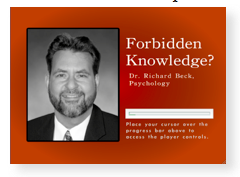 Course development for Summer Online also included many conversations and contributions in the department, from comparing course goals to developing learning objects for the modules. In both cases, I felt that departmental buy-in for a course designed for my peers to teach was essential. Bill Rankin and I collaborated on an interview with a medieval mystic resurrected the first summer in an IM chat and then with the help of Doug Darby in a Monty Pythonesque video. Others in the department, like Dana McMichael and Bill Walton, contributed readings and interpretations we recorded to introduce Elizabethan poetry while friends from across campus like Richard Beck in Psychology and Eric Harrell in Theatre, contributed their expertise through interdisciplinary interviews.
This fall when introducing podcasting to a major English class for the first time, I decided I needed a hook to attract students to my model Coffeehouse Podcast. In a department with so many shady characters, it was natural for me to populate my audio visit to an eighteenth-century coffeehouse with the voices of my colleagues so I begged, persuaded, and coerced Steve Weathers, Nancy Shankle, and others into cameo appearances that students needed to identify the next class period for quiz credit.
Across Campus
My own work with Study Abroad has encouraged further cross-campus collaboration. Preparing for our first semester abroad in 2003, I made a serious effort to hear from colleagues in a number of departments. This preparation involved an on-site survey trip in October of 2002 where I met and talked about the program and the potential of travel learning with faculty and administrators. As I’ve already mentioned, developing the Oxford Humanities block, HUM 222, provided additional incentive to these kinds of dialogues, and completing the Instructor’s Notebook upon our return allowed me time to reflect on the value of inter-cultural and experiential learning in Adams Center lunches and less formal conversations with departing faculty.
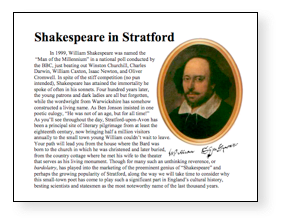 Working with colleagues on their personal writing projects has also led to conversations across campus. Spending a couple months in the summer of 2002 editing Fred Bailey’s England through the Ages provided an invaluable introduction to on-site resources for curricular travel in the UK. As we worked on over a dozen walking tours of key historical and literary sites, we talked about how travel learning might serve broader learning goals particular to study abroad. After a visit to Oxford in July of 2002, I also developed a walking tour to Stratford-upon-Avon I contributed to Fred’s project, introducing his students in 2002 to key themes in Shakespeare’s career and his early plays (see walking tour in Appendix Y). Then in 2003 I contributed abbreviated instructions for visiting Tintern Abbey and planning a trip to the theater. More recently I also provided comments on chapters from George Saltsman’s book An Administrator’s Guide to Online Education published in 2005.
Social Agenda
Many of the most rejuvenating moments with students and peers occur in less structured settings. One example would be the English Ice-Cream Social begun in 2001. These gatherings allow our majors to build relationships with peers they have met in classes but also for colleagues who spend so much of their year serving on committees and reworking courses a few precious moments to share conversation and frozen custard. Growing up in the Exercise Science department, I was introduced to the value of this kind of event in deepening community within a department, so I continue to work to keep it on the departmental calendar.
When possible, I’ve tried to maintain this relationship with Exercise Science, primarily as a sponsor on backpacking, skiing, and canoe-camping trips. These interactions with students struggling up a mountain trail or trying to avoid wrapping a canoe around a boulder have allowed me one more opportunity to get out of the ivory tower of third-floor Chambers and meet and work with students from a range of majors and disciplines.
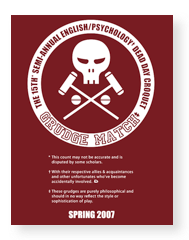 Another tradition I’m equally proud in encouraging community in our building and across campus is the Semi-Annual English-Psychology Dead-Day Croquet Grudge Match.* These informal contests have gotten departments on campus talking to one another in the spirit of interdisciplinary dialogue and cooperation. Through croquet, faculty from the College of Arts and Sciences, the College of Bible, and the Adams Center have further developed skills in problem solving and strategic planning, consensus building and smack talking that now inform their work as committee chairs, graduate directors, department heads, and deans (see Prickly Pear story in Appendix Z).
* The 2007 commemorative t-shirt itself was a collegial collaboration that included Bill Rankin and Katrina Willis, with design abstracts submitted through a process of double-blind review for approval by an inter-departmental editorial board appointed for the purpose.