–> Collegiality
In my eight years at ACU, I have found opportunities to serve in a number of roles. As I’ve worked with colleagues in the department, across the university and the nation, I’ve grown as not only a teacher but also a professional in my field. I’ve been challenged to consider the place of assessment in English studies and the thoughtful integration of technology to support teaching in the humanities. The following select list from my vita reflects not only my pursuit of the department’s goal to “increase the pedagogically-sound use of technology” but also “to enhance the department’s influence on campus and in the Abilene community.”
UNIVERSITY SERVICE
University, Disciplinary Review Board 2007-present
Adams Center, Podcasting Research and Support Team 2007-2008
Direct faculty and staff research into iTunes U applications
University, iPhone at ACU Leadership Team 2007
Member, co-edited Apple iPhone proposal
Campus Conversations This I Believe Chapel with Cole Bennett Fall 2007
University, Social Club Review Committee 2006-2007
Member, contributed to report to Board of Trustees
Campus Life, Sub-T 16 Self Study, Reviewer Spring 2007
University, Library Committee 2006-2007
Chair, wrote proposal for Mabee Library Auditorium redesign
English Department, Inscription Conference Committee 2003-2005
Co-Chair, Local Arrangements, media and web
English Department, Executive Committee Summer 2006
Member, developed departmental learning objectives
Distance Education, Summer Online Courses Program 2004-present
Course Developer and Supervisor, ENGL 221 Online
Study Abroad, Oxford Spring 2005
On-site duties in absence of program director
Study Abroad, Oxford Spring 2003
Developed and led all curricular travel
University, Library Committee 2003-2006
Member, edited proposal and brochure for Learning Commons
English Department, Technology Committee 2001-present
Chair, support liaison for labs and smart classrooms
Writer departmental LINK proposals
English Department, Sophomore English Committee 2005-present
Chair, review of learning objectives for sophomore surveys
English Department, Faculty Search Committee 2003-2005
Member, reviewed and interviewed applicants for open positions
English Department, Library Committee 2002-2005
Member, prepared purchase lists for targeted periods and areas
University, Disciplinary Review Board 2001-2003
Adams Center, Mini-grants for departmental TechTeaching Lunches 2001-2007
with Debbie Williams and Laura Carroll
English Department, English Essay Examination 2000-present
Director of Testing, administer and evaluate advanced credit essays
Texas Regional UIL Ready Writing 1999-present
Contest Director and Judge
CONSULTING
This I Believe—Abilene with KACU and Dave Smith 2007-2008
Content selection and editing, with Cole Bennett
Producing Podcasts and Podcast Assignments meetings Fall 2007
College of Biblical Studies with Stephen Johnson
Department of Art and Design with Mike Wiggins
First-Year Program with Charles Mattis
Adams Center, Alternative Learning Space Design Focus Group April 2007
CLEP English Literature Exam Committee, College Board (ETS) 2004-2007
Blackboard Bbionic and Greenhouse Exemplary Course Contest 2006-2007
Online/Hybrid Course Design overview for Dallas Christian High School Spring 2006
English and history teacher Kathleen Brooks
Study Abroad Visiting Committee faculty resource 2003-2006
Adams Center, Campus-wide Gradebook Focus Group February 2001
Adams Center, Blackboard Users’ Group Fall 2000
ADVISING & MENTORING
New Faculty Mentoring Program 2005-present
Mentor for Kenny Jones, Brad Crisp, John Camp
Oxford Alums “Commons Room” Small-Group Chapel 2005-2006
Sponsor
Advisor for a dozen majors annually 2003-present
U100 Honors section teaching and advising 2002-2003
.
Testing
For the last seven years, I’ve served as the Director of Testing for the English department. The principal function of this position is to administer the English Essay Exam several times each summer to students qualifying through their AP, ACT, SAT, and CLEP scores. During that period we have evaluated over 800 essays for incoming students seeking credit for 3-6 hours of first-year composition. Each essay is read by two or more faculty members before recommendations are tabulated and results returned to students in the 24 hours between the essay and their Passport advising appointments.
In 2004, I participated in discussions with Admissions and the First-Year Program on moving from a departmental essay to the new ACT and SAT Essay components for placement at all levels. We continue to work with the Career Counseling and Testing to review national results from the first years of both exams and recommend thresholds to place under-prepared students in ENGL 003 and 106 or grant advanced credit for ENGL 111 or 112.
 In the same year, I was also contacted by the College Board to serve on their national advisory committee for the CLEP English Literature Exam. The committee meets biannually in Princeton, NJ, to review all test questions for accuracy and fairness and then works through the fall drafting new questions for the CLEP pool. In 2005 we also gathered and evaluated information from schools nationwide to ensure the test continues to reflect current teaching trends in sophomore-level surveys.
Finally, when on campus in the spring, I have directed the UIL Ready Writing contest for the regional academic meet hosted at ACU. This entails administering the contest for 24 area high school students and working with faculty members and graduate students to evaluate and place the competitors’ writing. This is a great opportunity to work with secondary English teachers from across the region and encourage some of the best young writers in the state.
Technology
For the past six years, I have also served as the Director of Technology for the department. In this position, I act as a liaison for support personnel on campus to ensure that we track faculty issues and troubleshoot recurring problems in faculty offices, smart classrooms, and labs. In 2000, I worked with Bill Rankin to redesign the English lab in ADM 327 to better suit its dual-role as a teaching classroom and lab. The ADM 327 lab now serves every section of ENGL 326: Business and Professional Writing as well as many of our freshman composition and creative writing classes.
In 2006 the demands for the lab doubled when the department inherited composition classes for under-prepared writers from the Student Success program. We requested approval to renovate the CHA 120 Education lab for these classes and now have a second teaching lab in our building. Another key responsibility of the position has been to submit annual LINK proposals, successfully funding new smart classroom installations and upgrades in CHA 321, ADM 331, ADM 302, ADM 127 (see 2006 LINK proposal in Appendix S).
In 2003 and 2007, I worked with faculty as we moved through computer upgrades as part of the Three Year and Out (3YO) program. Over the same period I collaborated with Debbie Williams and Laura Carroll on four MiniGrants through the Adams Center to fund teaching and technology lunches to make faculty members more productive with their new computers and more comfortable teaching composition, literature, and business and professional writing in our wired classrooms and labs (see 2003 grant application in Appendix S).
 In January of 2004, I agreed to design one of the first two courses in the new Summer Online Program. The previous fall, one of the Strategic Solutions Teams recommended developing this program to retain credit hours typically lost to transfer courses during the summer. Within the space of four months, we were introduced to distance education theory and course design principles even as we needed to have fully functioning courses online by May. Though this process strictly belongs under teaching, there were aspects of our work that apply equally to university service. In collaboration with George Saltsman, Gary Tucker, and Doug Darby, I worked to develop course components that provided tested learning objects for second- and third-generation courses and teachers to build on. For example, the Flash timelines we developed to introduce key periods in Britain’s history have since been adapted to online classes in Old Testament and Church History. In addition, I presented in university faculty meetings and Adams Center lunches to help educate interested faculty and departments in the challenges and possibilities of the new medium.
Study Abroad
The two semesters teaching with the Study Abroad program in Oxford have been among my most memorable at ACU, helping bright students connect textbook readings and classroom discussions with travel across England and Europe. Not surprisingly, they also have been two of the most exhausting. In 2003 the on-site director position was empty and a temporary replacement went over with us in January. This meant that my responsibilities included the types of travel planning and logistics that would normally be taken care of by the on-site faculty. One benefit to this arrangement was the amount of control it allowed me in tailoring curricular travel to the assignments in the humanities block taken by 90% of students (see 2003 itinerary in Appendix T).
 In 2005 when we returned to Oxford, the program was led by Ron and Janine Morgan, freeing me to refine the Oxford humanities course and support other faculty as a visiting lecturer and a tutorial director. Camille and I had students to dinner and to tea, organized theater trips, and a road-trip to Stratford on Shakespeare’s birthday. When the Morgans were called back to the States for a family emergency, we filled in as on-site directors, extending our stay through Maymester.
On both occasions, I met with our students during the previous fall semester for Oxford Chapel to worship with them and begin to set academic expectations. Since our return, we have hosted students in our home and in 2005-2006 sponsored a small-group chapel that met once a week (see letter from Alaina Bearden in Appendix C). I have presented regularly at Study Abroad chapels and pre-departure meetings to help other students plan for the unique opportunities that come with studying overseas. When asked, I also have met with Study Abroad visiting committees and other administrators to communicate strengths and future needs of the program.
Committees Overview
Since finishing my dissertation, I have contributed to a number of departmental and university committees. While I have been willing to serve on many committees when asked, the collaborations represented below connected areas of personal interest with particular needs within the department and the university.
Library. I have enjoyed several semesters working with both the departmental and university library committees. In 2002, Bill Rankin and I worked to spend a one-time gift of $30,000 in periods neglected in the past or emerging areas of literary or theoretical interest. In 2004, I also had the opportunity to work with Mark Hamilton and the library committee in drafting and editing the university proposal for the new Learning Commons. The committee surveyed new trends in library commons nationwide and evaluated which components would be most widely utilized by students and faculty at ACU.
In 2006 I served as chair of the university library committee when we developed a document introducing faculty to the services in the Learning Commons and then in 2007 as we developed a proposal for a wholly redesigned Mabee Library Auditorium, offering the campus a laboratory to experiment with the next generation of smart classroom technology (see both documents in Appendix U).
 Inscription. In 2005 members of the English department began preparations for a joint conference with the Southwest Conference on Christianity and Literature called Inscription. My assignment was Local Arrangements Co-chair with Laura Carroll and we chose a conference hotel, arranged shuttle service between the hotel and campus, and prepared audio and video recording of sessions now available on iTunes U. In 2006 as the conference approached I also took over web duties while Cole Bennett was in Oxford, setting up conference registration and online payment for attendees (see samples pages in Appendix V).
Social Clubs. Beginning in 2006, I worked with students, campus life staff, and faculty on the Social Club Task Force. We reviewed results from a campus-wide survey on how social clubs contribute to campus culture. In 2007 we produced a proposal that raised the minimum GPA for pledges and shortened the pledge period by separating it from visits and social integration activities. Toward the end of our work, I was asked by Jeff Arrington to review the Sub T-16 Self Study.
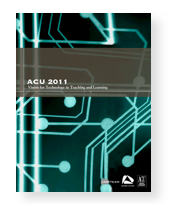 LINK Team. In 2006, I began meeting with the university LINK Team evaluating campus technology investments and areas of future interest. For example, in 2006 I presented responses from the Chronicle of Higher Education by students and faculty nationwide to the growth of wireless learning spaces. Then in 2007 we discussed and drafted a “five year visioning document for teaching, learning, and technology” called ACU 2011. The document considers the impact of students entering in 2011 who have never known a world without the Internet and the information and communication tools it represents.
 iPhone. As a result of work for the LINK Team, in April of 2007 I was asked to help write a proposal ACU would submit to Apple Computer on the potential impact of the iPhone in Higher Education. Through May, I worked closely with George Saltsman, Bill Rankin, Kevin Roberts, and Phil Schubert to shape the educational rationale at the heart of the proposal. As we moved toward the final proposal, I wrote case studies and edited material submitted by colleagues like Jonathan Stewart, Kenneth Pybus, and Joey Cope that highlighted opportunities for iPhone usage in classes and programs across the university (see educational context and case studies in Appendix X). As a result of our proposal, ACU was named to Apple’s iPhone advisory committee along with a select group of universities including Harvard, Duke, Stanford, and MIT. This fall I will help lead research studies by faculty and staff to continue investigating the potential of a broader deployment.
–> Collegiality