
When you are down in the stacks, sometimes an unassuming book can contain a treasure of information. The Decline and Fall of Nazi Germany and Imperial Japan: A Pictorial History of the Final Days of World War II by Hans Dollinger is a plain book that once opened contains notices, letters, pictures, propaganda leaflets and so much more from both the Allies and Axis powers. Below are just a few (and I mean a few) snippets of what can be found in this book.






An excerpt:
Will Germany be able to save her soul?
by Franz Werfel
“It is a terrible trial you are facing, German men and women, a trial without equal in the history of the world. Not in the defeat of your proud armies, not in the ruins of your flourishing cities, not in the millions whom you have driven from their gutted homesteads and who are now wandering homeless through the lands–not in all this suffering, horrible though it is, lies the terrible rial you have to undergo. The same sorrow that now drives you hollow-eyed over your ruined streets, was what you cold-heartedly prepared for others, not even bothering to look back at all the havoc you had caused. The other nations have survived their suffering. You, too, will survive yours, but only on condition that you save your souls. And this is your terrible trial and the great question: Will Germany be able to save her soul?
Do you know that it was Germans who killed millions and millions of peaceable, harmless, and innocent people with methods that would make even the devil blush with shame? Do you know about the ovens and gas chambers of Maidanek, the dung-heap of rotting corpses in Buchenwald, Belsen, and hundreds of other hell camps like these? Do you know of the fertilizer and soap factories set up in the vicinity of many a camp, lest human fat and human bones be lost to the German economy? Have you heard about the commandant’s wife who had a predilection for lampshades made of human skins?
Many of you will pale, turn away and murmur: “What has all that to do with me?” That is just it: it has to with you you, with every least one of you. If ever the course of history has expressed God’s judgment, it has done here and now. Did you not boast of your “national communion,” in which the individual was no more than a fanatical atom, unconditionally serving the whole? It was not individual criminals, therefore who committed all these horrors, but your “communion,” in which each stood for all, and all for each. The crimes of National Socialism and the unspeakable denigration of German civilization are but the logical outcomes of the devilish exaltation of the rights of the strongest and the claim that right is merely what serves the nation, or rather a few party bosses and swindlers. Nothing can undo the fact that you not only heeded these devilish doctrines, but that you embraced them fervently, defending them with fire, steel, and blood. Never before has a less heroic generation boasted a more heroic philosophy. Too late have your eyes been opened to the revolting behavior of your leaders, bosses, and generals.”
From Ruhr Zeitung, 19 May 1945, pg. 314 in The Decline and Fall of Nazi Germany and Imperial Japan






























 Truthfully, every time I think about Leonard Bernstein now is in relation to John Mulaney’s Kid Gorgeous Netflix special. Definitely go watch it because he’s hilarious! But Leonard Bernstein’s gifts for drama and connecting with popular audiences made him a central figure in twentieth-century American music. Baber investigates how jazz in its many styles served Bernstein as a flexible, indeed protean, musical idea. She also offers in-depth analyses of On the Town, West Side Story, 1600 Pennsylvania Avenue, and other works to explore fascinating links between Bernstein’s art and issues like eclecticism, music’s relationship to social engagement, black-Jewish relations, and his own musical identity.




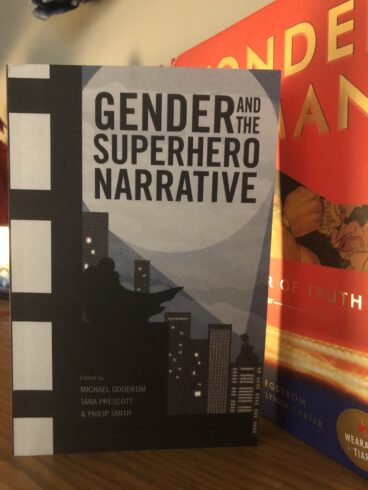 The explosive popularity of San Diego’s Comic-Con, Star Wars: The Force Awakens and Rogue One, and Netflix’s Jessica Jones and Luke Cage all signal the tidal change in superhero narratives and mainstreaming of what were once considered niche interests.










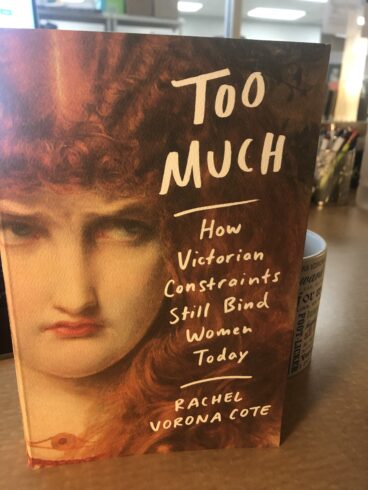 Yet, many double standards for women still exist because of this group of people. A weeping woman is a monster. So too is a fat woman, a horny woman, a woman shrieking with laughter. Women who are one or more of these things have heard, or perhaps simply intuited, that we are repugnantly excessive, that we have taken illicit liberties to live with abandon. It is the age-old problem women face, they can either be the angel or the monster, Mary or Eve, the madwoman in the attic or Jane Eyre.
 In the 1950s and 1960s, Churches of Christ were the fastest-growing religious organization in the United States. The churches flourished especially in southern and western states, including Oklahoma. In this compelling history, historian W. David Baird examines the key characteristics, individuals, and debates that have shaped the Churches of Christ in Oklahoma from the early nineteenth century to the beginning of the twenty-first century.
 Part of a series that remains one of the most important resources for choir directors looking for quality repertoire that has been vetted by a distinguished panel of educators. Containing Teacher Resource Guides for approximately 100 works, organized by difficulty. Selected by a team of leading choir directors, the repertoire in Volume 5 balances SATB literature with works for treble and tenor/bass choirs.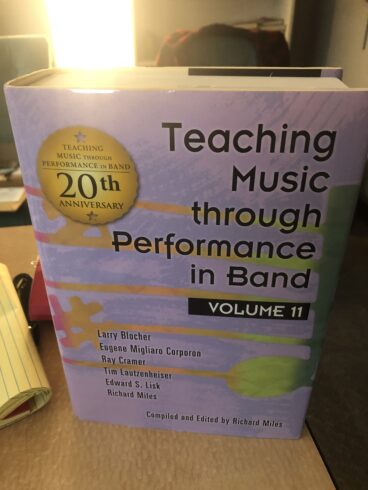



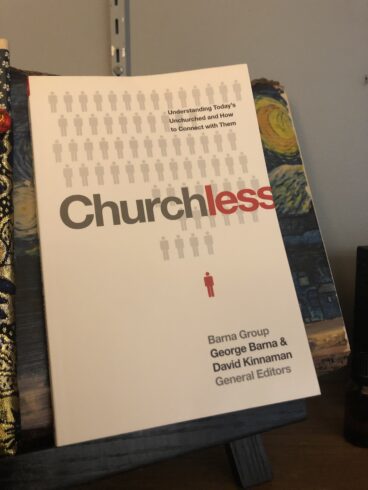 In Churchless, David Kinnaman and George Barna shine a spotlight on today’s culture and reveal the surprising reasons why church avoidance is on the rise—and a hopeful analysis of what to do about it.
 In We Were Spiritual Refugees, she shares the story of departing the traditional church for the frontier of the spiritual-but-not-religious and building community with Jesus-loving (or at least Jesus-curious) outsiders. Galileo church “seeks and shelters spiritual refugees” in the suburbs of Forth Worth, TX. Told in funny, poignant, and short vignettes, Galileo’s story is not one of how to be cool for Christ. Like its founder, Galileo is deeply uncool and deeply devout, and always straining ahead to see what God will do next. Hays says curiosity is her greatest virtue, and she recounts learning how to share the good news with people who are half her age and intensely skeptical.
 Emma centers around Emma Woodhouse a young girl who tries her hand at matchmaking and ends up causing many problems along the way. Filled with youthful hubris and the perils of misconstrued romance, it’s an enjoyable novel that explores the concerns and difficulties of genteel women living in Georgian-Regency England.