Transplanting the Northwest to Abilene
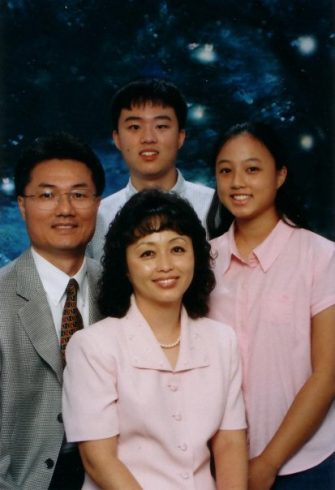 A rumor has it in my neighborhood that I am “transplanting the entire Northwest to Abilene.” Curt Niccum informed me of the rumor. He probably heard it from his parents, who are my wonderful neighbors. Of course, the rumor is an exaggeration, but it is not completely unfounded. When we moved to Abilene in July 2011, we bought a new house that had NOTHING in the front and back yard! We had just moved from Portland, Oregon, where the grass is always green, and evergreen trees and streams are everywhere. I knew what I was getting into, so before our move I brought a big framed, picture of the beautiful forested coastline of Cannon Beach, Oregon. Of course, that was not enough, so I started planting trees, shrubs, flowers, and sowed lawn seeds in my yards.
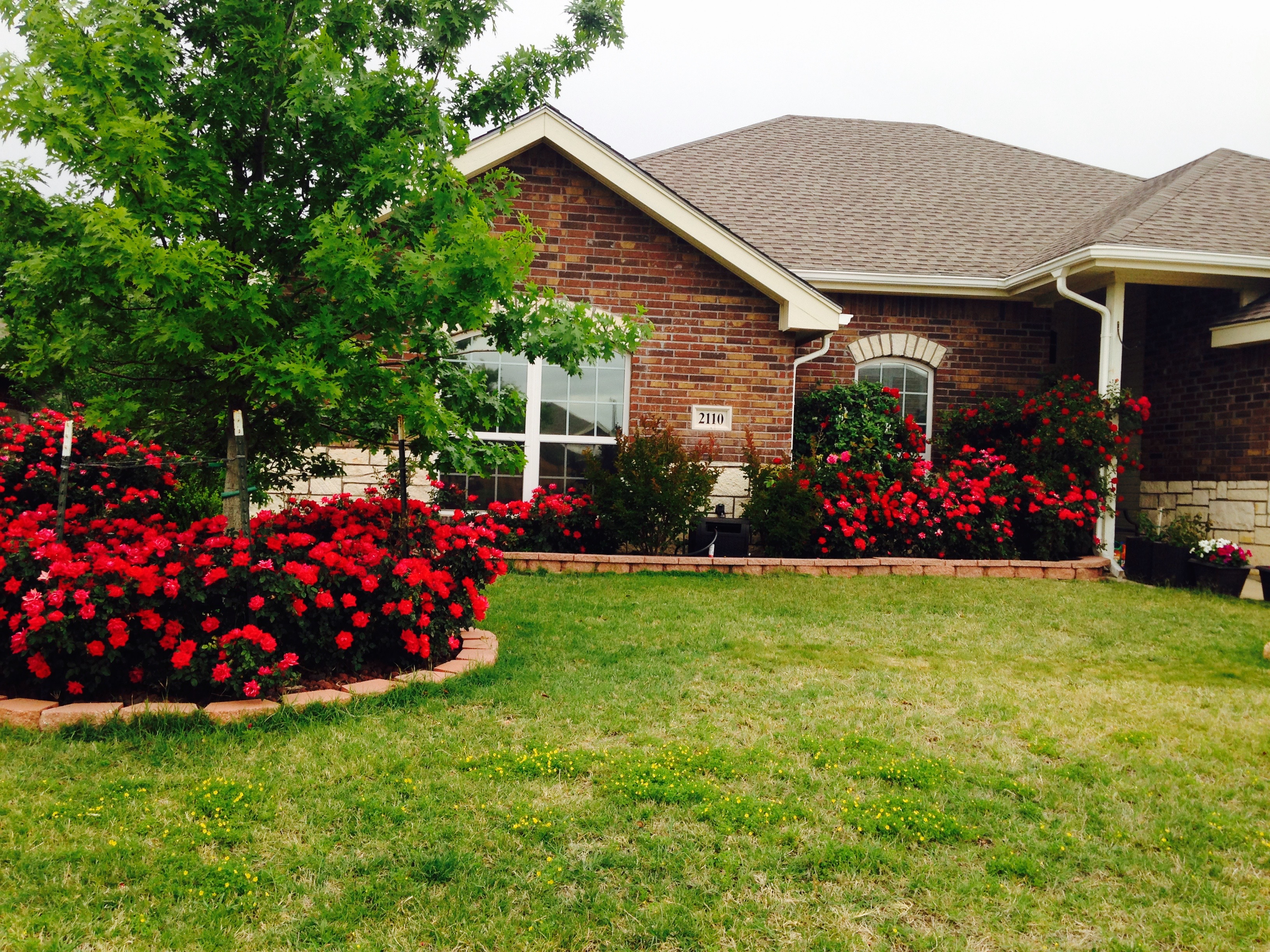
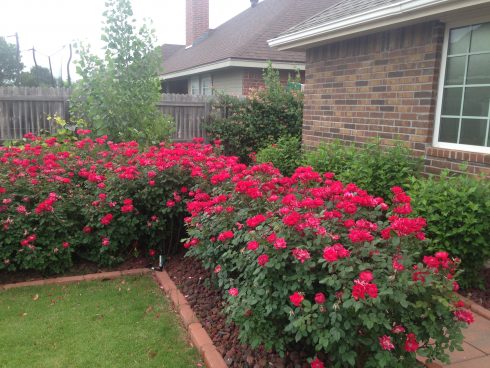 When I asked around what to plant, Randy Harris suggested I plant roses. He said, “I do nothing for them, but they do great every year!” So I planted over fifty Knockout rose plants along with multiple dozens of Crape Myrtles, Japanese Boxwoods, dwarf hollies, etc. After five years of hard work (for example, my wife said I’d better sow the lawn seed before rain comes, so one night I worked till 1 AM), I’ve succeeded in transplanting not the entire Northwest but, at least, a little portion of it to Abilene as the pictures above and below show. Transplanting the NW works in more than one way for me as I try to repeat that in my classes.
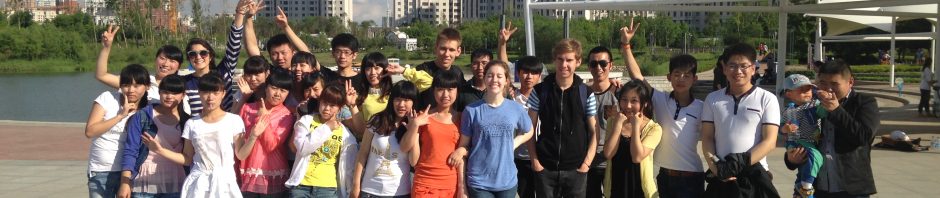
 Cascade College, where I taught for five years before joining the ACU faculty, was a very small Christian college where everybody knew each other by their first name. Compared to Cascade, ACU is a huge school to me, and I am often amused to hear my students saying that they chose ACU because it is a “small school.” I know exactly what they mean by that statement. They understand the ACU difference, where they are much more than a mere number among a great multitude. ACU students appreciate not only academic rigor and the Christian environment ACU provides for them but also a close, mentoring relationship with their professors. For this reason I am grateful for my teaching experience at Cascade, where anonymity was impossible, teaching and mentoring were done both in and outside class, and building close personal relationships with students mattered. My teaching experience at Baylor during my doctoral training was quite the contrary.
As I teach at ACU, I continue in the same vein as I did at Cascade and do my best to perfect it since I no longer know my students like I used to at tiny Cascade. One way for me to know my students better now is to require all of them to write a 500 to 600 word Vocational Essay so that I get to know their walk with God, their reason for choosing to attend ACU, what they expect to learn in my class, their aspirations after graduation, and anything else I should know about them. Each semester I have close to 200 students, and I have a separate binder for each semester, which I treasure very much. I like hard copies of their essays because I underline or highlight sentences that characterize them very well and make notes in margins in order for me to get to know them better individually and serve them more effectively. That is how I get to know their stories that I would probably not find out without the essays: Zach and Katy’s loss of their mom; Sarah’s aspiration to be a medical doctor, which resulted in me writing a letter of recommendation for her later and sharing the joy of her acceptance into medical school; and Andrea’s role model Mr. Johnson, who inspired her to “be a life-long learner” and to pay it forward to the community that gave her the free school supplies her family could not afford, to name a few. Through these stories I get to feel their pain, their triumphs, their joys, and the hopes they hold closest to their hearts. That is how I begin each semester as I get to partake in what I see as the great privilege of teaching at ACU, and the task of transplanting continues both in my yards and classes.
In Him,
Kilnam Cha
Next Page: Philosophy of Teaching and Learning