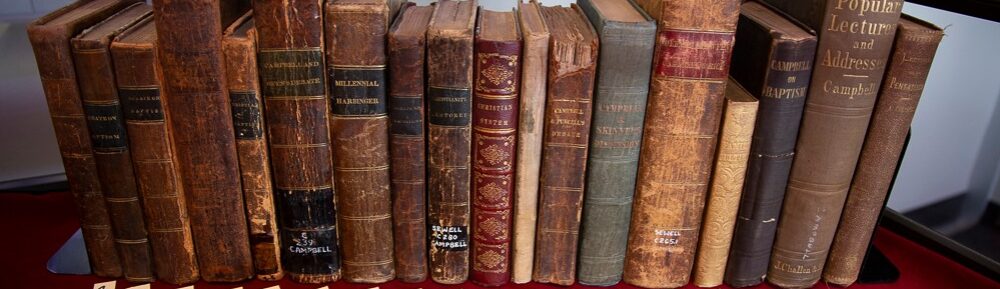
I will reflect briefly on the capstone highlights of the collegial atmosphere I have benefited from, and sought to contribute to, at the library and university.
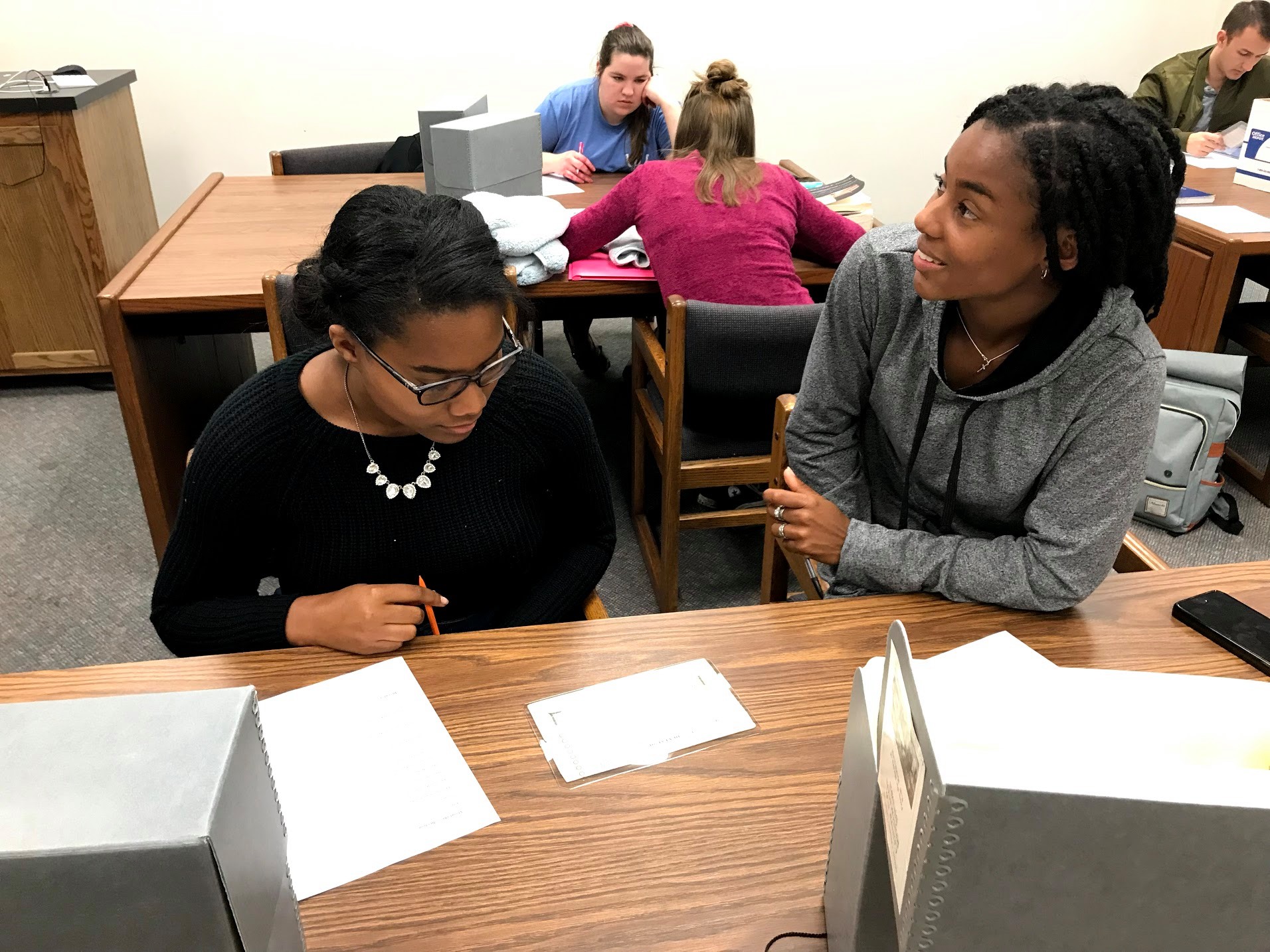
The collaborative and collegial experience of co-teaching has consistently been a high point of my year, every year, since I came to ACU in 2013. This picture captures an ‘aha’ moment of discovery, one of my favorite moments in teaching.
The daily work of our department does not fall solely upon my shoulders and every good fruit of our labor is due to the shared work of a team of colleagues. I am fortunate to share my work with Amanda Dietz and Erica Pye, and as noted elsewhere, our student employees. Any institution should consider it a compliment when its alumni choose to return to it. Amanda was among the first of Tracy Shilcutt’s Historical Methods students to work in ACU Special Collections. She is an experienced (and Certified) archivist, as well as a trained museum professional. This suite of training and experience manifests itself in the quantity and quality of our archival processing achievements. Erica is the newest librarian to join Special Collections, and I consider it honor that she wanted to come on board our team. She is a talented librarian with a strong ethos for service and has proven to be a quick study in archival science. I have personally benefited from their willingness to tackle the challenge of a growing collection embedded in a university context. I respect them both very much for the intelligence and professional competence, as well as the personal care and dedication, they bring to our shared tasks in service of our shared goals. When I try to think about collegiality, it is difficult to conceive of it apart from the most immediate context of a department wherein each member contributes to a collaborative partnership to achieve our common goals. When I think of collegiality, I think of shared work and for me that begins first within my department and moves outward.
Beyond my immediate department, my work is closely aligned with our Technical Services department. The value of this partnership was brought home to me in an acute way some time ago when an archivist at another institution described to me how the library dean recently informed him that the library’s technical services and cataloging department would no longer serve the needs of the rare books and archives division. He was crestfallen and through tears described how he would be expected to shoulder this additional burden. The Dean asked him to set a goal of one new catalog record per week. Such a low goal only added insult to injury. I could not bear to tell him how our collaborative partnership with Shan and Gary (and Jana, and student workers and volunteers) has resulted in multiple thousands of catalog records per year for several years, and many of those reflect original cataloging. We forged this partnership through determination as a result of the need to align annual personal and departmental goals. We worked out any number of logistical challenges, sought input from Linda Childers and Amanda Dietz, then steadily moved forward.
I cannot imagine the hostility my colleague feels as he has been isolated from the very kind of technical support that is critical to his department’s vitality, the library’s mission, and the university’s benefit. I am therefore grateful for the collaborative spirit I share with my colleagues upstairs. Our shared work certainly involves many practical details and logistical challenges, but often our conversations center on how we can best describe our holdings for maximum impact for researchers, and how our materials genuinely fill a niche. It is much more than a pleasant work environment, though it is, but the partnership facilitates a quality of benefit for our library and larger scholarly community that is difficult to quantify and almost impossible to describe. Therefore I value very much these two unsolicited statements from my colleagues Linda Childers and Laura Baker.
I have worked closely with Dr. Cole Bennett and the Adams Center to improve my scholarship and get to know my colleagues. Cole remarked once in an Adams Center session how the Writing Center is open to faculty and he is available to peer-review papers. I immediately took him up on the offer. He has served as a conversation partner and an independent set of eyes for my research papers. His collegial spirit is a safe and welcome space wherein I can practice my scholarly voice, knowing I will receive helpful critique. The Adams Center sessions and lunches have been a highlight. They foster interest and engagement across the disciplines and facilitate the kinds of conversations that otherwise might not happen. Of particular value was a Qualitative Research group led by Andrew Huddleston. He invited me, introduced me to the group and made me feel welcome. As a result I was able to assist other faculty with research interests and raise awareness for our department.
It is rare that a week goes by that I do not hear from Monty Lynn as he asks questions about our needs or has located some obscure publication we lack for our collection. On average, I receive something from him about every month or so: usually a new book, but often we engage in email conversations about prospective donors and their papers. Monty has proven to be a true friend of the archive. Additionally, he greatly honored me two years ago with an invitation to speak in a month-long series for his Sunday School class at Highland Church. His notes usually come in the form of post-it notes attached to books he sends through campus mail, but this recent email is typical of his kind spirit.
The longest-standing collegial relationship I have is with the history department as a result of the Historical Methods partnership. My work with Drs. Tracy Shilcutt and Kelly Elliot has proven to be so enriching as they repeatedly welcome me into their classes as a peer and partner. We have revisioned the class twice now, and remain in conversation about course requirements, outcomes, readings, and approaches. It has proven to be a highlight of the year.
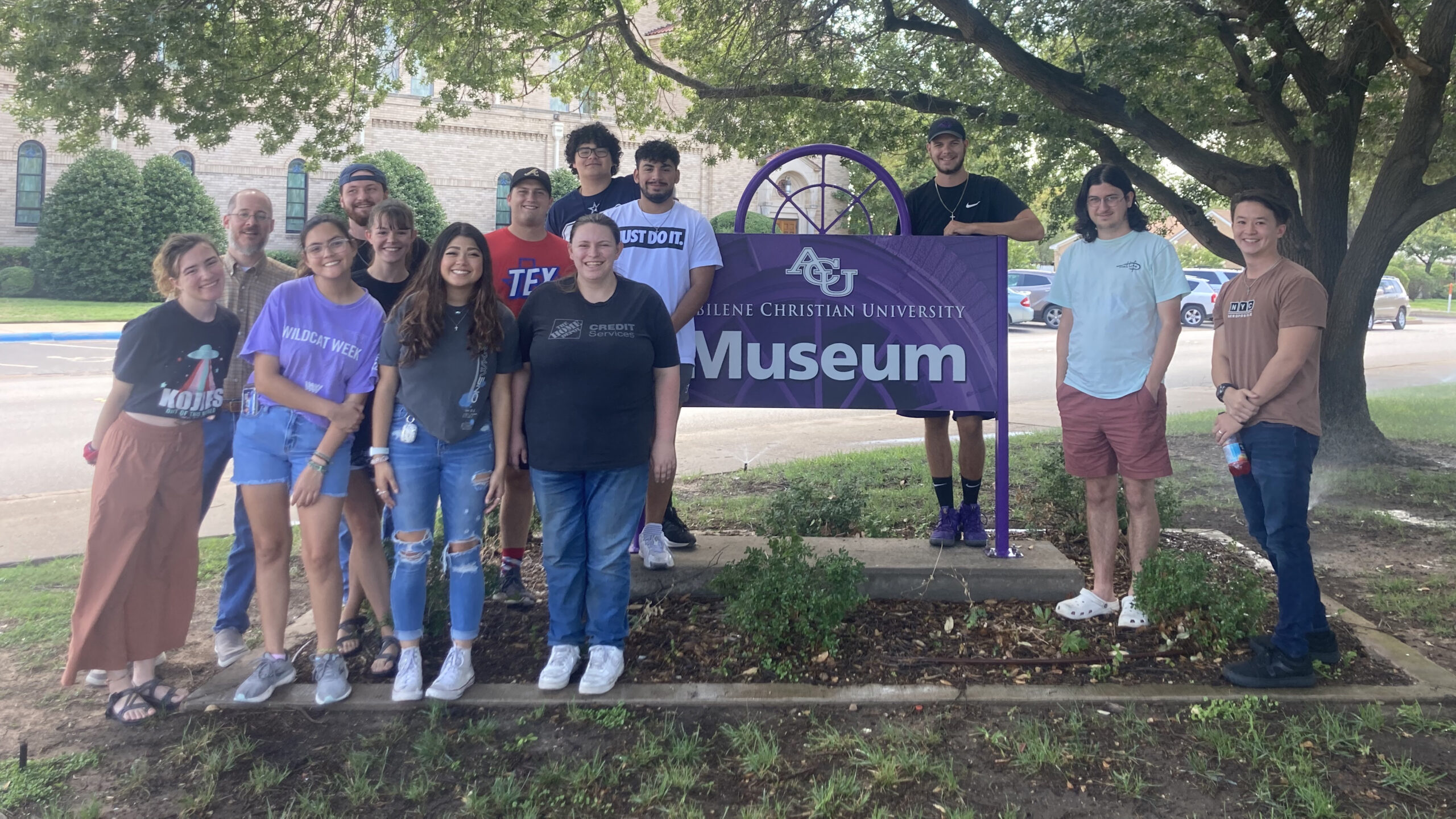
The Fall ’22 Historical Methods class tackles a new project…a full inventory of the contents of the WACU Museum at the historic Jennings House!
Each of these examples illustrates what is typical and required of my work and they illustrate my great need for collegiality. On the one hand there is work to be done: processing the collection, growing it, and teaching from it. All of these are core activities of my position. Yet I could not advance this work alone or in isolation from my peers. Even if I were to attempt it, I could not do alone what can be done through collaboration. I could not accomplish the quantity of cataloging work without partnerships with Shan and Gary. I could not identify gaps in our collection, and fill them!, without Monty’s generosity. I could not teach historical methodologies apart from the expertise that Tracy and Kelly bring to the table. The result is that what these partnerships create is greater than a mere sum of their parts. As I reflect on the years it took to form these relationships it becomes clear to me that they would not have happened other than through the hard work of earning trust, sharing work, providing honest feedback, being willing to listen, and delighting in our common investment in the work of the library and university.
Like beauty, I think ‘goodness of fit’ is sometimes in the eye of the beholder. I consider myself fortunate that my colleagues in Technical Services, in the Writing Center and Adams Center, and across the university, often and regularly make me feel like I am a good fit.
Drs. Shilcutt, Elliott, Lynn and Coates have been unflagging sources of support. When I work with them, I feel as if I ‘fit’ here. This letter from Dr. Neal Coates contains his appraisal of my collegiality.
Next section: CV, Annual Evaluations and Letters of Support