So then neither the one who plants nor the one who waters is anything, but God who causes the growth. Now he who plants and he who waters are one; but each will receive his own reward according to his own labor. For we are God’s fellow workers; you are God’s field, God’s building.
–I Corinthians 3:7-9
The word “collegial” relates to the idea of shared responsibility, e.g. consider the Latin “collegium” for “partnership.” As I reflected on this notion, I was drawn to Paul’s early discussion in I Corinthians. Rather than accept a rivalry with Apollos, Paul appealed to the church to view them as simply “God’s fellow workers,” taking the focus off of themselves and putting the honor rightly on the Father. When I consider this, I am challenged to reconsider my role as a faculty member. Academia is typically extremely competitive and prone to frankly unhealthy rivalries. At ACU, we share a unique commonality in the desire to train our students not just for their careers but for using their skills as Christians serving others. In that sense, we are truly “fellow workers.” This is a lesson I will keep before me, as I continue growing as a faculty member at ACU.
Growth in Collegiality
On collegiality, the faculty handbook states the following:
A consideration of collegiality is particularly appropriate at a Christian university and is given special attention when tenure is under consideration. Collegiality involves relationships within departments/schools, within colleges, and within the university. These interactions should support the mission and goals at each level of the institution.
Examples of collegiality include, but are not limited to, the following items:
- Sharing personal values and beliefs with other colleagues
- Being willing and open to new ideas
- Being considerate, sensitive, and caring of others
- Demonstrating tolerance for opposing opinions of colleagues
- Volunteering to help other colleagues with common academic tasks
- Participating in discussions about academic issues
- Participating in academic decision processes
- Fostering a sense of community and equality
- Demonstrating interest and cooperation across disciplines
Though wide consensus exists regarding the nature and appearance of collegiality in academic settings, it cannot be measured by rigid checklists or formal requirements. The portfolio and the letter from the department/school should address the collegiality of the applicant. Finally, the applicant must include reflection on growth in collegiality.
Reflection on Collegiality at Lamar
Lamar University is, of course, not a faith-based institution. While many of the faculty are people of faith, sharing personal values and beliefs takes on something of a different form than at ACU. Nevertheless, I did find opportunities to share my faith with colleagues and students outside the classroom and enjoyed sharing meals together at the Lamar Church of Christ Student Center off campus. For colleagues who shared different beliefs and values, I believe I was able to show a productive level of tolerance, consideration, and sensitivity. However, I cannot consider this at all remarkable, given my long affiliation with STAR in which my worldview places me in many ways in the overwhelming minority. Over the years, I have grown accustomed to being “peculiar” in academic circles, so developing productive and mutually uplifting relationships with people who believe and think very differently from me is quite natural.
As I discussed in my service section, I served on the Lamar College of Arts and Sciences Curriculum Committee. This gave me many opportunities to work with members of other departments across disciplines on academic issues and in the decision process. One of the more focused interdisciplinary activities in which I participated was in the drafting of an NSF Proposal for Enhancing Student Success and Retention in STEM Fields with Active Learning (program description, below). The proposal was ultimately unsuccessful, however, constructing the proposal gave me the chance to work with an impressive group of colleagues from across the university. I was one of 14 faculty associates and co-PIs from seven different departments in two different colleges. During our meetings to construct the proposal, we were able to discuss a variety of teaching strategies, experiences, and observations. I learned a great deal about how different disciplines interact with their students, and I have continued to use many of the active learning ideas discussed in those meetings in my own classes.
One of the challenges I encountered early on was that the Department of Physics at Lamar had some dysfunctional tendencies. Two faculty members in particular maintained a fierce and unproductive rivalry that often boiled over publicly. I was somewhat naïve in my initial year at Lamar, and I did not appreciate the extent to which these two colleagues expected me to “choose sides.” I quickly learned to be more shrewd, and I was able to maintain productive relationships with both throughout my time on campus, e.g. exploring new curriculum innovations with one and co-sponsoring SPS with the other. The experience had its unpleasant moments, and I admit that some of them left a painful mark. On the positive side, the experience has helped me maintain a sense of gratitude for the collegial atmosphere of the ACU Engineering and Physics department. None of us are perfect, but our ability to navigate our differences professionally and productively at ACU is not something I take for granted.
Reflection on Collegiality at ACU
In many ways, collegiality at ACU is natural for me; and, to be honest, I cannot present any of it as some grand accomplishment. Leaving Lamar was difficult because of the relationships I had built with students, staff, and the church; but in some ways transitioning to ACU was coming home. People who had been professors and classmates of mine are now colleagues. Working through disagreements is not hard; we have been doing it for two decades, already! Collaborating on research projects, course innovations, or student activities is a joy because of the people with whom I work, the very people who initially inspired me to pursue a career in academia.
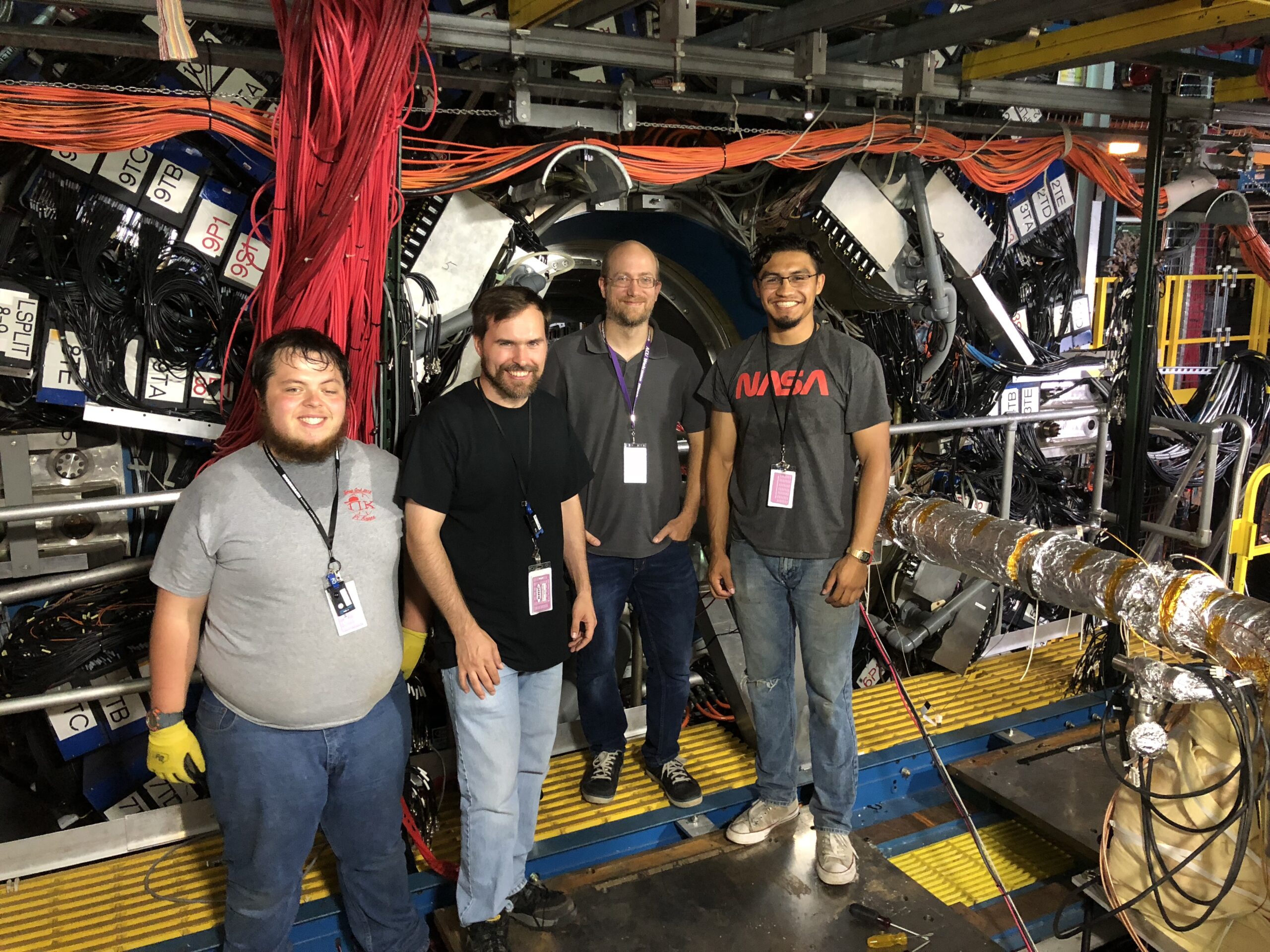
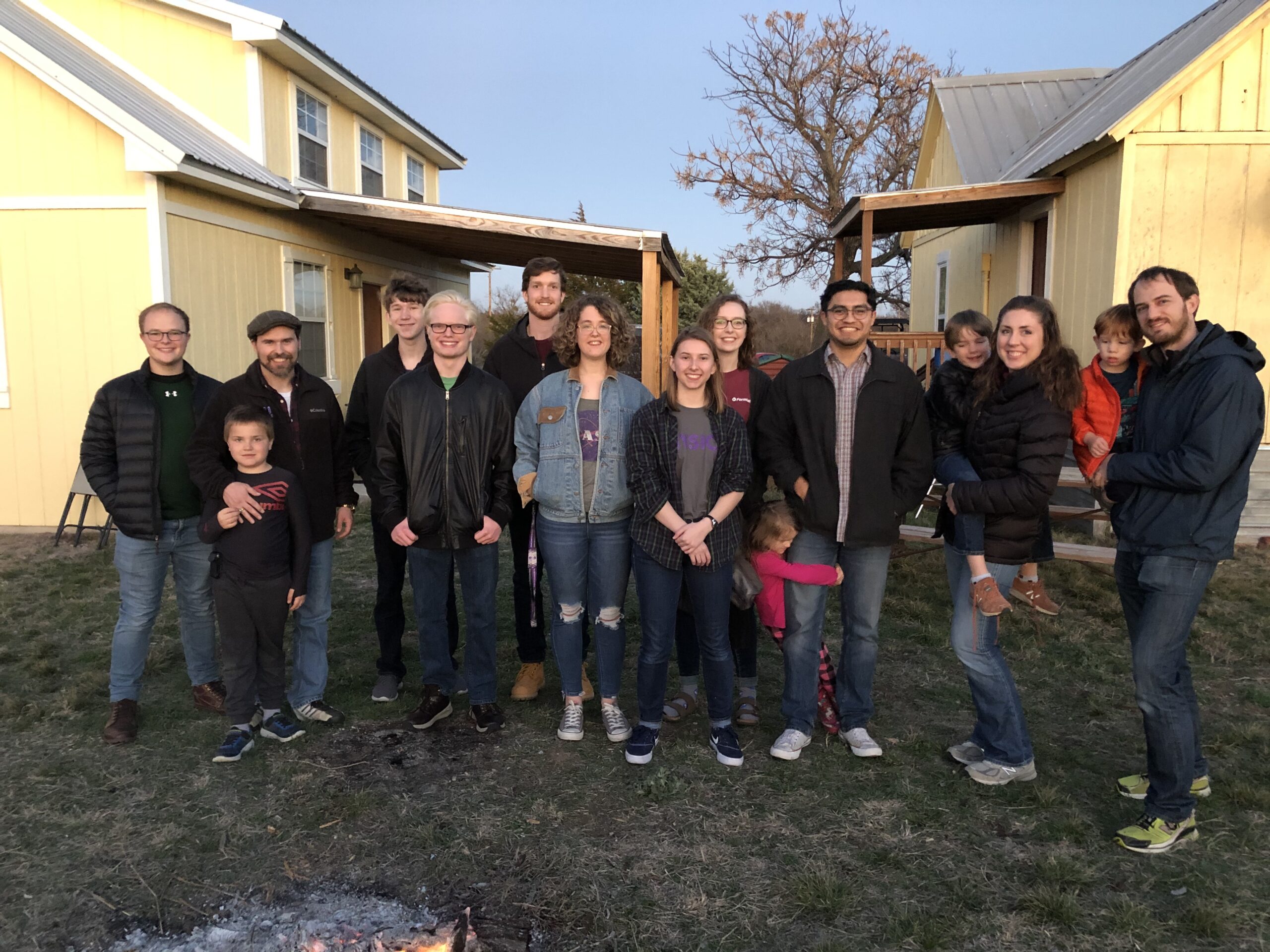
Where I have grown over the last several years is in a better recognition of why my relationships with them are so deep. I believe it is because of our shared identity and mission. ACU is unique. On STAR, I share a goal with my collaborators, namely a greater understanding of the natural world. At ACU, I share that same goal but with a mission: to know and love my God more deeply. At Lamar, I shared a goal with my colleagues, namely to guide my students to an understanding and wonder for the physical laws that govern nature. At ACU, I share the same goal but with a mission: to inspire an awe for our Creator that drives them to pursue Him in everything they do. In my professional career, I have come to see how wonderfully peculiar we are in that respect; and that shared peculiarity can only drive us to deeper partnership.
In the next section, I will outline some of the specific ways I have met my department’s expectations for collegiality. I hope that throughout my portfolio, you can see evidence of collegiality in each of the other categories (teaching, scholarship, and service). I have been an active participant in department meetings and discussions; and from those discussions I have grown in concrete ways as a teacher, e.g. the computational initiative, as a scholar, e.g. broad collaboration with the forward upgrade project, and as a servant, e.g. joining the Undergraduate Research Festival planning committee. I have largely focused on positives, as that is truly my honest assessment of the state of our department. We have had, at times, areas of profound disagreement. I will admit that I have felt in the minority or on the “outside looking in” with some of those disagreements and even in their resolutions. However, I believe my record reflects an ability to respect the various viewpoints of my colleagues and to maintain relationship and shared mission despite those disagreements. I believe I have grown from them, and I believe we are stronger from having navigated those moments together. I have certainly seen it done very differently, and I am truly grateful for what we have at ACU.
Another area where I have grown is extending my relationships outside the department. At Lamar, I made an effort to form relationships outside the department, e.g. through the STEM active-learning initiative, however, it was difficult as a young professor to find time to do this in significant ways, while also building my courses. I believe I have grown in my ability to manage this at ACU. I have continued simple general activities such as participating in college and university meetings, but I have also been intentional to take advantage of smaller or more specific opportunities. I have participated in periodic lunch discussions with other faculty and President Schubert. Through these discussions, I have been able to hear from and interact with faculty from across campus on many different topics. I have attended events hosted by different departments, e.g. the Lunch with Kasey S. Pipes event hosted by the Department of Political Science and Criminal Justice and the ACU Center for Building Community. Through this interaction, I was able to share a lunch with members of a learning community quite different from my own and to hear a lecture and Q/A with a Nixon biographer addressing interesting topics and issues well outside my area of expertise. During the Spring 2020 semester and throughout the summer of 2020, I increased my participation with the Adams Center to learn from colleagues experienced with the tools of the virtual classroom. As a practical matter, my own courses benefitted significantly from these interactions, e.g. in dramatic improvements to my Canvas course. However, out of these interactions with people from across the university grew other opportunities, such as presenting in the Canvas Course Showcase and co-leading an Adams Center reading group on Small Teaching Online with Dr. Shelly Sanders. As a final example, I have worked with Dr. Kendra Jernigan from the Department of Agriculture and Environmental Sciences to co-teach an honors colloquium. Using her expertise in environmental science and my expertise in physics, we look at some of the structures and dynamics behind life and living organisms. It has been a wonderful opportunity to see ways that our different fields related to each other and the different ways of approaching an understanding of the world around us. I look forward to continuing my work with faculty from across the university in formal and in informal settings.
<<< Service to the University Department Criteria for Collegiality >>>