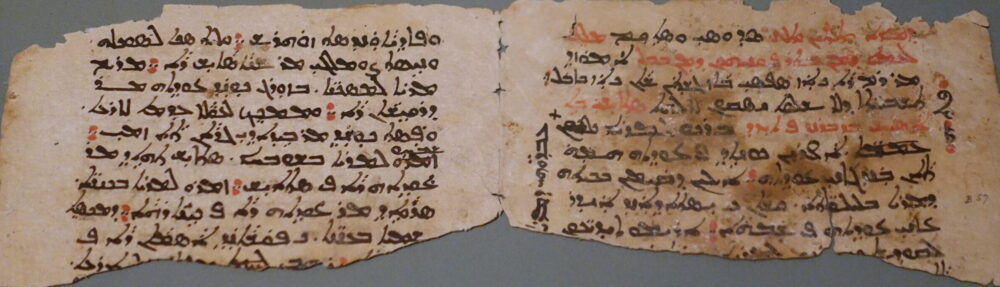
I have taken significant steps forward since my pre-tenure review in 2019. In addition to the four items that have been published since 2019, I have submitted three other pieces for publication, including a volume of translations that is in the final stages of editing. I’m currently waiting on the second round of proofs. I have also made significant progress on my edition and translation of two of John of Dara’s works. I am working on two articles related to John of Dara and the earliest manuscript that preserves a particular collection of his works. My research agenda is set for at least the next couple of years, and I’m already gathering materials in anticipation of the next big project, perhaps a study of Syriac Orthodox catechetical material related to the Nicene Creed. I feel good about the progress I have made, despite various constraints, including the pandemic.
The pandemic upset many of my research plans: all of the conferences I planned to participate in were canceled in 2020, and I spent the summer I had reserved for uninterrupted research adapting my residential classes for online delivery instead. At the same time, 2021 was the 1500th anniversary of Jacob of Serugh’s death, and I was invited to contribute a paper to a monthly online conference dedicated to Jacob’s legacy. (I was a little star-struck to be invited to participate alongside some of the most prominent scholars in Syriac studies!) Jacob of Serugh and his works are not really in my “wheelhouse,” but it was wonderful to have a reason to spend time with some of his metered sermons, written as they are with playful imagination and reverent awe. Not only was this enjoyable work, but it also provided an opportunity to contribute a book chapter and prepare some of my translations for publication. The collected volume of conference papers should be published in 2023.
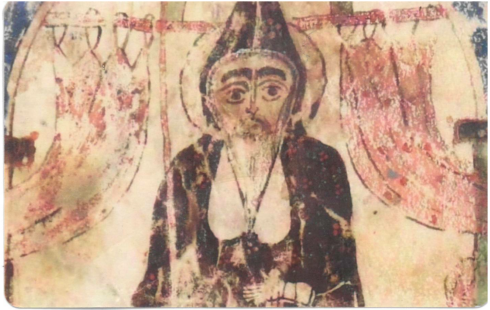
In putting together this portfolio, I was struck by how long the time between the submission of a piece and its publication can be. I know other early career scholars who hesitate to contribute to collected volumes for precisely this reason. I have usually chosen the slower route. It allows me to work collaboratively with people in my field, especially when I’ve been invited to participate in a conference or workshop. These volumes are edited by respected scholars in my field, they have been published by well-regarded academic publishers, and the standards for publication are high. For example, the 2019 Narsai volume is the first book dedicated solely to studies of Narsai, a significant East Syrian theologian and poet of the sixth century. It will be a valuable resource for scholars who study the Church of the East. As a researcher, it is much easier to pick up a collected volume on a subject than to track down articles in several different journals or books. I’m glad I’ve had a chance to contribute to the Narsai and Jacob of Serugh volumes, even if the publishing process has moved slowly.
The nature of the research that I do is also time-consuming. Many of the primary sources I work with have never been edited or translated into a modern language. Before writing a paper for presentation or publication, I have often spent many hours transcribing Syriac from manuscripts and translating it into English. I aim to balance my publications between editions and translations on the one hand and articles or other publications on the other. Making an ancient text available in print and in English translation opens up the opportunity for more conversation within my field and across theological and historical disciplines. I find producing translations deeply rewarding. It allows access to primary sources for scholars who do not know Syriac, contributing to the broader study of the history of global Christianity. At present, I am close to seeing, finally, the fruit of several years of work on some of John of Dara’s writings.
Research and writing are exhilarating and engrossing on their own, but my research also directly supports my teaching. In Theological Explorations, for example, I find that my students are more interested and engaged when we integrate material from my research. I have shared my prepublication English translations of primary source texts to illuminate a theme in the course material or to add complexity and depth to a class discussion.
The classes that I teach have also shaped my research in ways I didn’t expect. This is especially true for what I look for when I study an ancient source. For example, in my Historical Theology class, I have noticed that one can read many modern interpretations of fourth-century Trinitarian theologies and learn a lot about the development of technical terms, with only a passing comment or two about how worship, scripture, and prayer influenced these theological developments. When one reads the primary sources, however, references to prayer, scripture, and worship—especially vital Christian practices like baptism and communion—abound. I’ve started paying much more attention to how the ancient traditions of communal worship reinforced certain interpretations of scripture and the systematic theology that grew from them. Teaching this topic in a class with thoughtful, budding practical theologians has helped me to ask new, often better, questions about primary sources I’ve read many times before.
Next page: Service