
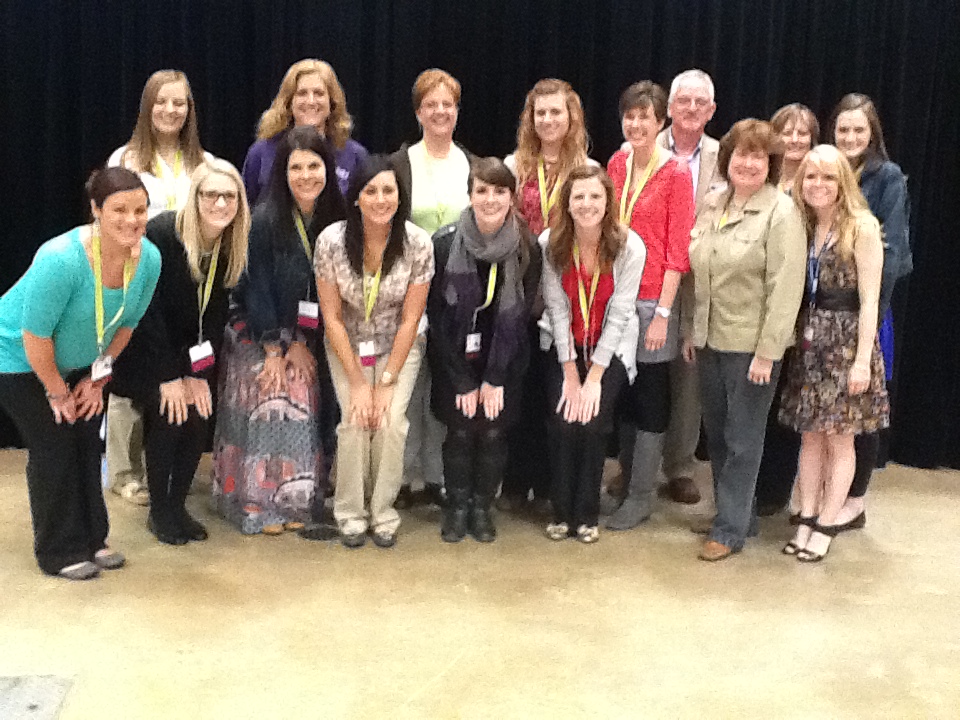
Student mentoring: Faculty and graduate students attend the annual TSHA convention
Our department is relatively small, with six full-time faculty members, one adjunct instructor, and an administrative coordinator/degree-plan adviser. The number of majors that we work with each semester is growing. I do not have official numbers, but I estimate that our census of majors in 2008 (when I arrived) was approximately 80-90, including 22 graduate students. Now I would estimate that our number of majors at the undergraduate level is 120+, and our number of graduate students is 42–for a total over 160. There are many factors to which this growth may be attributed, including the proliferation of jobs in health care and related fields, but I believe that part of the reason for our department’s growth is that we are known for being a department that values relationship. Being “relational” with colleagues and students is a value that the faculty has selected and highlighted for our department. As such, student mentoring, both formal and informal, is a significant part of what we do. In this section I will highlight four ways in which I participate as a mentor and adviser to students.
1) Faculty mentor for undergraduate majors: each faculty member is assigned approximately 30 undergraduate majors for whom they serve formally as mentors. The students also work with the degree plan adviser to select and register for the correct courses each semester, but many students want to understand better how the choices they are making will influence their future career. These conversations happen with the faculty mentor. I engage in the following activities to ensure the well-being of the students that I mentor: communicating with them and making certain that they know of my availability; following up on (offering to meet with) any students who appear to be experiencing academic, spiritual, or social difficulties; and meeting with students to converse about possible career directions, minors, electives, and career development possibilities such as internships or shadowing opportunities.
2) Research mentoring: I have mentored the research of four teams of graduate students (and now working with the fifth) and the Honors Capstone research projects of two senior honors students. The graduate student research is usually connected to my own research in service delivery in culturally and linguistically diverse populations; however, occasionally I mentor students in areas related to other interests such as (currently) service delivery models in school-based practice. When mentoring I meet with the students frequently, provide guidance and feedback on their research questions, data collection strategies, and analyses, and edit their reporting of the results. These efforts have lead to four shared poster presentations at annual conventions of the Texas Speech-Language-Hearing Association in 2010, 2011, 2012, and 2013.
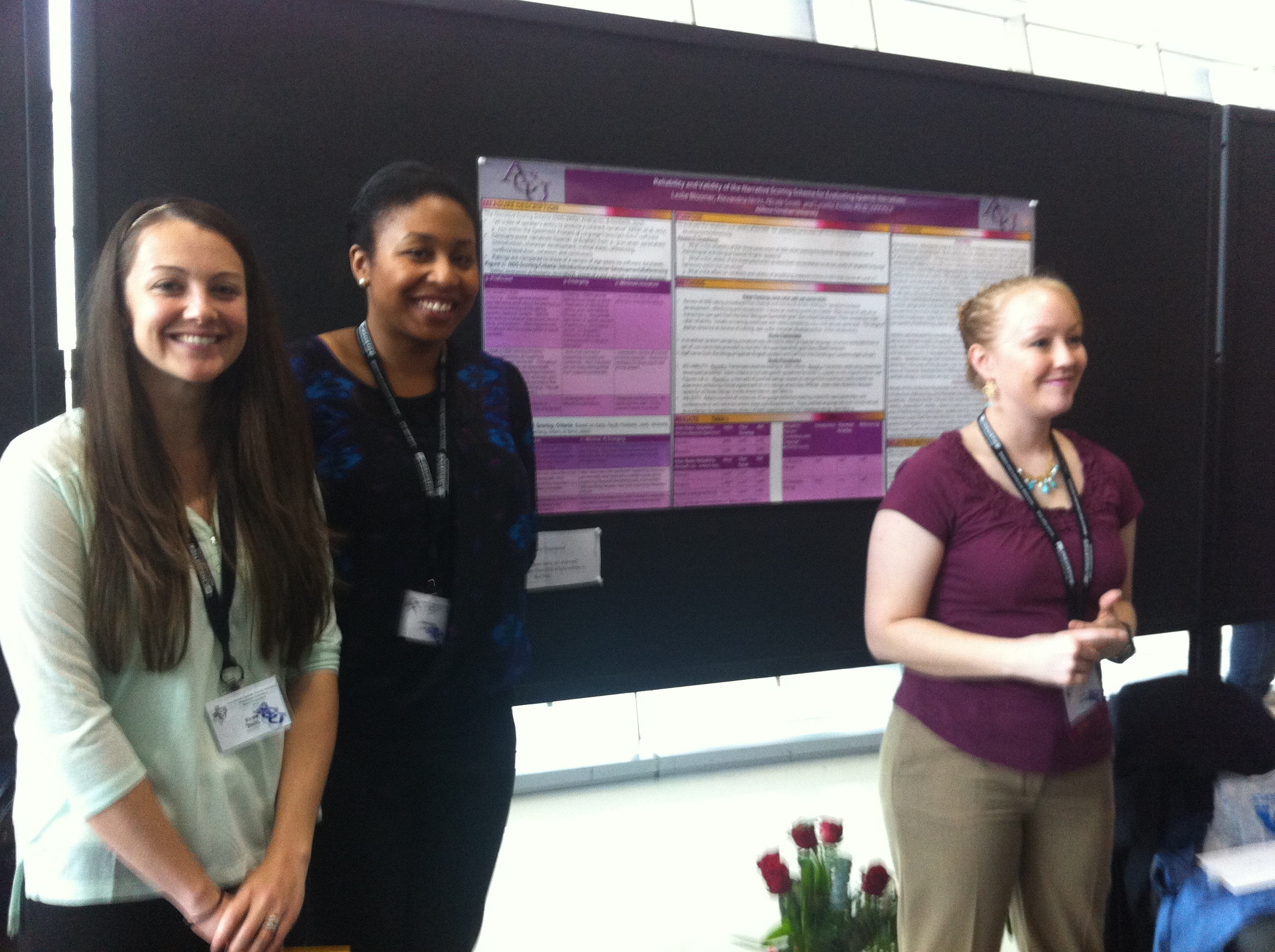
Graduate student group working under my guidance presents research
3) Bilingual Emphasis Program: Within the department I have been gratified to be able to initiate a structured mentoring/teaching program for preparing Spanish-English bilingual speakers to practice as bilingual speech-language pathologists. With the assistance and support of my department chair, Brenda Bender, I designed and now coordinate a specialization within the M.S. degree in communication sciences and disorders which provides the necessary extra academic and clinical preparation for these students as well as assessing and confirming their degree of Spanish-language proficiency.
I applied for and was given an ACU Faculty Enrichment grant during the summer of 2009 in order to engage in the extra work needed for this effort. Preparing for this program meant researching the other seven (approximate; the number changes) bilingual specialization tracks within programs in the state of Texas as well as a number from outside the state. After reading and visiting with other faculty, I designated a program of specialized study and clinical experience, and developed a means of language proficiency testing using both formal and informal measures, which made our program both doable and comparable to what is available at other schools. The program parameters are outlined in this document:
Bilingual Emphasis Program structure–revised January 2013
The program necessitates providing some specialized coursework. This is achieved by collaborating with other faculty members in order to integrate a bilingual focus into research and disorder-area courses, as well as provision of one specially developed, focused course which I currently teach as a guided study. This course, Lifespan Language and Communication Development and Disorders In Spanish- and Spanish-English Bilingual Speakers, is taught each spring to students enrolled in the program.
I also provide assessment and guidance for students who, though they speak Spanish, still need to develop their skills. Spanish-language coursework is not required, but an intermediate-to-advanced level of proficiency is the target and I assist students in organizing language study and locating resources to help them reach that goal.
Students exit the programing taking with them a letter of credential signed by myself and Dr. Bender, detailing their specialized coursework, applicable clinical experiences, and current level of Spanish language proficiency as assessed by the Oral Proficiency Interview–Computerized (OPIC). Below is a sample of the letter of credential
Bilingual Emphasis Program_sample letter of credential given on completion
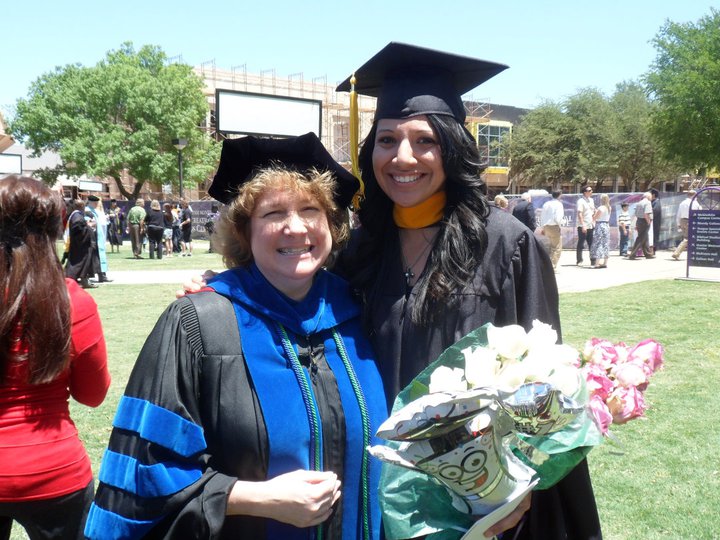
BEP graduate Monica with Lynette Austin
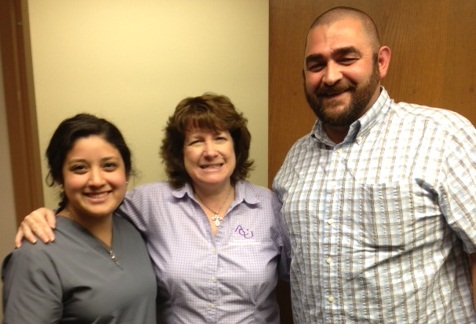
Current BEP students Ramiro and Kristi
As noted, the program is designated the Bilingual Emphasis Program (BEP). To date four graduates students have completed the BEP, (two in 2011, one in 2012, and one in 2013) and three other students who lacked second language proficiency have participated in components of the program because of their interest in the area. Currently, three students are on track to complete the program in May of 2014, and two new first year graduate students are embarking on language proficiency testing to determine their eligibility to participate. Our four graduates are now recognized and employed as bilingual SLPs (with at least two receiving extra stipends because of these credentials). Below are letters of affirmation of the program from three graduates, as well as a note from a participant who, though not completing the program in its entirety, participated in several components of it.
ACU Bilingual Emphasis Program_Leslie Bloomer
ACU Bilingual Emphasis Program_Monica Garcia

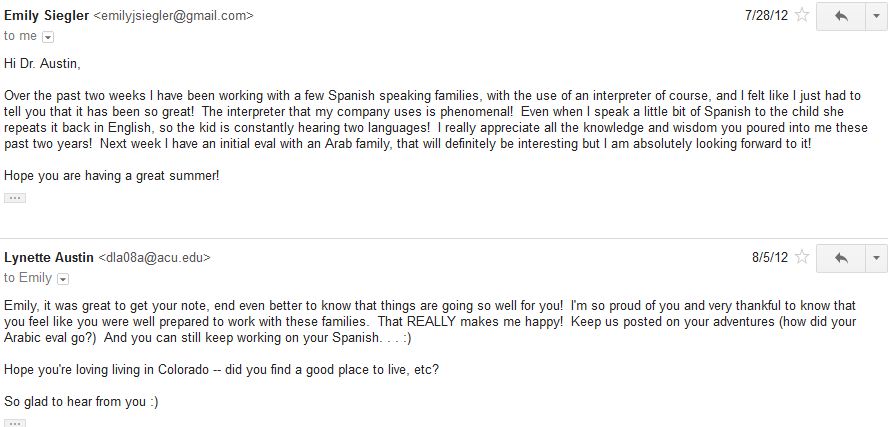
4) Study Abroad for Pre-Health Majors in Montevideo, Summer 2012: a very special mentoring opportunity was provided by the invitation to join Dr. Cynthia Powell in Montevideo for a summer session in 2012, with students in pre-professional programs for various healthcare-related careers. These included pre-med students, pre-nursing students, and four pre-speech-language pathology students. (I also mention this experience in the Collegiality section of this portfolio). A total of 13 students accompanied us on the trip.
Living, teaching, worshiping and working with these students for seven weeks provided me with unparalleled opportunities to share with and listen to them. One of my roles on the trip was to teach a required majors course, Hearing Rehabilitation (ComP 353), while assisting Dr. Powell in teaching a course in Global Healthcare. A particularly rich experience was the opportunity to arrange and participate with (and interpret for most of) my CSD majors in shadowing and service-learning opportunities having to do with communication disorders. I was able to make contact with Uruguyan speech-language pathologists who invited us into hospitals and clinics to observe.
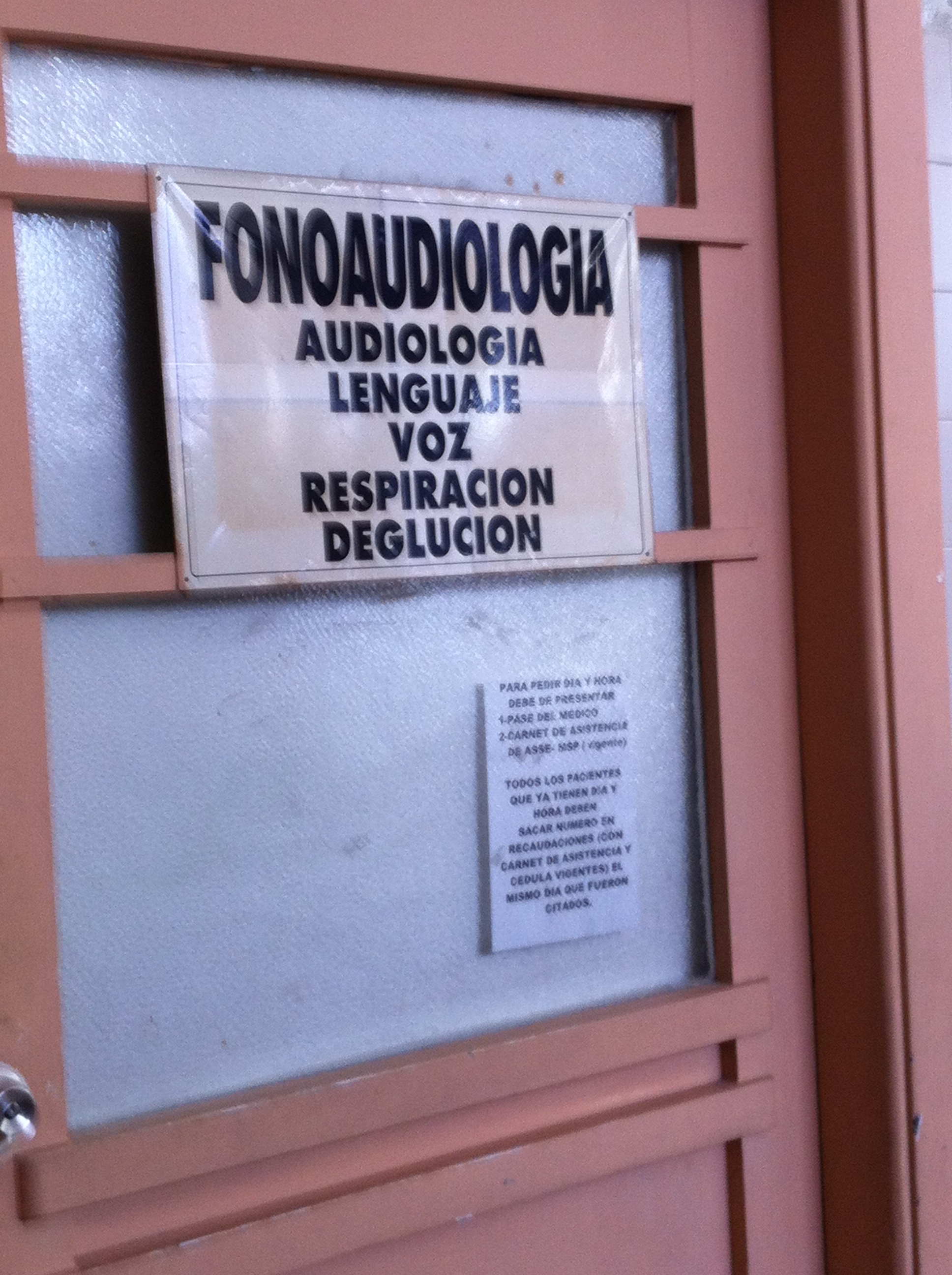
Speech and language therapy at a local hospital in Montevideo where ACU students shadowed therapists.
My students mingled with their Uruguayan peers in a clinical practicum placement at a children’s hospital. Both sets of students had questions for their counterparts, leading to interesting conversations.
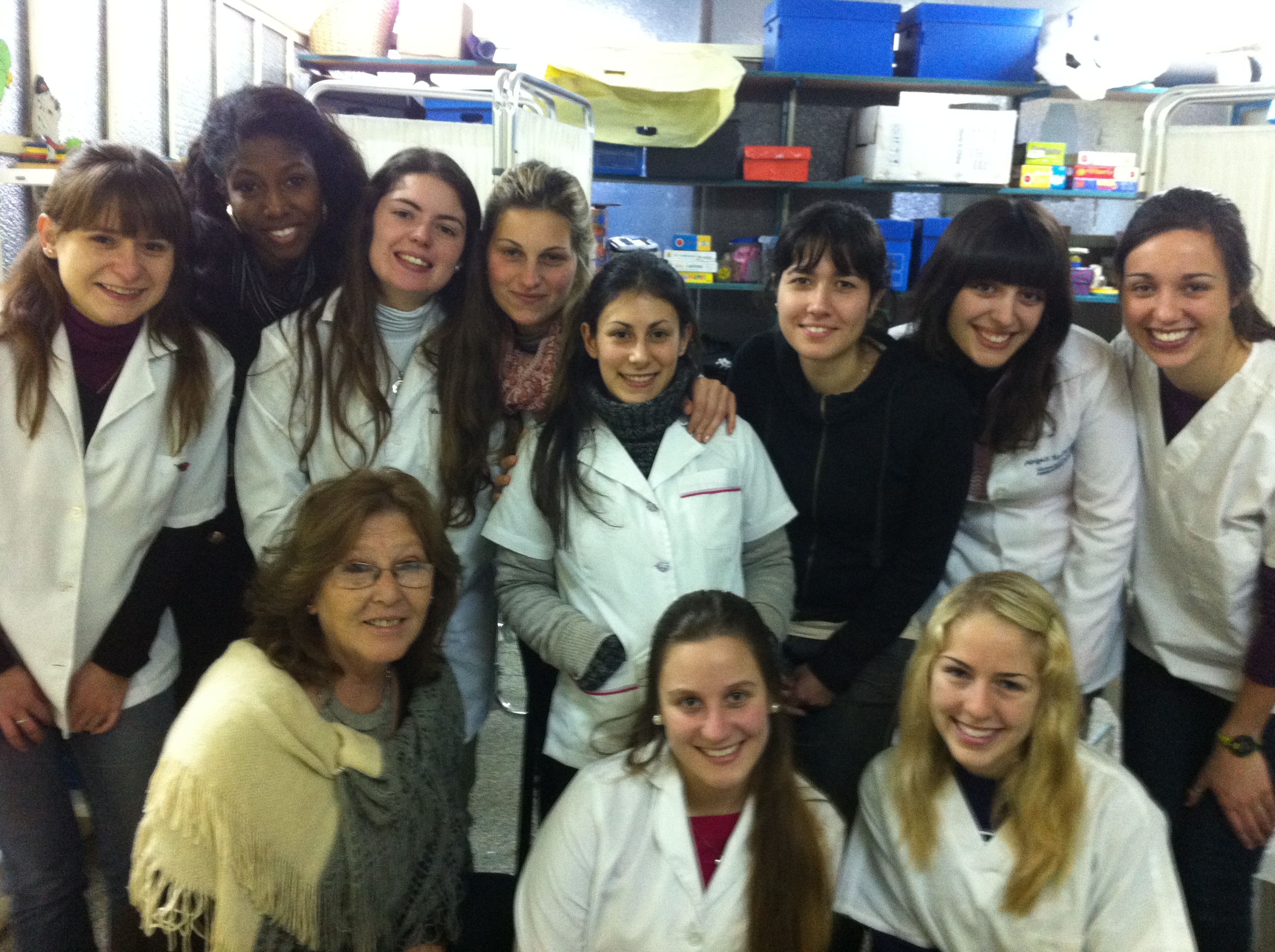
ACU students meet speech-language pathology students from the Universidad de la Republica (Uruguay) who were engaging in clinical practicum at a children’s hospital. Pictured, Trina (bottom right), Kelsey (back right), and Denysha (very back, left.)
Finally, through the efforts of our host couple, Wimon and Rosalinda Walker, the students were able to provide communication support under my supervision for children with severe disabilities at a special school. My students’ intense engagement in each of these activities was highly rewarding!
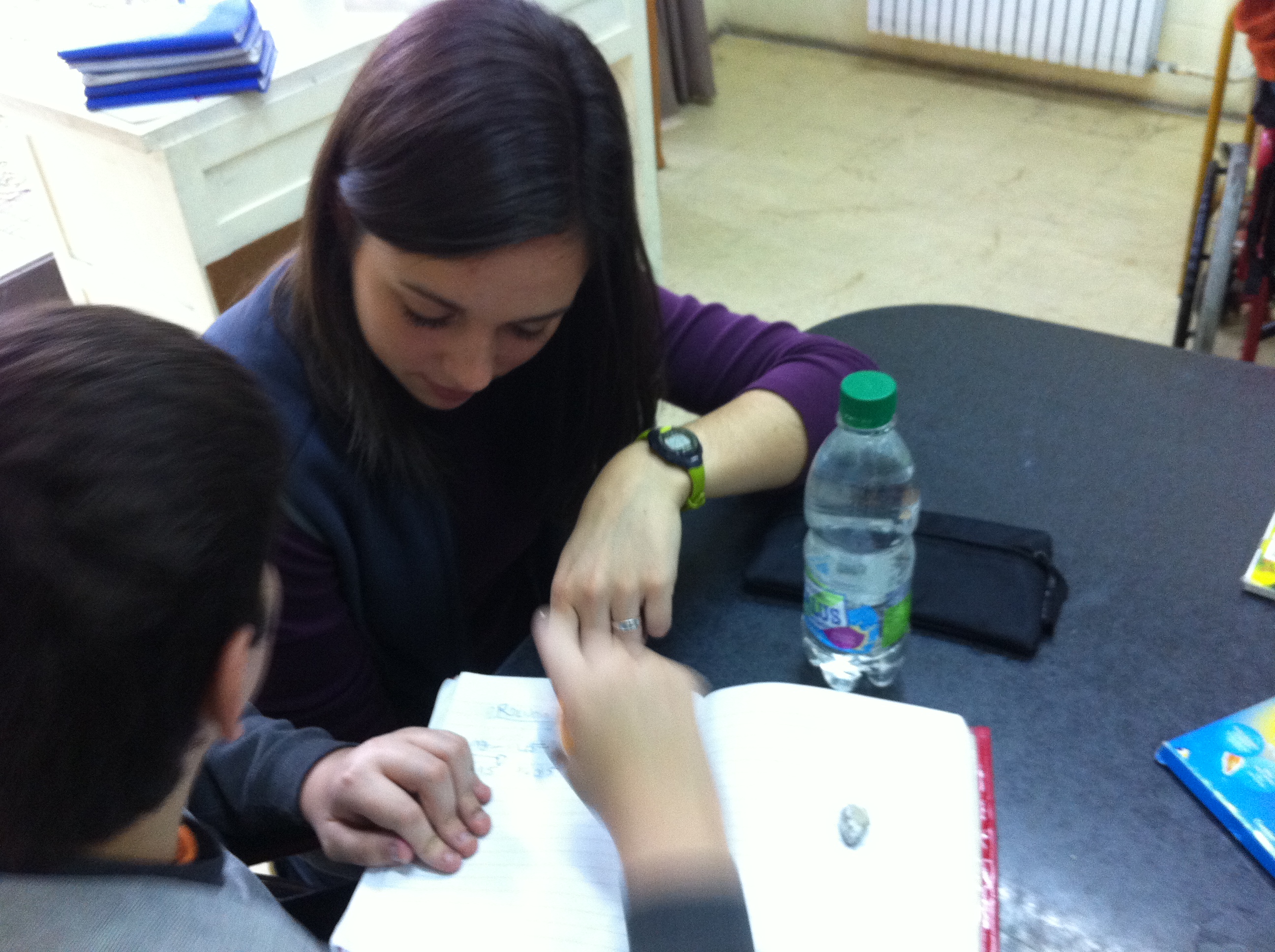
Undergraduate student Kelsey provides communication assistance at a school for children with severe motor and intellectual disabilities in Montevideo.
Next. . . Integration of Faith and Learning