by M. C. Jennings | Nov 19, 2015 | Academics, COBA Faculty, Current Students, Research, Uncategorized
I am enjoying my research with Dr. Ryan Jessup about the applications of Google’s page rank algorithm to other uses, including ranking sports teams. Believe it or not, this stuff actually relates to the courses that I teach at ACU. This data crunching and analysis of college football results involves statistics, mathematical optimization and model fitting, and cause-effect analysis, all of which relate to the 3 courses that I am teaching this semester: Statistics, Management Science, and Quality Management.
Now, about the title of this blog post. I am a proud Aggie Industrial Engineer, and it hurt my pride enormously when my Aggies dropped from our carefully calculated rank of 32 to 52 after the Saturday November 14th weekend. You see, our algorithm does not accept game results when a big school like Texas A&M plays “Roast Beef Tech” (with apologies to Western Carolina fans). So, A&M dropped in our rankings below such traditional football powers as Bowling Green and those unworthy academic establishments in Austin and Lubbock, Texas. Wow. That hurts.
by M. C. Jennings | Nov 17, 2015 | Academics, COBA Faculty, College Decisions, Current Students, Human Resource Management, Uncategorized
Senior management major, Hayley Griffin, was honored at the HR Southwest Conference (HRSWC) on October 26th, as she was one of four students who received The Excellence in Education Student Scholarship. Recipients of this scholarship are chosen based upon their academic standing, involvement in their community and campus, and by recommendations of their professors, advisors and/or employers.
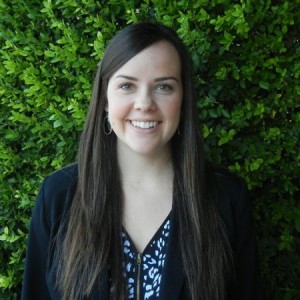
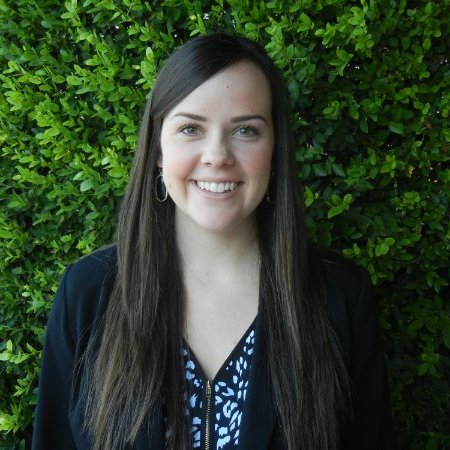
Hayley Griffin
Dr. Malcolm Coco, professor and SHRM Student Chapter Advisor, nominated Hayley for the scholarship. Dr. Coco said that Hayley has proven to be an outstanding employee, currently working in the ACU HR department and as a student assistant to the COBA marketing and recruiting manager. He touted Hayley’s intelligence, personable demeanor, abilities, accomplishments and work ethic. As the current president of the SHRM student chapter, he said that Hayley has shown initiative and leadership as she attends professional chapter meetings and has supported the chapter’s request for student chapter involvement in joint activities and research. Hayley is also treasurer of the women’s social club Sigma Theta Chi, a member of Phi Eta Sigma Honor Society and is on the Dean’s Honor Roll.
Dr. Coco went on to say that, “Whether she is performing volunteer work for Meals on Wheels, Habitat for Humanity or volunteer tutoring for an elementary school, she is always totally engaged. The bottom line is that Hayley continues to excel in every aspect of her life and has demonstrated superb initiative and leadership. She is the epitome of an all-around outstanding person. Whether it is academics, service to the community, involvement in campus activities, she is always leading the way. She is a top drawer person.”
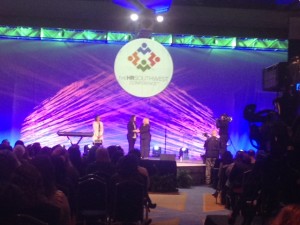
Hayley receiving The Excellence in Education Scholarship
The HRSWC is a regional human resources conference held in Fort Worth every October. The conference is a 3 day event filled with educational sessions, keynote speakers, and networking opportunities. The educational sessions focus on 8 different areas in HR ranging from benefits to HR development to recruiting the best talent. This year the keynote speakers were David Pogue, the founder of Yahoo Tech, and Soledad O’Brien, the founder of Starfish Media Group.
As a student attending HRSWC, Hayley said, “There are so many outstanding networking opportunities to grow your professional network. There is a market place in the convention center that over 200 companies set up booths to tell people about their company and solutions, so it’s almost like networking heaven! There are some educational sessions geared towards students and how to go about the internship/job search, how to network, and how to get the most out of the conference. This year my favorite session was titled ‘Essential Global Recognition and Engagement Insights’. The speaker presented research that was conducted on different companies across the global market and the differences in how incentive pay and culture are linked. For example, in Brazil, employees expect to be recognized differently than here in the US, in India, or in the UK. It was interesting to hear about cultural differences like this and I am looking forward to being able to use what I learned not only from this session, but the entire conference, into my future career.”
The Society for Human Resource Management student chapter is sponsored by the local professional human resources chapter. There are 27 professional and student chapters in the state of Texas. The Big Country SHRM is ACU’s sponsoring chapter and provides all types of support for the student chapter. Student officers are part of the professional chapter’s executive committee and regularly attend monthly meetings. The student chapter members are also invited to attend each month’s chapter meeting to hear the presentation for that month. The Big Country SHRM also supports the students by offering scholarships for attending the state SHRM annual conference and the student leadership conference. The student chapter provides support for the professional chapter by conducting surveys to gather information from its members and provides support for professional chapter activities.
The student chapter is one of 27 in the state of Texas and over 400 nationally. Over 10,000 students belong to SHRM student chapters. Each student must be chartered and sponsored by a professional chapter. ACU’s chapter is sponsored by the Big Country SHRM professional chapter. The Society of Human Resource Management is the world’s largest association devoted to human resource management. The society serves the needs of HR professionals and advances the interests of the HR profession. Founded in 1948, SHRM has more than 225,000 members in over 125 countries, and more than 575 affiliated chapters. Visit shrm.org
by M. C. Jennings | Nov 16, 2015 | Uncategorized
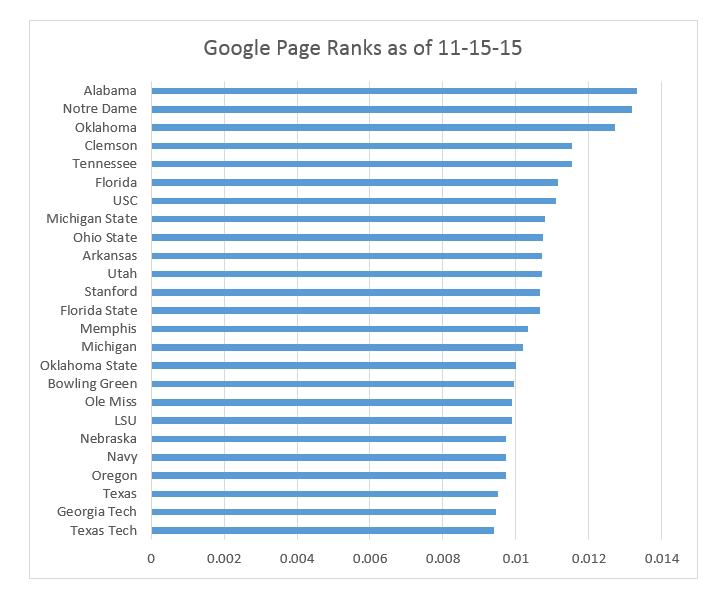
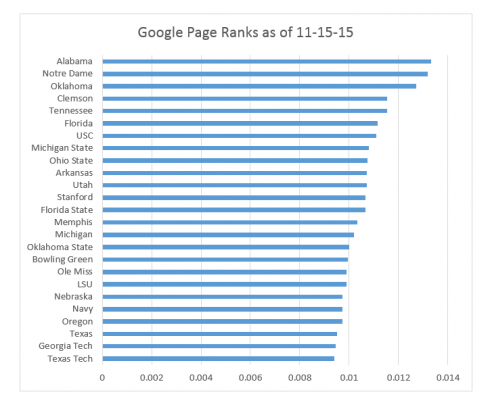
Here are the JP College Football Rankings after the 11th week of the season. (See our first post for a brief explanation of our methodology and find last week’s post here.) After two consecutive weeks of Notre Dame and Clemson at the top we have a new #1 this week, Alabama, after consecutive impressive wins over strong teams: LSU (#19) and Ole Miss (#18). Notre Dame fell one spot to 2nd and Oklahoma moved up to 3rd, bumping Clemson into 4th place. Four loss Tennessee remains in our top 10, largely due to their impressive away performances against Alabama and Florida (#6) a few weeks back. Similarly, Texas is 23rd, almost entirely due to their victory against Oklahoma several weeks ago. Undefeated Ohio State finally broke into our top 10 at 9th place, one position ahead of Arkansas who continue to play well against top teams. Ohio State will play #8 Michigan State in Ohio this weekend. Our model would expect a very narrow home win (4 points or less). The other undefeated teams are Oklahoma State falling one spot to #16, Iowa falling 6 to #41, and Houston rising two to #47. Baylor rose 5 spots to #55 as they apparently performed slightly better in their home loss against Oklahoma than our system expected. The top 50 teams are listed below.
| 1 |
Alabama |
| 2 |
Notre Dame |
| 3 |
Oklahoma |
| 4 |
Clemson |
| 5 |
Tennessee |
| 6 |
Florida |
| 7 |
USC |
| 8 |
Michigan State |
| 9 |
Ohio State |
| 10 |
Arkansas |
| 11 |
Utah |
| 12 |
Stanford |
| 13 |
Florida State |
| 14 |
Memphis |
| 15 |
Michigan |
| 16 |
Oklahoma State |
| 17 |
Bowling Green |
| 18 |
Ole Miss |
| 19 |
LSU |
| 20 |
Nebraska |
| 21 |
Navy |
| 22 |
Oregon |
| 23 |
Texas |
| 24 |
Georgia Tech |
| 25 |
Texas Tech |
| 26 |
Pittsburgh |
| 27 |
Washington |
| 28 |
Mississippi State |
| 29 |
California |
| 30 |
South Florida |
| 31 |
TCU |
| 32 |
Louisville |
| 33 |
Wisconsin |
| 34 |
South Carolina |
| 35 |
UCLA |
| 36 |
North Carolina |
| 37 |
West Virginia |
| 38 |
Temple |
| 39 |
Minnesota |
| 40 |
Penn State |
| 41 |
Iowa |
| 42 |
Central Michigan |
| 43 |
NIU |
| 44 |
BYU |
| 45 |
Cincinnati |
| 46 |
Washington State |
| 47 |
Houston |
| 48 |
Virginia |
| 49 |
Virginia Tech |
| 50 |
Toledo |
by M. C. Jennings | Nov 6, 2015 | Academics, COBA Faculty, Research, Uncategorized
Dr. Ryan Jessup and Dr. Don Pope have teamed up to create the Jessup Pope NCAA Division I FBS rankings. Jessup, Assistant Professor of Marketing, teaches marketing research and data mining and Pope, Associate Professor of Management, teaches statistics and intro to management. These two great statistical minds decided to put their knowledge and experience to practical use in devising a new method of ranking college football teams. The blog today is written by Dr. Jessup as our COBA Blog guest writer.
I present to you the inaugural Jessup Pope NCAA Division I FBS rankings. This is a ranking of all 128 college football teams in the bowl subdivision based on the performances this season to date.
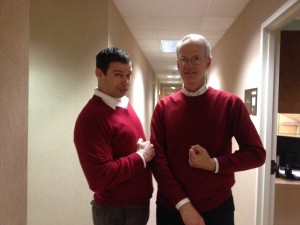
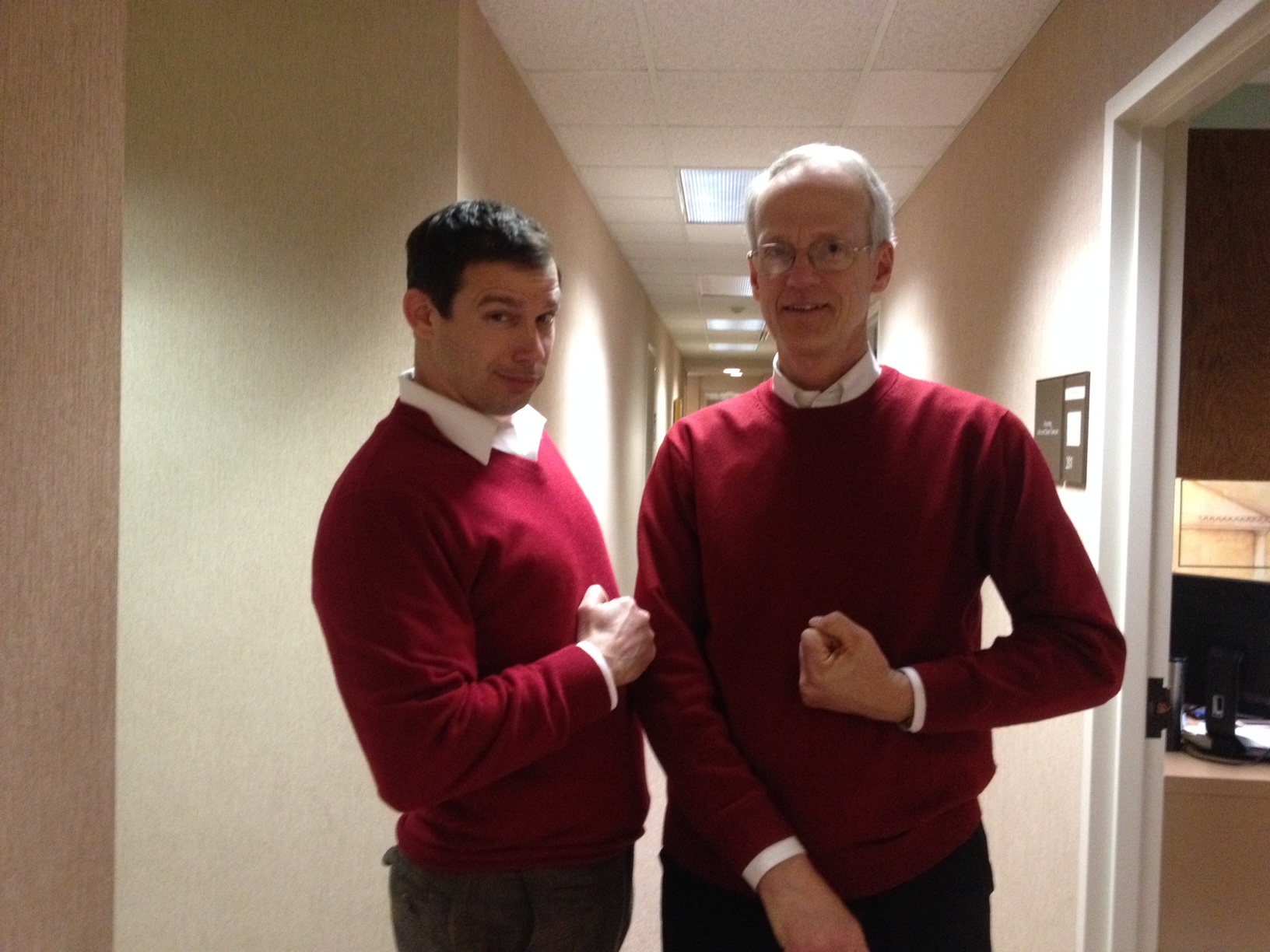
Dr. Ryan Jessup and Dr. Don Pope
A brief history
A few years ago, after the wildly improbable success of our faculty/staff intramural soccer team, the Sunflowers of Death (which is a topic for another time, but suffice it to say that we have finished 2nd place in 4 out of the 7 seasons we have played), we wanted to come up with a better way to rank sports teams.
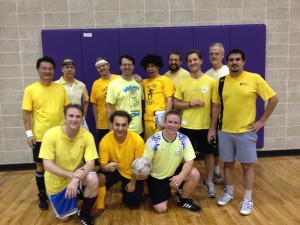
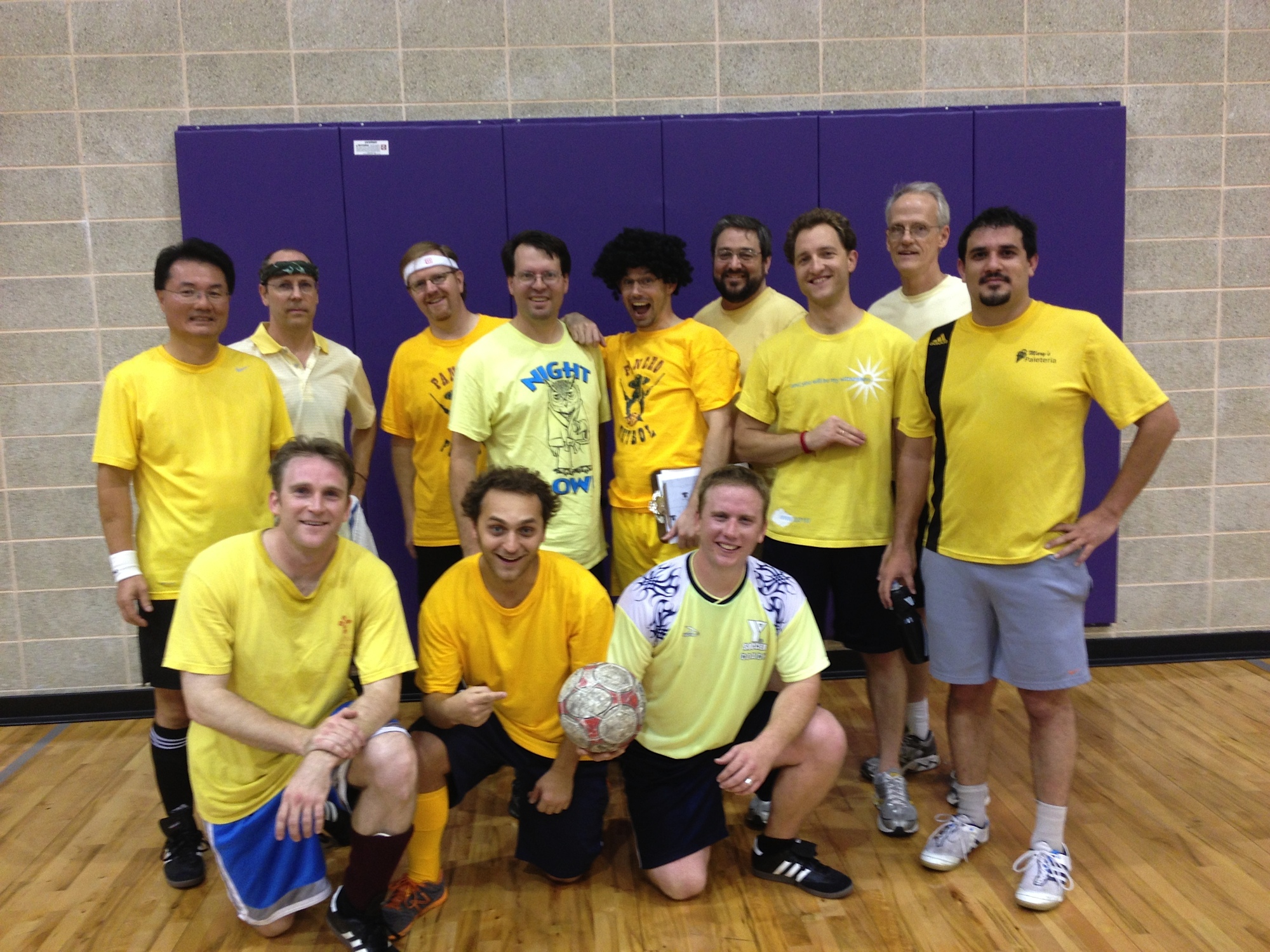
The Sunflowers of Death
With the help of our then-student worker, Amy Morris, we collected the data from multiple seasons of a variety of sports. Don Pope and I then took the Google PageRank algorithm, the algorithm that jump-started the search engine giant – and still underlies their current approach today – and made several modifications to it to allow it to rank teams, instead of webpages. We also enabled it to account for home field advantage and temporal decay of performances (this is where games early in the season weigh less in the rankings than more recent games), among other things. We then forecasted bowl games at the end of three seasons, finding that our algorithm correctly predicted the winner (1) more than 60% of the time, (2) better than the BCS (or its replacement, the College Football Playoff), and (3) even out-predicted the Las Vegas betting line 56% of the time. We presented this work at the Christian Scholars Conference in Abilene this past summer. More recently, with the help of several faculty in the SITC, most prominently Dr. Ray Pettit, I wrote a screen-scraper in python (a programming language) to scrape off all the information for each college football game so that we can begin looking at our rankings on a weekly basis.
The rankings
The effectiveness of the ranking system lies in the fact that it not only takes into account your team’s performance against other teams but also the other teams’ performance against other teams. So let’s take a quick look at these initial rankings. Some of these rankings accord with our expectations and others outrageously violate them. On one hand, quite reasonably, Notre Dame and Clemson are 1 and 2, and Alabama, Stanford, Michigan State, and Florida are all in the top 10. On the other hand, USC is No. 3, Texas is No. 16, whereas Ohio State and Baylor are No.’s 11 and 60, respectively, all apparently crazy! Given that they were just punished by Iowa State, I don’t believe that Texas is the 16th best team in the nation, but that aberrant win over Oklahoma at a neutral site is currently making Texas look very good. And what’s the deal with Baylor and Ohio State? Well, part of the issue is that Baylor and Ohio State are both in power conferences and began the season ranked in the top 5. Yet our system cares neither about which conference your team is in nor is it biased by preseason rankings: it only takes into account your team’s performances and the quality of the opponent (as judged by their performances against their opponents). So, apparently they have not played very strong opponents thus far.
I think as the weeks continue our rankings will begin to accord a bit more with our expectations but I won’t be terribly surprised if at the end of the season there are still some outrageous-looking rankings. You don’t beat the Vegas line 56% of the time by just heeding the status quo!
Here are our rankings at this time:
| Rank |
After Week 9 |
| 1 |
Notre Dame |
| 2 |
Clemson |
| 3 |
USC |
| 4 |
Florida |
| 5 |
Tennessee |
| 6 |
Alabama |
| 7 |
Oklahoma |
| 8 |
Stanford |
| 9 |
Michigan State |
| 10 |
Michigan |
| 11 |
Ohio State |
| 12 |
Utah |
| 13 |
Ole Miss |
| 14 |
LSU |
| 15 |
Georgia Tech |
| 16 |
Texas |
| 17 |
Washington |
| 18 |
TCU |
| 19 |
Mississippi State |
| 20 |
Wisconsin |
| 21 |
Florida State |
| 22 |
Virginia Tech |
| 23 |
Penn State |
| 24 |
Nebraska |
| 25 |
California |
| 26 |
Louisville |
| 27 |
Memphis |
| 28 |
Texas A&M |
| 29 |
Texas Tech |
| 30 |
Central Michigan |
| 31 |
Bowling Green |
| 32 |
East Carolina |
| 33 |
BYU |
| 34 |
Temple |
| 35 |
Oklahoma State |
| 36 |
Iowa |
| 37 |
Arkansas |
| 38 |
Pittsburgh |
| 39 |
Boise State |
| 40 |
UCLA |
| 41 |
Iowa State |
| 42 |
West Virginia |
| 43 |
Miami (FL) |
| 44 |
Northwestern |
| 45 |
Cincinnati |
| 46 |
Utah State |
| 47 |
Western Kentucky |
| 48 |
Oregon |
| 49 |
Tulsa |
| 50 |
Washington State |
| 51 |
Minnesota |
| 52 |
Boston College |
| 53 |
Louisiana Tech |
| 54 |
San Diego State |
| 55 |
South Carolina |
| 56 |
Auburn |
| 57 |
Virginia |
| 58 |
Houston |
| 59 |
South Florida |
| 60 |
Baylor |
| 61 |
Navy |
| 62 |
North Carolina |
| 63 |
NIU |
| 64 |
Kansas State |
| 65 |
Duke |
| 66 |
Georgia |
| 67 |
Purdue |
| 68 |
Connecticut |
| 69 |
Maryland |
| 70 |
Appalachian State |
| 71 |
Western Michigan |
| 72 |
Toledo |
| 73 |
Arizona State |
| 74 |
Vanderbilt |
| 75 |
NC State |
| 76 |
Syracuse |
| 77 |
Indiana |
| 78 |
Wake Forest |
| 79 |
Missouri |
| 80 |
Southern Miss |
| 81 |
Marshall |
| 82 |
Ball State |
| 83 |
Kentucky |
| 84 |
Georgia Southern |
| 85 |
Illinois |
| 86 |
Massachusetts |
| 87 |
SMU |
| 88 |
Air Force |
| 89 |
Arizona |
| 90 |
Buffalo |
| 91 |
Troy |
| 92 |
Oregon State |
| 93 |
Colorado |
| 94 |
Wyoming |
| 95 |
Colorado State |
| 96 |
Akron |
| 97 |
FIU |
| 98 |
Arkansas State |
| 99 |
Rutgers |
| 100 |
Ohio |
| 101 |
UTSA |
| 102 |
UNLV |
| 103 |
Middle Tennessee |
| 104 |
Hawaii |
| 105 |
Florida Atlantic |
| 106 |
UCF |
| 107 |
Eastern Michigan |
| 108 |
Miami (OH) |
| 109 |
Nevada |
| 110 |
San Jose State |
| 111 |
Tulane |
| 112 |
Rice |
| 113 |
Kent State |
| 114 |
Idaho |
| 115 |
Louisiana Monroe |
| 116 |
South Alabama |
| 117 |
Texas State |
| 118 |
Army |
| 119 |
Fresno State |
| 120 |
Kansas |
| 121 |
Louisiana Lafayette |
| 122 |
New Mexico |
| 123 |
New Mexico State |
| 124 |
North Texas |
| 125 |
Georgia State |
| 126 |
UTEP |
| 127 |
Old Dominion |
| 128 |
Charlotte |
by M. C. Jennings | Nov 4, 2015 | Uncategorized
What is your educational background?
BS Chemistry from ACU (1988), MS Industrial Administration from Purdue (1989), and PhD Organization and Management from Capella (2005).
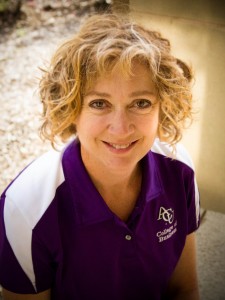
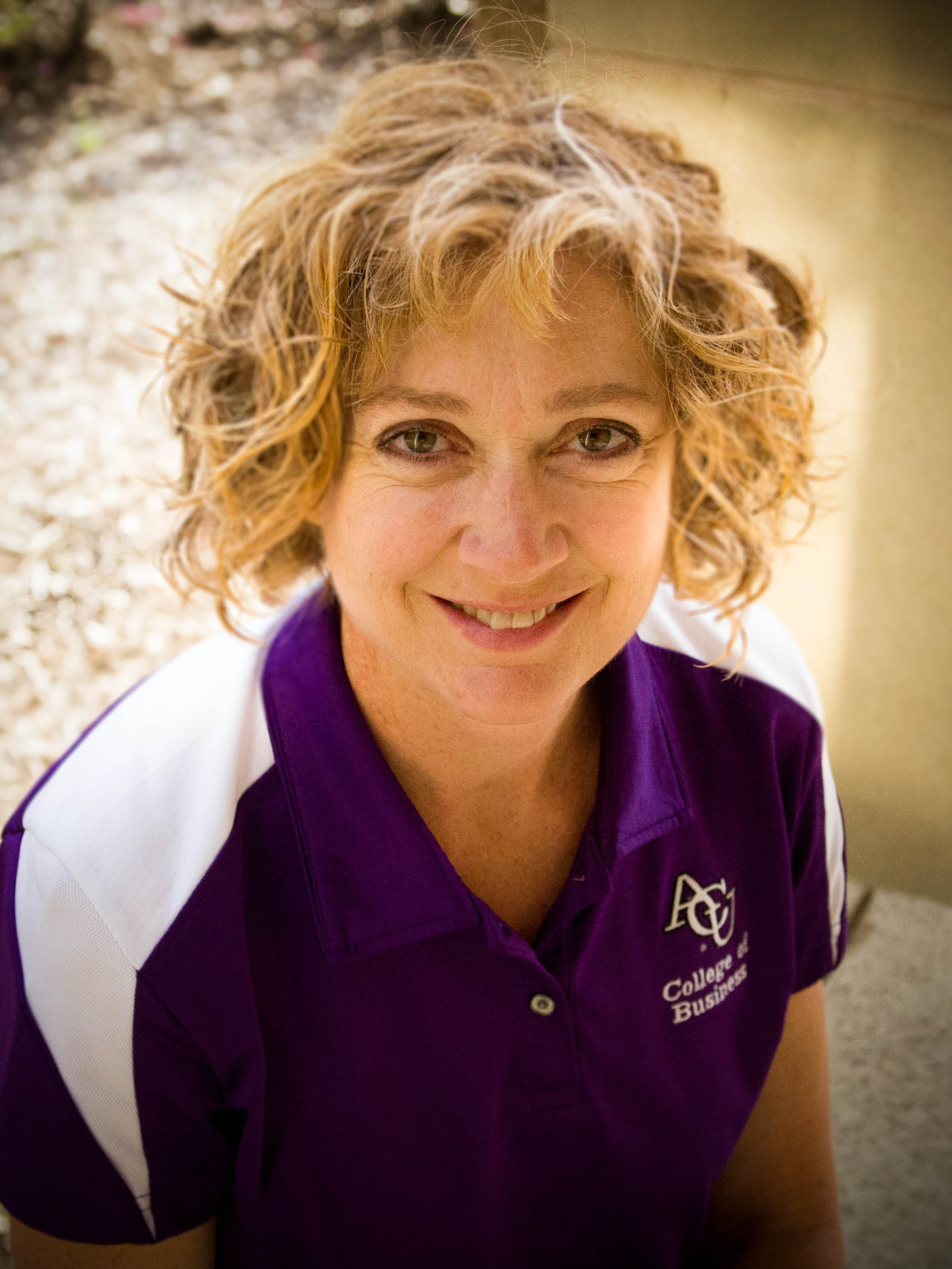
Dr. Laura Phillips
What is your work background?
I worked as a Financial analyst at Eli Lilly and Company (1989-1993) and then with the Franklin Church of Christ, part-time (1997-2001).
What do you teach at ACU?
Business Statistics and Social Entrepreneurship.
What committees/other duties do you have at ACU aside from teaching?
I serve as the NCAA Faculty Athletic Rep for ACU and Mark and I are the Faculty-in-residence at McDonald Hall.
What drew you to teaching? Why did you want to work with students?
I didn’t originally know that’s what I wanted to do. My plan when I went to get my PhD was to do nonprofit consulting when I graduated. A faculty position opened up, somewhat suddenly, in COBA about the time I was finishing up my degree, and I decided to try teaching. I started teaching one week after I defended my dissertation.
What’s the best part of working with students?
I enjoy watching the students work through the college process: learning to balance work/school/fun, trying to decide what to do after college, learning new things in the classroom, engaging in new experiences, taking on leadership roles, etc.
Outside of teaching, what passions and hobbies do you have?
Traveling, cycling, hiking, kayaking, trying new things, cooking, working out, being outside, collecting hobbies.
-
-
Exploring the Northwest
-
-
Because who doesn’t surf for the first time in Canada?
-

-
COBA’s exploring couple, the Phillips
What is a good, early story about your teaching?
I started teaching one week after finishing my PhD. I had three sections, two different preps, and I had never taught before. I was exactly one week ahead of the students in the book. Each week, I would read the chapter (for each class) to see what we were supposed to cover the next week. I had inherited a Tuesday/Thursday teaching schedule so my classes were an hour and twenty minutes long. There was NO WAY I could teach for that long all at once (I have no problem with that now!), so we had an intermission every day in the middle of class. Sometimes I had other faculty come in. I remember Jonathan Stewart coming in and playing a Bon Jovi song on his guitar.
Do you do any charity or non-profit work?
Not in the way you are probably asking, but I work with a number of nonprofit organizations through the social entrepreneurship class as well as through the global entrepreneurship class we’ll be teaching in Central America this summer. Also, much of my research is related to nonprofit work, so I interact with and support organizations through that.
Who is your role model, and why?
Maybe Pat Cranfill because I so admire the way she’s invested herself in the work with refugees who have been placed in Abilene. She is a regular person who is making an extraordinary difference right where she lives.
Who was your most inspirational professor and why?
Probably Eric Hardegree (Physical Chemistry). It was one of the hardest classes I had. He expected a lot in both the class and the lab (which met on Friday afternoons from 1-5pm for an entire year!), but he was also reasonable and willing to help us understand the topic.
If you could have a superpower, what would it be and why?
Superfast grading because that would free up so much time for more engaging activities. (Insert smiley face here.)
What is something that students might be surprised to find out about you?
I don’t know. I feel like I’m pretty transparent. Perhaps that I’m really clumsy or that I’m a pretty extreme introvert.
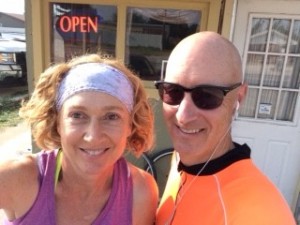
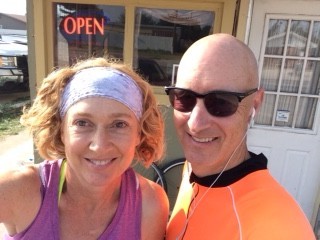
Mark and Laura Phillips enjoying breakfast after one of their many bike rides.
What would you really want students and alums to know about you?
That I teach just because I want to. I wouldn’t do it for free (because it’s VERY time consuming), but I feel that I am lucky to have a job that’s basically a paid hobby.
by M. C. Jennings | Oct 20, 2015 | Academics, Careers In..., COBA Faculty, College Decisions, Current Students, Faith Infusion, Uncategorized
What is your educational background?
I received my:
- Bachelor’s degree from ACU in 1976 (first graduating class of ACU, formerly ACC).
- MBA from Mary-Hardin Baylor in 1992
- Ph.D. from Texas A&M University in 2001
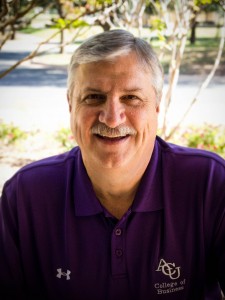
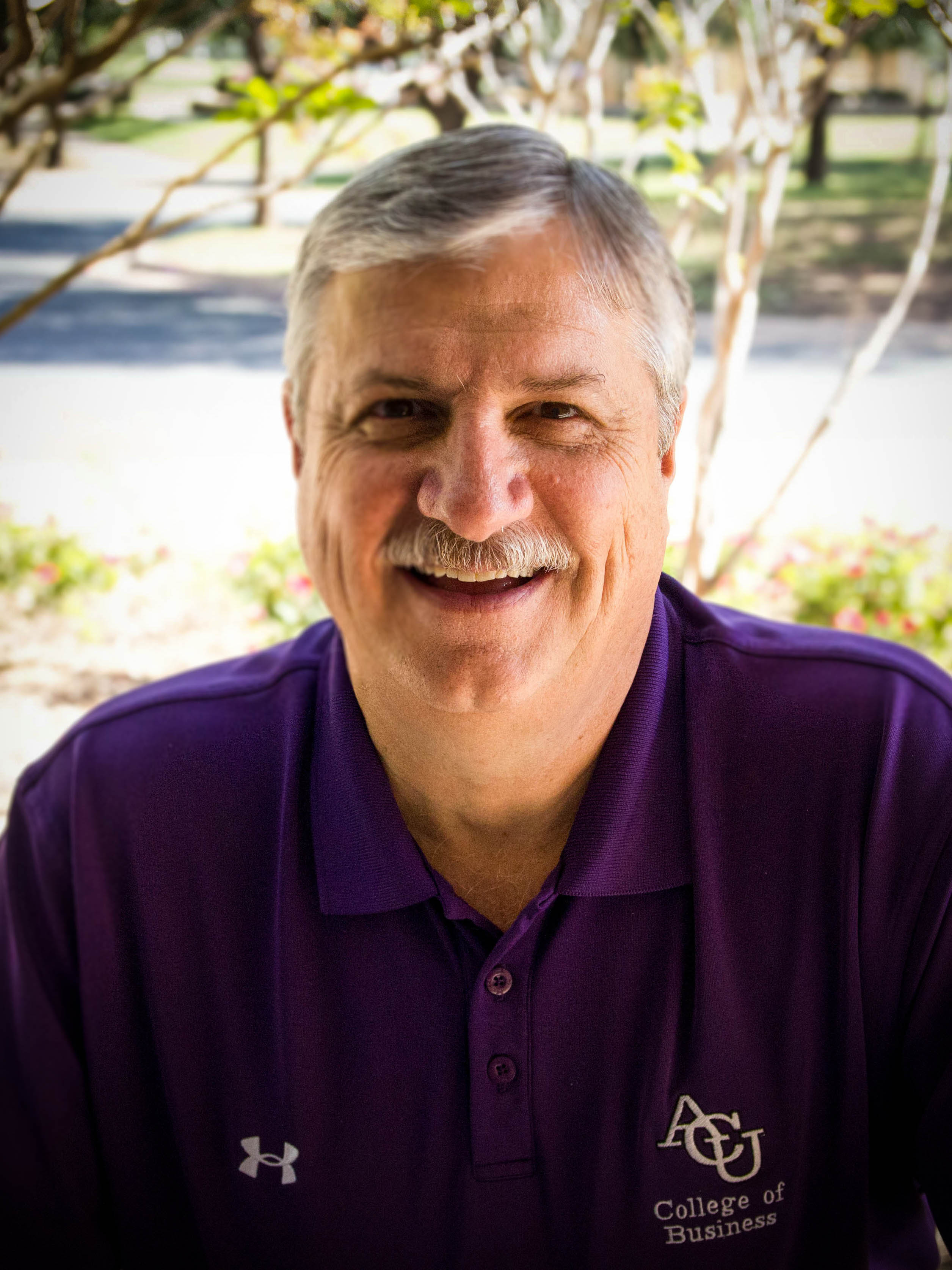
Dr. Phil Vardiman
What is your work background?
My work background includes Management and Leadership experiences in “Manufacturing Operations” and “Human Resources”. Companies I worked for include; General Tire & Rubber Co., Avery Dennison, and Cardinal Health. I taught one year in Lubbock ISD – way back in the 70’s. Prior to coming to ACU, I also taught at Texas State University in their graduate HR program.
What do you teach at ACU?
I teach management class (primarily MGMT 330) and I also teach HR classes (MGMT 447 & MGMT 337). Occasionally I teach in the graduate OD program.
What committees/other duties do you have at ACU aside from teaching?
This year I am the Faculty Senate Chair which means I get the opportunity to participate on many committees. Some of these include; the Provost’s Cabinet, Faculty Senate, Benefits Committee, Pricing Team, and Debt Reduction Team.
Being the Faculty Senate Chair is a great opportunity to provide service for the university and also work closely with many people across campus.
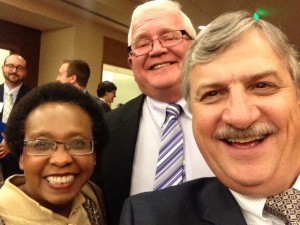
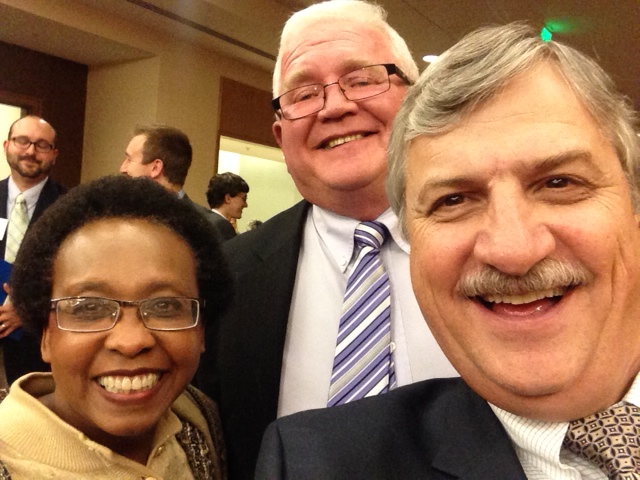
Phil with colleagues Orneita Burton and Ian Shepherd
What drew you to teaching? Why did you want to work with students?
I was blessed to have excellent teachers in my past that inspired me to love learning and helping others succeed. I have always wanted to teach and being in the business field provided me an excellent opportunity to expand my learning and also the foundation for advancing my education to reach my goal of teaching.
What’s the best part of working with students?
My biggest enjoyment in my job is mentoring and getting to know my students. I love to see them succeed and do great things. I strongly believe that every student can (and should) succeed. I’m amazed at the many things our students accomplish.
Have you ever given up any big opportunities to keep working with students?
I did change careers and with that there was a financial impact, but I believe that the most important part of a person’s career is not how much money they make – it is much more about the positive difference they can make in the relationships and lives of those around them. I also feel that I have gained much more as a college professor than I ever gave up.
Outside of teaching, what passions and hobbies do you have?
I have been blessed to experience the “Grandparenting” stage of life and it is wonderful. I have 5 grandchildren and they are so much fun.

Phil with two of his five grandchildren
I also have to mention Golf – I do enjoy the outdoors and a good round of golf. I also started taking piano lessons at the good age of 55. It has been fun and very challenging. (Playing the Piano: http://www.reporternews.com/news/abilene-music-teachers-hold-recital)
What is a good, early story about your teaching?
Besides the many moments when your students encourage and touch your life in a significant way I would say there have been several funny/interesting moments.
One that I remember well was the time I gave a test and offered the students the opportunity to take the exam in a very different way. I told them they had the option to take the exam and purposefully try and miss every answer and I would give them a “100” on the exam – of course they had to miss every answer – if they even got one right – then they would only get the score of those they got right. You must know there were several True/False and Multiple Choice questions on the exam. There was also some short answer. The outcome of this crazy moment turned out to be a funny memory (at least now it is funny). I was also able to get two published articles from this event.
Tell me about a project or accomplishment that you consider to be the most significant in your career.
It has to be my Ph.D. later in life and the challenge of completing this goal while still working and raising a family. My wife deserves most of the credit!
Do you do any charity or non-profit work?
In 2014 I became an Elder at the Hillcrest church of Christ. I have learned the importance of “service” and “encouragement” at a whole different level. I also currently serve on the Big Country Society for Human Resources executive board (BCSHRM).
Who is your role model, and why?
This is a difficult question and there are several who come to mind.
- Billie Gill (a Christian lady who encouraged me to stay true to the Word of God and be a strong family man – in many ways she was a mother to me)
- Claude Burns (an Elder and Christian man who gave me such good advice and the opportunity to grow as a young family man)
- Bill O’banion (my father-in-law, who gave me a very positive and strong Christian example. Bill is also a father example to me in so many ways)
- Jerry Drennan (a college professor who inspired me to teach by his example)
- And the most important role model is my wife, Jackie. She is such a good Christian example in so many ways and it has been wonderful to see her influence in our children and the encouragement she continually gives me.
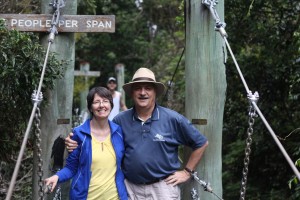
Phil and Jackie Vardiman
Who was your most inspirational professor and why?
As noted above, Jerry Drennan. He was always encouraging and also pushed me to do my best. I enjoyed his classes and teaching style. I remember wanting to teach just like he did.
If you could have a superpower, what would it be and why?
This is always an interesting question and my first thought would be to “fly”. Hard to beat this one. If I had a second choice, it would be to speak and read every language (this would be amazing and provide an outstanding learning opportunity).
What is something that students might be surprised to find out about you?
I found my twin sister when I was 50 years old.
What would you really want students and alums to know about you?
I love what I do! It is such a wonderful career and the blessings never cease. My first career enjoyment is mentoring students and my second is teaching.
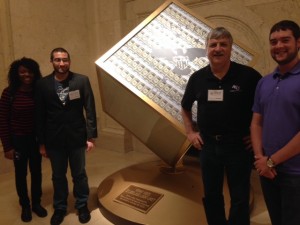
Phil with some of his students