Foldered & Finished: Robert Lynn Anderson Papers

The Robert Lynn Anderson Papers (1965-2019) are processed and ready for researchers. The finding aid for the papers and digitized selections are now available on DigitalCommons@ACU. These papers include 34.5 linear feet (58 boxes) of paper-based files and cassette tapes, and over 1000 digital files including 175 audio and video files.
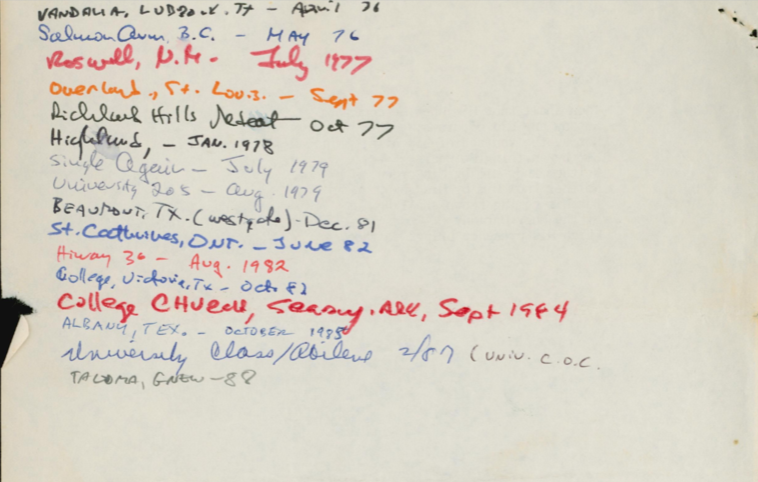
List of plases sermon What is ‘Spirituality?’ was preached over the years. Series VI, Spirituality flash drive, Robert Lynn Anderson Papers, 1965-2019. Center for Restoration Studies MS #488. Abilene Christian University Special Collections and Archives, Brown Library. Abilene Christian University, Abilene, TX.

The following biographical sketch is adapted from the biographical note on the dust jacket of Lynn Anderson, Steps to Life, 20th Century Sermons Series Volume 10. Abilene: Biblical Research Press, 1977.

Robert Lynn Anderson was born September 22, 1936 in Saskatchewan, Canada. After graduating from high school at Western Christian College (Weyburn, Saskatchewn) he attended Freed-Hardeman College (Henderson, Tennessee) and Harding College (Searcy, Arkansas) where he received the B.A. degree in 1959. He received the M.A. degree in 1965 from Harding Graduate School of Religion (Memphis, Tennessee). In 1990, Anderson was the first Doctor of Ministry graduate at Abilene Christian University.

Click on audio player below to hear the opening of Lynn Anderson’s sermon, Ride the Wild Horses, preached at Highland Church of Christ in Abilene, Texas. Visit DigitalCommons@ACU to hear the entire sermon and explore more digitized resources: 

Anderson’s ministry experience includes the establishment of a congregation in Salmon Arm, British Columbia, where he preached from 1960-1964. In 1964-1965 he preached in Lepanto, Arkansas, and then established a congregation in Kelowna, British Columbia, where he ministered for six years. From 1971-1989 he preached at Highland Church of Christ, Abilene, Texas. From 1991-1996 he preached at Preston Road Church of Christ, Dallas, Texas. Following these congregational ministries, he devoted full-time to leadership development and coaching through Hope Network Ministries. He conducted a radio ministry consisting of brief 60-second spots heard twice daily in Kelowna and three times per day in Abilene.
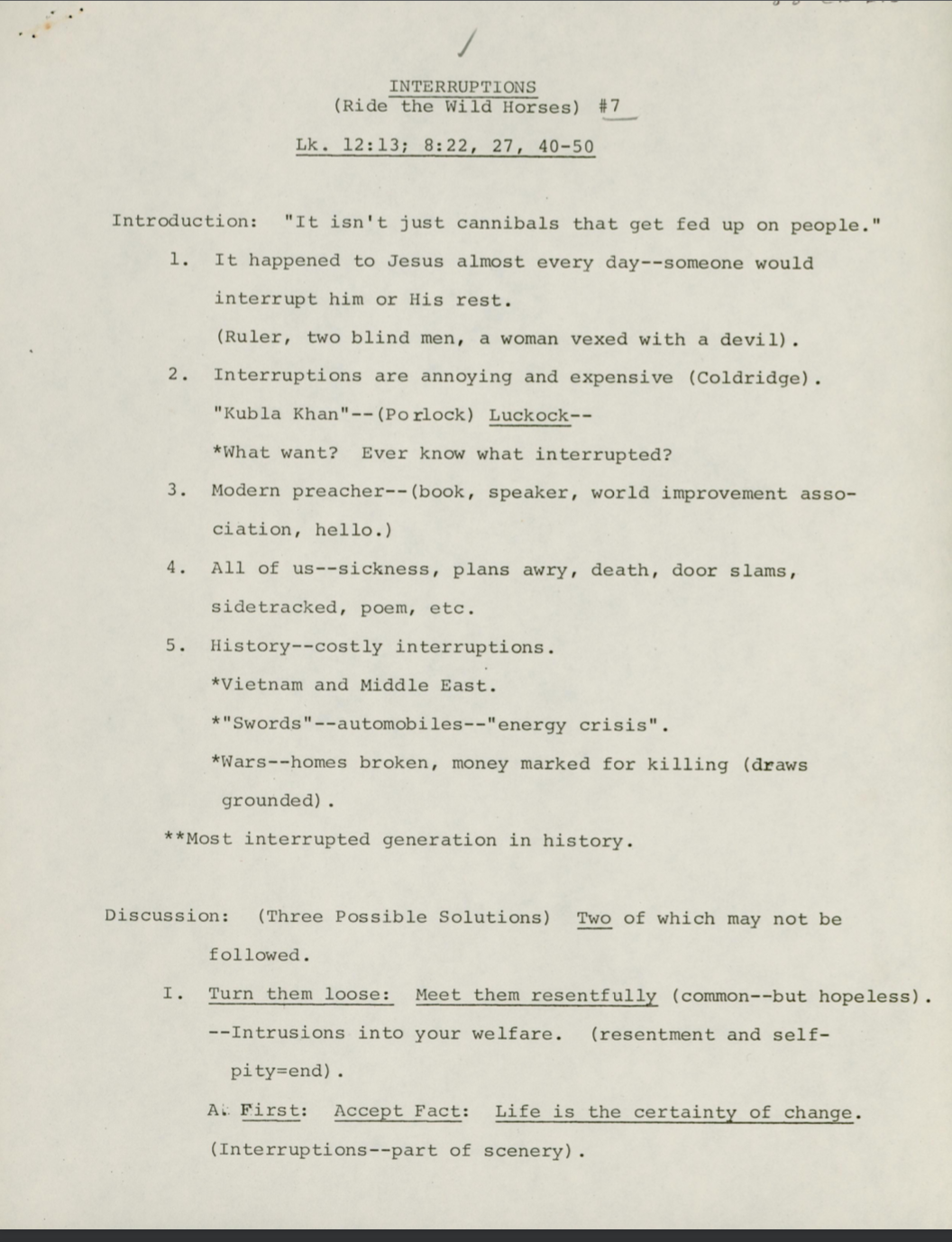
Sermon Interruptions, Series VI, Wild Horses flash drive, Robert Lynn Anderson Papers, 1965-2017. Center for Restoration Studies MS #488. Abilene Christian University Special Collections and Archives, Brown Library. Abilene Christian University, Abilene, TX.

He was active in community life, serving in leadership and board positions in Kiwanis Club, Community Chest, United Appeals, Action for Education Association, and the Committee for Better Education Now. As an adjunct professor, he taught cross cultural communication, Bible, and ministry courses at Abilene Christian University.

Click on audio player below to hear part of Lynn Anderson’s sermon, How to Find Faith, which was part of a series on spirituality. Visit DigitalCommons@ACU to hear the entire sermon and explore more digitized resources: 

Series I, Sermons and Research Material (boxes 2-16) consists of folders Anderson generated in the course of preaching and teaching through the Biblical text. The processor preserved the original order which closely mirrors the Biblical canon. In many cases the folders contain sermon notes, manuscripts or outlines. Series II, Topical Files (boxes 17-34) consists of topical files Anderson generated in the course of teaching, preaching, and speaking. Included in this series are the scripts from and correspondence about Anderson’s radio ministry. Series III, Ministry Files (boxes 35-39) contains files of historic memorabilia, keepsakes, and correspondence from Anderson’s tenures at Highland Church of Christ, Preston Road Church of Christ, and Hope Network Ministries. Of particular note are the notes of appreciation and encouragement Anderson received over the course of his ministry. He kept these in folders labelled ‘Bad Day File.’ Series IV, Writings (boxes 40-42) contains articles Anderson wrote as well as drafts and correspondence about Anderson’s books. Series V, Cassette Tapes (boxes 43-58) contains recordings of Anderson’s preaching at Highland Church of Christ and Preston Road Church of Christ. In many cases these recordings correspond to foldered materials in Series I and II. Series VI consists of digital files Anderson created in the course of his writing and speaking. Contact Special Collections and Archives for access to these files.

Stay tuned additional content on DigitalCommons@ACU! 
On the Shelf: New items added to Center for Restoration Studies collections, August 2019

In August our colleagues in Technical Services and Cataloging added 168 items to the Center for Restoration Studies, University Archives, and Rare Books collections.  Among them are books, periodical issues (bound volumes and boxes of unbound issues), a few tracts and A/V items in various formats. Some are completely new to us but a handful are second copies or variant editions, bindings or printings. The work performed on some items reflects original cataloging, which is a tremendous contribution to knowledge about information resources from and about the Stone-Campbell Movement.

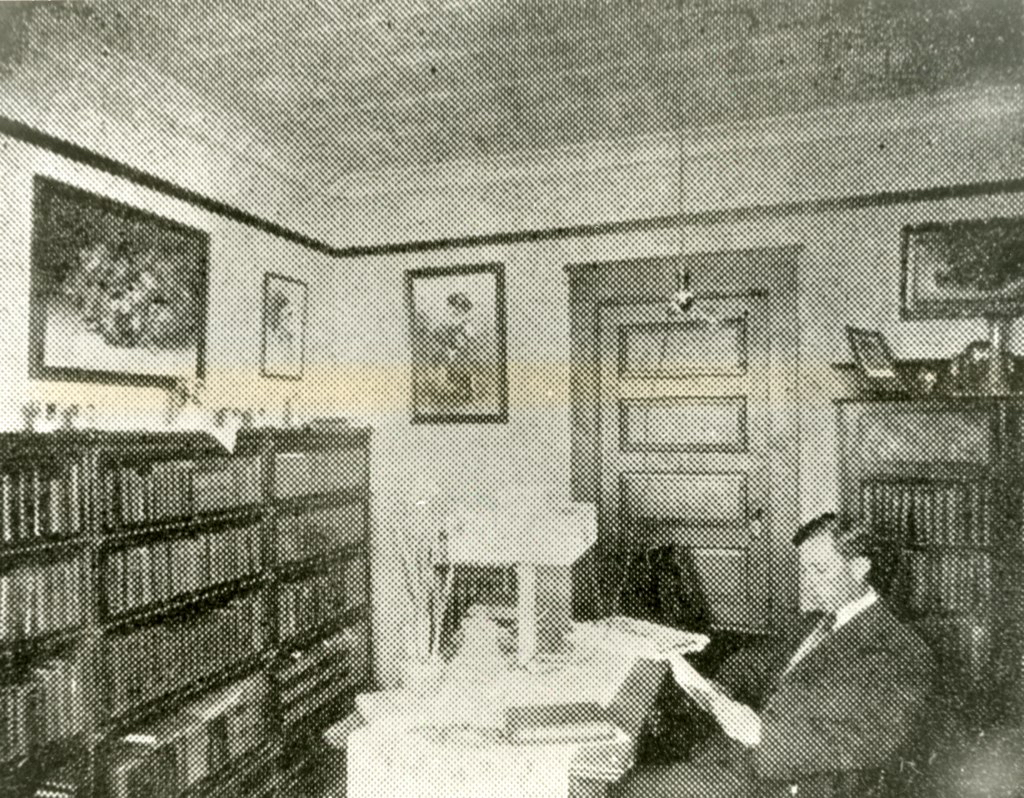
The Library in Daisy Hall.  Jesse Sewell reads a book at a table surrounded by shelves of books.

Our goal is to build a comprehensive research-level collection of print materials by, for, and about the Stone-Campbell Restoration Movement.  But beyond assembly and preservation, a collection should be discoverable by those who need the information.  Collecting and preserving is only part of our task; those objects must be described and made available.  Thanks to the close and careful work of our colleagues upstairs, who describe our holdings, these materials are now discoverable. By discoverable I mean a patron can utilize our online catalog (such as by searching by author, or title, or subject) to find these materials.

168 new items…cataloged, shelved, and ready for research: Continue reading

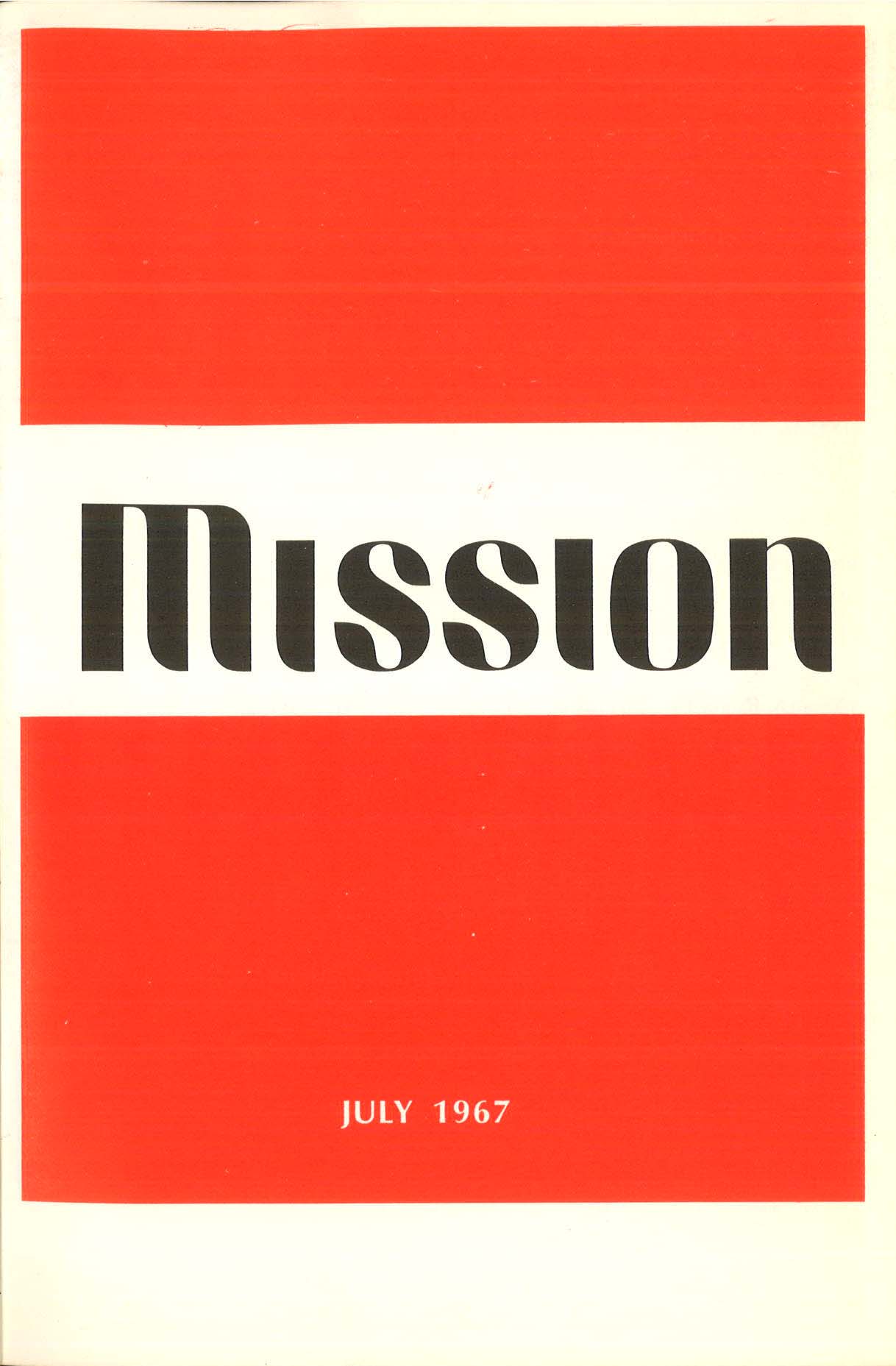
Mission Journal (1967-1988) now available online

We are pleased to announce Mission Journal is now available online for full-text browsing, searching, and download. From 1967 to 1988, Mission Journal was a forum for theological reflection on issues such as race, gender, war and peace-making, the place of the church in urban society, the nature and implications of Restorationism and critical Biblical and historical scholarship.  It was one of the most controversial periodicals among Churches of Christ in the decades of the late 1960s-mid 1980s.

Bob Turner, in his preface to this oral history project, describes Mission’s character as “unique—sort of Sojourners meets Village Voice meets MAD Magazine. It was smart enough to provoke a theologian but accessible enough to put on your coffee table; classic enough to attract intellectuals in the 1960s but avante garde enough to get picked up by a college kid a generation later. It was unquestionably the literary counterculture of Church of Christ periodicals for two decades.”

Turner’s oral history compiles reflections from some of the key persons involved in Mission from its founding to its closure in 1988: Dwain Evans, Don Haymes, Richard Hughes, Victor Hunter, Warren Lewis, and Thomas Olbricht.

Olbricht provides in this essay, New Journals for the Sixties: Restoration Quarterly and Mission, an extended reflection and assessment of the impact of these journals. Drawing from his deep insider involvement in Mission and from Abe Malherbe’s in Restoration Quarterly, Olbricht situates them within the journalistic, editorial, theological and historical contexts of the 1950s-1970s Churches of Christ.

Greg McKinzie conducted an interview session at the 2017 Christian Scholars’ Conference, Lipscomb University, Nashville, TN, dedicated to recording the stories of Dwain Evans, Vic Hunter, and Richard Hughes in the production of Mission Journal. Participants reflected on the motivations, hardships, and successes of publishing thoughtful, courageous content during a tumultuous time for the country and for Churches of Christ. What were the personal costs? How did the journal evolve and why? What would they do differently if they had it to do over? And what is the legacy of Mission for today? Listen here:

With the completion of the digitization project, fully searchable and downloadable PDFs of every issue are available at http://digitalcommons.acu.edu/missionjournal.  Mission on ACU DigitalCommons contains the full run of the journal, from volume 1, number 1 (July 1967) to the final issue, volume 21, numbers 5-6 (December 1987-January 1988). This digital archive will ensure Mission is widely and easily available for historical research and continued reflection on the issues it raised and discussed.

The digitization initiative was led by Mac Ice, Director of Archives and Special Collections. Student workers Julia Teel and Cayla Savari accomplished much of the digitization work, from scanning to page proofing.  Archivist Amanda Dietz worked with BePress to fine tune the public display details and ensure each issue was uploaded and working properly.  We are grateful for the partnership with Greg McKinzie, Executive Editor of Missio Dei Journal, Bob Turner, Librarian at Harding School of Theology and Thomas Olbricht for their fine work in contextualizing Mission’s voice amid the editorial landscape of late 20th century Churches of Christ.