by Katherine Norris | Jan 28, 2021 | City of Abilene, Current Students, Student Spotlights
 The Griggs Center for Entrepreneurship and Philanthropy, located in COBA, founded the Springboard Student Venture Competition to support the growth of ACU undergraduate and graduate student businesses and nonprofit organizations. Winners receive one-time funding from $500 – $3,000.
In order for the students to be able to compete in front of the Springboard judging panel, the students must be enrolled at ACU, must own at least 51% of their venture, and must be engaged in entrepreneurial activities such as the Founders Club, a student venture club led by Mindy Howard, the Student Engagement Coordinator in the Griggs Center. Awards are based on the panel’s assessment of the potential of the business and the “spirit of entrepreneurship displayed by the student(s)”. Students come prepared with a 3 – 4-minute speech and the necessary financial reports for their business. Each student receives feedback on their presentation/business model and a chance to compete again in the next competition for those who are not awarded funding in the current competition. This year, the students gave their pitch to three local business owners via video chat.
A.J. Brown, senior management major from Midland, Texas won this round of competition receiving a total of $3,000 to put towards his business, Southern Sno Shaved Ice.
We asked Brown about his business and how he got started. “Southern Sno is a mobile shaved ice trailer in Midland. We have a location that is open daily during the summer, while also catering to events/parties with an outfitted gas-powered cart that we like to call the ‘Jolly Trolley’. We pride ourselves on being the fastest shaved ice drive-thru in town, with the nicest employees. Our sno-cones have fun and unique flavors with the softest ice.”
One thing that unites many of the Founders Club members is how they got started. Each student has a unique story, but they could all agree that they put themselves out there and went for what they wanted to achieve. “During my freshman year of college, I changed my major to business after the first semester. Because of that, I was looking for something that I could do in the summer that could teach me about business while still getting to hang out with my friends. Options were limited because it had to be a seasonal business, so that is where the idea of sno-cones came into play. I used the money I saved up from a mobile car detailing business I ran in high school and hit the ground running!”
We love hearing Brown’s story and his inspiration to create his own work experience based on what he has been learning in COBA. From beginning his business to winning the competition, we asked Brown what he learned from the experience. “The competition was a great experience for me. It gave me a reason to step back, analyze what things I have done well, and what things I need to improve on. I also loved the experience of having to come prepared and confident about presenting my business in front of a group of successful entrepreneurs. I am very grateful for the Griggs Center and all that it does!”
Now that Brown has won, he says, “In all that I do with this business, I want to go about it in a smart and professional manner. I have heard of many companies that scale too fast and it ends up hurting them. My dream is to expand Southern Sno into other cities in Texas. But for now, I am focused on mastering the operations in Midland. At Southern Sno, everything is made in-house: syrups, ice, etc. The last two years I have been very blessed to be able to use a commercial kitchen from a group in Midland. I have realized that this isn’t a great long-term solution for scaling the business. So, with the money I have won from the competition, I will outfit the small warehouse that Southern Sno leases from a group in Midland. This allows me to have all of the supplies, ice, syrups, and trailers all in one place which really helps operations. Once we master that, we will look to move forward with possibly expanding into other markets.”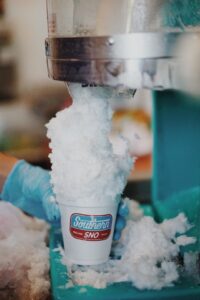
Owning a small business during COVID-19 has proved to be a difficult task for business owners all across the nation. We asked Brown what it has been like to continue operations as a young entrepreneur. He told us, “COVID-19 brought about some crazy instances. The first crazy thing we had to deal with was on our ‘Opening Day’ that we had been advertising for over a month. Thirty minutes before opening, the owner of the lot we were using called and said we could not be there. So that was a mess, but we recovered and ended up finding a great location. I would say the main thing that we had to change was we completely pivoted into a drive-thru only location. Before, people could only walk up. The drive-thru actually created a quicker and more efficient way for us to get cars in and out, and it showed in our daily revenue. The biggest downside we faced was that our business was hurt with not really being able to do many events throughout the summer. The year before that was our primary source of income. We are hoping to increase both of those streams of revenue this next summer, hoping that Covid calms down!”
Congratulations to A.J. Brown for all of his hard work and accomplishments that have led him to this point in his entrepreneurial journey. We look forward to seeing his continued growth as an entrepreneur as he continues to learn and expand his business.
You can check out Southern Sno Shaved Ice here!
by Katherine Norris | Oct 1, 2020 | Academics, City of Abilene, Current Students, Management, Marketing, Student Spotlights
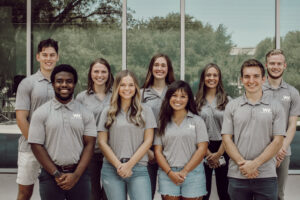
Wildcat Ventures Team
Wildcat Ventures (WV), part of the Griggs Center for Entrepreneurship and Philanthropy, is a student organization that hosts six student-run businesses. Each business has its own student CEO and set of employees. WV includes the Crossing Cafe (located in the Mabee Business Building), Aperture Research Group, Purple Collar Tees, Wildcat Software, Purple Outfitters, and Right Hand Media.
Junior marketing and management major, Camyrn Eason, and junior marketing major, Ale Ceniceros, are serving as the vice presidents of Wildcat Ventures this year. They hope to see their CEOs grow, learn, and overcome the extra challenges that this year brings. We asked both of the VPs, as well as the president of WV, junior management major, Riley Simpson, to share some of their expectations for this year and the challenges that COVID-19 is bringing to the student-run ventures.
What are your expectations this year for Wildcat Ventures?

WV President: Riley Simpson
Riley: “Wildcat Ventures is a club of the most entrepreneurial, problem-solving, ‘figure it out’ students on campus. We opened this year with an almost completely new team of executives and CEOs. I was hired the week that school went online (last spring) because of COVID, and our whole club is facing unprecedented challenges. Things started with a sense of what in the world are we going to do? But I am incredibly thankful for two vice-presidents and 5 CEOs who have rolled up their sleeves and dove into creative problem-solving. I’ve seen a lot of hard work in the face of adversity. We are approaching this year as a year of unique opportunity rather than a year where everything falls apart. I’m looking forward to a year of innovative solutions alongside an exceptional team.”
Camryn: “I definitely think this year will be a big challenge and learning opportunity for everyone involved. I’m excited to watch our CEOs adapt and use creativity to solve problems.”
Ale: “I hope to just see learning. I think a big part of WV is learning from mistakes and hardships that come along. Learning to work through these with the people in your company is important. I believe that this is what will help us be better leaders and business professionals.”

WV Vice President: Ale Ceniceros
What changes do you see being made this year?
Riley: “In the past the CEOs of WV have operated in more independent ways, focusing on their companies without much connection to one another. This year we want everyone in WV to feel like they are a part of something bigger than themselves. We’re out to bring positive change to ACU and develop leaders that will carry the Kingdom into the business world. You can’t do that alone and this year we want to create a thriving collaborative community. We are also honing in on creating sustainable systems that will outlast this year’s team. With student organizations, the turnover rate is so high. This year we want to create club-wide systems that will keep the momentum going even when we are gone.”
Camryn: “I hope to see better systems put in place for WV this year and easier transitions. As an executive team, we are working super hard to reform the systems to make them more simple and eliminate a lot of communication gaps. We also want to focus on the transition process from year to year so that when a new executive team and new CEOs are put into place, they will have an easier time transitioning. Of course, I would also love to see Wildcat Ventures turn over a bigger profit than previous years.”
Ale: “I think a big change this year is collaboration. The executive team is hoping to create a culture where WV is all one entity instead of 5 small companies with different systems, ideas, and beliefs.”

WV Vice President: Camryn Eason
How do you think COVID-19 will impact the businesses this year?
Riley: “COVID-19 changes the landscape that WV operates in. We are running a cafe without much seating, selling shirts when there are no events and doing marketing research for a constantly shifting market. The pandemic is forcing us to be creative, and it is also forging our leaders. I know we can have an incredibly successful year. When the pandemic pushes us to the limits we just have to push back.”
Camryn: “COVID-19 will definitely have a big impact on all of our business this year. With department budget cuts, some of our project-based companies could see less business, but I am confident in our CEO’s abilities to overcome this problem. There will also be several changes made in the Crossing Cafe to follow CDC and university guidelines.”
Ale: “COVID-19 has already impacted our businesses a lot. Some of them have been taken online, others are thinking of ways to stay open in person. This is where creativity and an entrepreneurial mindset will be helpful. It will be so fun to see what the CEOs come up with.”
While the president and vice-presidents of Wildcat Ventures oversee the entire operation, it is up to each individual CEO to manage their specific business. We interviewed two of the CEO’s, Ben Fridge and Maddy Crockett, to ask them what they anticipate the new year to bring. Ben is a junior management and marketing major and is the CEO of Aperture Research Group (ARG), a market research and analytics firm. Maddy is a junior management and accounting major and is the CEO of Purple Collar Tees, a custom apparel screen printing company specializing in t-shirt design.
Why did you apply to be a CEO?
Ben: “The WV President painted a vision of a club I wanted to be a part of. The opportunities we can provide the Wildcat and greater Abilene community is immense and exciting to be stepping into before I leave school.”
Maddy: “Wildcat Ventures drew my attention with the hands-on opportunity they provide to students. The leadership this year is top-notch, and I’m excited to be working with a team of like-minded people who will push me to be better.”

ARG CEO: Ben Fridge
What is your plan going into your business?
Ben: “I want to streamline systems within ARG and grow our clientele this semester. Transition is a big part of student-run organizations that operate on a semester to semester basis, and I was blessed to be handed this company in great shape with exciting things on the horizon. For that reason, I want to be able to truly leave ARG better than I found it!”
Maddy: “My plan is to be persistent, be excellent, and be collaborative. My business is largely sales-driven, so communication with my team and our customers is key. Being excellent in customer service is our top value proposition, and we get countless opportunities for that throughout the year. Finally, collaboration with my team is a great way to create ideas and teamwork.”
What challenges do you anticipate?
Ben: “I think the word ’streamlining’ can be hard to quantify and easy to boast about. If we truly want to maximize efficiency and simplify processes, we will need to be honest about what is truly serving our systems and what is ‘fluff’ that has no bearing whether it is cut or kept.”
Maddy: “I think the most challenging part of this position is the fact that we are all students, with several other commitments outside of Wildcat Ventures. The greatest aspect of change in my plan will be challenged in staying on task and of course, specifically when life outside of work gets crazy.”

What changes would you like to make?
Ben: “I want to greatly expand our portfolio of clients on ACU’s campus using referrals and my analyst’s network of connections. I believe there is a great need for more organizations to be data-driven (especially on ACU’s campus), so reaching further in our circles would reveal deficiencies to these groups. Also, with a broader range of projects behind us, ARG can focus on more involved ideas in future years.”
Maddy: “I want our image on campus to be as a business that goes above and beyond with top-notch products. I’d like for our team to be unified in the way we sell to customers and be persistent in the way we communicate.”

PCT CEO: Maddy Crockett
How has COVID-19 impacted the way you are operating?
Ben: “Beyond Zoom interactions with the employees hired, ARG can function in an online world more easily than many of the other companies. One of the exciting changes within our changed world is the potential for organizations needing data and insights about the way people are consuming and participating in commerce today. Market research opens the door to understanding how culture has shifted and how businesses or groups need to shift to retain individuals and thrive in this season.”
What does your business specialize in?
Ben: “Market research and data analytics regarding the success of events or programs has been a major focus in past years. Reviewing collected responses to satisfaction surveys or creating focus groups to determine how well an organization is performing at a point in time is an area that ARG has mastered.”
Maddy: “My business specializes in custom apparel and merchandise products for individuals and organizations around Abilene. We partner with people who have a design idea, and we help initiate and finish the process of bringing that design idea to life.”
Why should groups/students on campus use your business?
Ben: “The unique insights we provide have made waves in the decision-making process of all our clients. The value of having data and research behind initiatives deeply matters in an era that craves certainty and evidence. ARG strives to create the most value for whatever your business, organization, or campaign is driving.”
Maddy: “PCT serves the ACU community by providing top-notch products at a competitive price. Not only do we walk with you step-by-step through the creation process, but we also deliver your items directly to you – you never have to leave campus! If you can create it, we can make it a reality.”
WV president, Riley Simpson, knows the plan going forward this year may likely change but feels that the organization is ready to adapt and grow. “We are currently working on launching two new companies this year. I know we can do it, but we have to have the right people in place. We need to find the people who see things differently, who aren’t afraid to fail, and who won’t quit when they get knocked down. We are in the business of developing resilient leaders who are crazy enough to think they will change the world. We know we will. If you’re one of those people, find me and let’s make it happen.”
We hope that this will encourage you to think of the services that Wildcat Ventures offers the next time you need a cup of coffee, a t-shirt made, or help to form a strong strategy for your organization. You can read more about each of the businesses by clicking here. If you are interested in becoming a part of Wildcat Ventures, fill out this form or check out their website.
by M. C. Jennings | Sep 19, 2020 | Academics, Alumni Spotlight, Careers In..., Current Students, Faith Infusion, Marketing, Springboard
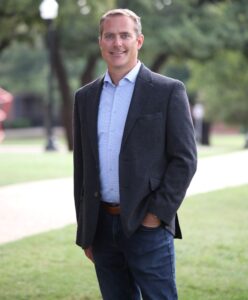
Matt Boisvert
When Matt Boisvert (’97), President and co-founder of Pharos Resources, graduated from ACU with a degree in marketing he never would have dreamed that his professional life would be so heavily influenced by his time as a student and as an educator. Matt has given back to his alma mater by being consistently involved in helping current students with professional development by providing internships and support at Pharos Resources as well as serving on COBA’s Visiting Committee.
After graduating from ACU, Matt began his career at C&W Manufacturing in Alvarado, Texas as the Director of Marketing. It didn’t take long for Boisvert to return to the classroom. In 2001, while working on his MBA in Services Marketing and Management at Arizona State, he began interning with Hallmark Cards at their headquarters (Kansas City, MO) in their Specialty Retail Group, implementing and measuring the grand opening marketing strategy for Hallmark stores. Matt received his MBA in 2002 and came back to ACU’s College of Business Administration to become the Director of COBA’s Career Development Center, building a comprehensive career readiness and employer relations program for business majors.
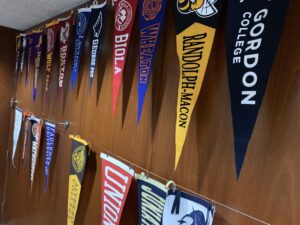
Some of the colleges and universities that Pharos works with.
In 2004, Boisvert became the Director of Career Development for ACU and, in 2006, the Executive Director of the Office of Career and Academic Development. It was during these years that he learned about the challenges of student success, as this office was tasked with overseeing the “Support Our Students” program and related SOS software, as well as providing career development and academic counseling services to students. In 2007, Matt returned to COBA and served as the Assistant Dean of Marketing Operations and as a marketing instructor. He said, “Teaching taught me the power of actually ‘seeing’ your students in the classroom… identifying those who were struggling in academic and non-academic ways. At the same time, I was consulting with ACU to help commercialize the SOS software for the higher education market…which led to me making an offer to purchase and transfer the ACU-developed technology to a newly formed entity (Pharos Resources) in 2008.” In 2010, Matt entered Pharos Resources in the Springboard Ideas Challenge and won the “most fundable” business plan. It was time to fully pursue growing Pharos Resources – which meant leaving ACU in order to do so. However, this did not mark the end of his relationship with ACU. In fact, it has led to many opportunities for Matt to collaborate with COBA through Pharos Resources. Today, Pharos Resources serves 61 institutions across the United States and Canada. Its solutions are used by over 10,000 faculty and staff and provides support to over 125,000 college students.
Faith has played a vital role in Boisvert’s work throughout his life. “Having my identity in Christ has sustained me during the lows and keeps me humbly grateful in the highest highs. It is an incredible experience to be able to create value, impact lives, and build a team of people who are passionate about meaningful work. I feel so blessed to do this work.” Matt allows his faith to guide him day by day in all seasons, reminding him that he is uniquely made and loved by God. “God is investing in me, wanting to teach and continuously lead me for His plan. That has given me the freedom and confidence to create Pharos in a way that honors Him.” This is lived out by the way that Pharos treats their clients, how they interact with competitors, and how they invest in their client’s success.

Mission First with Anthony Melchiorri
Pharos’ current challenge, like most of the rest of the world, is helping clients navigate COVID-19. In May, COVID-19 forced universities to face difficult decisions about their summer and fall reopening plans. After hearing Anthony Melchiorri on the daily podcast “No Vacancy”, Matt reached out to the “Hotel Impossible” host and hospitality expert to see if he would share his insights from the hard-hit travel industry to improve the success of higher education institutions during the pandemic. Anthony is an expert on how to create clean, safe spaces with visual signs of sanitization, and provides an exceptional understanding of how to deliver service excellence. The Travel Channel host, Melchiorri, is known for being direct, honest, and committed to excellence. In addition, he is deeply passionate about student success! Melchiorri points to his own higher education and military experiences as life-changing and the fact that he has three daughters in college right now makes his investment clear and personal. He is also involved in the business of higher education, by serving on the board of Park University, his alma mater. Anthony’s response was immediate and definitive: “If this partnership can change the life of one student, it is worth it.” Pharos Resources is partnering with Anthony through 2020 and has already hosted four Mission First webinars with him, providing practical advice and encouragement with an engaging and entertaining format: readers can access those webinars at the links below.

Tres Cox
Helping Boisvert and Melchiorri drive the Mission First marketing campaign is Tres Cox, senior marketing major from Lewisville, Texas. Tres has been a marketing intern with Pharos since fall of 2018. While the Mission First marketing campaign promotes the Pharos partnership with Anthony Melchiorri, Tres has had the opportunity to work on a wide range of marketing projects for Pharos including COVID-19 resources, brochures, conference sponsorships and exhibits, digital/social media marketing campaigns, and marketing new product launches. Boisvert is highly complimentary of Cox, saying, “He is incredibly talented, with a great combination of valuable skills. It is clear that COBA continues to develop talented students into business professionals. Tres has added significant value to our brand and the team.”
Matt’s student experience at ACU, especially with faculty members, was formative as he described each of his COBA professors as exceptional and still appreciates them for connecting him to real-world applications while in the classroom. He said that COBA gave him confidence in his ability and instilled in him the value of service as a Christian leader in business. Dr. Rick Lytle was Matt’s overall favorite professor for the reason that “he modeled a life in Christ through his love and leadership” which has greatly influenced who Matt has become.
Boisvert’s favorite ACU memory? That would be Welcome Week during his senior year. “For my friends, roommates and me, it was junior/senior wars and my house was the de facto headquarters for seniors. My roommates and I had crates of eggs set on the roof of Bob Hunter’s rent house as massive egg fights erupted. In the middle of this ‘war’, I met my wife Melissa and we have been together ever since.”
Matt advises incoming freshmen to complete at least one internship before graduation. “They expand your network, allow you to explore your career options, and will test your competence.” And to current students, he says, “I would strongly encourage COBA students to invest in learning more about who they are and how they can make an impact in the world. Then, to prepare for their future, I really encourage students to develop their ACU network: peers, faculty, mentors. The value of a college degree is more than the classes you take…the people who love the ACU mission will be valuable connections for life.”
by Maddy Crockett | Sep 15, 2020 | Academics, Current Students, Management, Professional Development, Student Spotlights
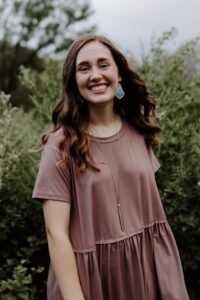
Junior accounting and management major, Maddy Crockett, from Lubbock, TX interned this summer at the corporate headquarters of City Bank, a publicly-traded company in Lubbock, Texas. While there, Maddy worked for the director of the Project Management Office and said, “The internship I held this summer with City Bank went beyond my expectations, and I am incredibly grateful for the experience the company provided me”.
Maddy learned so much during her time at City bank. “Project management within companies has always been fascinating to me, and I was able to learn it first-hand this summer. Over the nine weeks I was with City Bank, I was shown the timeline of a project, both in theory and in practice. I was able to shadow the director of the department in all areas – project implementations, team touchpoints, leadership development, and meetings with department heads and bank executives. I was also given a project of my own to work on, where I communicated with corporate and branch team members to complete a data initiative. The leaders in the Project Management Office showed me real tools to initiate and carry out projects from start to finish.”
Real-world experience with an opportunity to apply what she had learned was invaluable to Maddy. “One of my greatest lessons from this experience was getting to lead a meeting of my own for the director and other members of PMO. I also enjoyed experiencing seeing individuals from all different departments come together to accomplish a project; individuals were chosen to utilize their specific skill sets, and it was encouraging to see that teamwork and cooperation from everyone involved. City Bank is an excellent organization to work for; they treat employees like family, they provide great opportunities for growth, and they execute top-notch service for their customers.”
Maddy felt ready to take on the summer internship saying, “ACU has prepared me to be proactive and professional in this internship, along with being willing to work hard. By our professors encouraging us to be inquisitive and prepared for questions, I was able to learn from my director and peers. COBA has taught me that excellence is worth pursuing, and it is a goal I should seek after in all areas of work.”
Maddy’s favorite thing about being a COBA student is the variety of opportunities the college offers. “I love the learning opportunities COBA provides; nowhere else have I gotten the applicable experience that I have here. Additionally, the relationships we get to have with our professors has been a favorite of mine.”
For those students preparing for an internship, Maddy advises, “Have a teachable attitude, say yes to what is asked of you, and don’t be afraid to ask questions! Your internship is what you make of it – it can be average, or it can be exemplary. Take advantage of the opportunity your internship provides for you and make it exemplary!”
by Maddy Crockett | Apr 23, 2020 | Academics, Accounting, Current Students
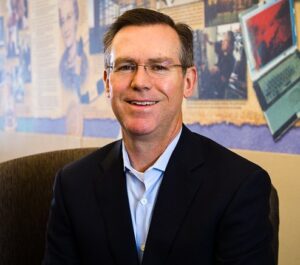 Cliff Crockett (’89), Partner at the accounting firm KPMG in Dallas, Texas, has been conducting interviews for accounting internships at ACU for the past twenty years. This year’s global pandemic proved to be a bit of a challenge. Yet, the social distancing guidelines moved them in the direction that many companies across the country are taking: adapting to virtual interviews.
“We have always done face to face interviews and much prefer them. So this was the first time to do Skype interviews on a broad basis,” Cliff explained. While exceptions have been made before to accommodate students out of the country on study abroad, in-person interviews are the ideal platform to allow interaction with the students.
“We typically have a pre-interview dinner the evening before the interview so that we can get to know them better. This also allows the students to ask a lot of questions to multiple KPMG employees to help them feel more comfortable and get to know KPMG better. The students also get to interact with our greeters right before the in-person interview, so they miss out on this as well.”
Students initially had their interviews scheduled for March 26th, but when the campus closed, they instead began to prepare for virtual ones. When asked if this changed their approach in preparing, sophomore Lacy Mayes explained, “I had to practice looking at the camera instead of the screen. It’s definitely a different approach when you can’t shake hands or look at them directly in the eyes.”

Mikel-Ann Terry
One of the main concerns for virtual interviewing is technology issues, from poor connections to glitches. “I think it is harder for students doing it this way than for the interviewer actually,” Mr. Crockett explained, as KPMG is accustomed to meeting virtually with clients and employees. He advised students to double-check that their technical setup was working well before their interview. However, even when issues arose, junior Mikel-Ann Terry said that the interviewers were very understanding of any issues encountered, saying, “I would encourage anyone thinking about an internship to interview with them, even if it is just for the experience!”
Hannah Pinson
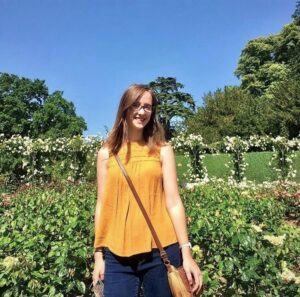
Even though face to face is the ideal platform for interviewing, going virtual is providing students with valuable experience – regardless of location. Senior Rachel Rankey shared, “I learned to speak with confidence so they know what you’re saying and why you were right for that position. I also learned that oftentimes, they just want to get a sense of who you are rather than grilling you with a lot of questions that might be hard to answer”. Junior Hannah Pinson said that she enjoyed the virtual aspect, once she grew accustomed to it.
Crockett concluded by sharing how much he loves being on campus and interviewing ACU students. He and his team look forward to being on campus as soon as they can. “ACU does a great job preparing their business and accounting students for the real world, so take full advantage of your education!”
by Maddy Crockett | Apr 14, 2020 | Academics, Current Students, Student Spotlights
In the College of Business Administration, students across the board have experienced the challenge of creating and selling a product to their peers however students this semester are facing an additional challenge: creating and selling their product — from home. All business students are required to take the class Intro to Business. This class gives students an idea of what different fields of business are all about. One of the main projects in the course is an entrepreneur-type activity called ‘Venture Out’. Teams are built to create, market, and sell a product to the ACU community; incentives include grades throughout the course, entrepreneur experience, and the opportunity to donate additional profits to the beneficiary of the team’s choice. Products in the past have ranged from t-shirts, stickers, sweatshirts, or anything that can be dreamed up. The teams must keep track of expenses, create a business plan, and pitch their product to a board of professionals for approval.
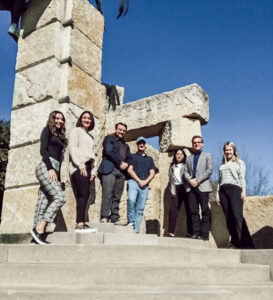 While this project provides students with valuable experience, current Intro to Business students impacted by the campus closure are having to promote and sell their products remotely. Intro to Business professor Dr. Monty Lynn explained that due to this issue, not all of the teams were able to proceed with the project due to funding and selling issues. Venture Out teams who were already underway in their project chose to continue and are now facing the challenge of selling that product away from the ACU campus. Dr. Lynn commented that despite this extra obstacle, “They are doing a tremendous job”.
Two of these current participating teams shared their experience so far. 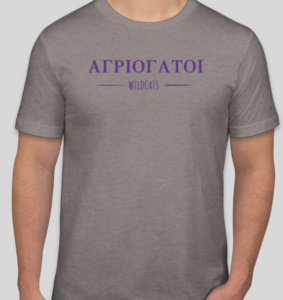 “It was more difficult to connect with our customers and explain why we were selling this product,” explained Berkley Bruckner, member of Team Foundation T’s. They chose to sell t-shirts, and created the design in hopes of boosting school spirit and promoting awareness for Big Brothers Big Sisters, their chosen beneficiary. “Since most of our group members are freshmen, we wanted to incorporate a class we all have to take this year. We chose our Bible class and wrote ‘Wildcats’ in Greek”.
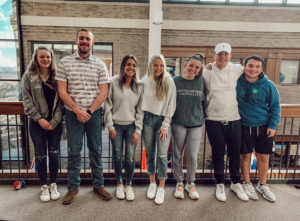 Another team experienced similar issues. When asked what has been a challenge for them, member Estefany Hernandez stated that “We couldn’t express our feelings about where the money will be donated or to express our love for children and giving back”. They chose the Hendrick Home for Children as their beneficiary and decided on t-shirts as well for their product.
Despite the challenges posed for this unprecedented sales environment that COVID-19 has brought on, these student teams are persevering and are learning valuable skills. Dr. Monty Lynn shared a customer’s experience with one of these continuing Venture Out teams: “An ACU graduate student recently contacted me to say she purchased some stickers from a team and was so impressed with the transaction. She received the ordered stickers in the mail shortly after purchasing it online. The product even arrived with customer service touches and an e-invoice! So just a shout-out to our freshmen business teams who have pivoted quickly and are serving well!” COBA is proud of these teams for their success and perseverance during this time and believes that unique business lessons are being learned about the need for flexibility and agility in small businesses that will stay with these students for a lifetime.
by Maddy Crockett | Apr 4, 2020 | Academics, City of Abilene, Current Students, Student Spotlights
(Maddy Crockett, sophomore accounting major from Lubbock, Texas shares her experience of living in Oxford, England with ACU’s Study Abroad program this spring and what it was like when they were forced to return home due to the Coronavirus.)
Heartbroken – the moment we’d been dreading had come. We looked around at each other as they announced over the loud speaker on the bus that the Oxford program was forced to shut down. We were going home two months earlier than expected. President Trump had addressed the nation the night before, raising the travel restriction levels all throughout Europe, except for the UK. The other students in Leipzig were out of Germany when the news came, and they left immediately – without their belongings and without saying goodbye. The prospect of the Coronavirus interfering with our semester had been a topic of debate between the students for several weeks, but we were optimistic until the end. After that day, though, we began the dreaded process of saying goodbye.
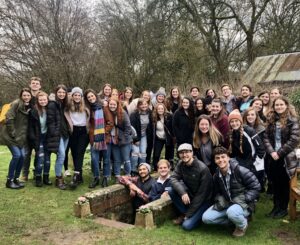 Before I studied abroad, I might not have taken seriously how deeply one connects to the place they live. “Yes, they have to come home. So what? They just spent the last two months travelling and spending money. Surely it couldn’t have made that big of an impact, right?” And sadly, I make these assumptions for many activities I have no experience in. Yet, the past two months, while seemingly short, truly were life changing, and my heart ached at the prospect of leaving early and departing from that environment.
I really had no plans to study abroad. A friend convinced me to sign up freshman year, and thinking it would be a good way to push myself, I said yes and submitted my application. Yet, as the drop date steadily approached, I went back and forth, struggling over if it was something I truly wanted to commit to. Did I want to be gone for a whole semester? Would I regret the activities and people I’m missing on campus? What if I got over there and hated it? Was it even worth it? After almost backing out – twice, I might add – I decided to go through with it, and that was that. Fall semester flew by and Christmas break arrived, which led to packing, planning, and saying goodbye to friends and family in Texas.
 The day we left for Oxford – a Wednesday morning after spring semester had started – we were teary-eyed and unsure what the next four months held. I had two close friends going abroad with me and others who I hoped to know better, but I was leaving many dear friends at ACU. ‘Why on earth am I leaving when I have so many good things right here?’ I thought as we all hugged each other goodbye. Then, we were whisked away on the bus, took several long flights, and arrived exhausted and unsure the next day in the city of Oxford. It was cloudy, cold, and completely foreign.
The next few days held room assignments, walking tours, scavenger hunts, and exploration as we settled into our new environment. The cloudiness and cold slowly shifted to cozy and ideal; the foreign turned into curiosity and adventure. We found bakeries with beautifully decorated cakes, coffee shops with upstairs seating and rickety wooden floors, the grocery store to load up on a few days’ worth of groceries (and no more than that — it’s a mile walk home, and you carry what you buy). We began our classes in a little establishment off of Woodstock Road – The Quaker Meeting House – and got plugged into a church that many study abroad alums told us about, St. Aldates. We went running through the abundant parks and meadows Oxford holds, and we grew accustomed to walking at least a mile to get places. The days faded into weeks, and without even realizing it, I had forgotten to be nervous or to miss home. This adventure had captured my attention, and each new day brought eagerness and excitement – a rhythm was found.
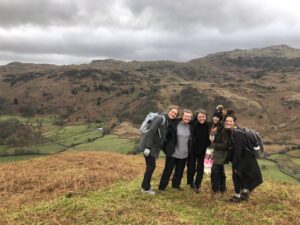 While a foreign country itself is an incredible journey, it wouldn’t have been half of what it was without the people I experienced it with. Oxford holds the largest ACU group, with thirty-five students, two professors, and an on-site director, but it never hindered us from learning to know one another. These were people we saw day in, day out, from breakfast to class, to the common rooms and everywhere in between. We were all on the same schedule, all in a new place, and all wanting to make the most of our time here – which is the perfect environment for connection. Not only did I grow closer to the friends I already had, but our community grew abundantly as we created one-of-a-kind shared experiences with each other. Class devotionals on Monday nights, breakfast for dinner with a smaller group, college night at church (and going for ice cream once it ended), and eventually, travelling to different countries in our free weekends. An environment affect change so much in a person, but the people there with you make all of the difference.
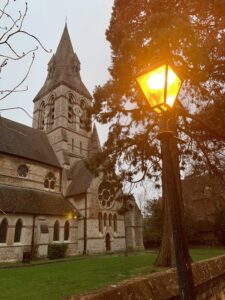 It would be impossible to convey everything I learned or experienced in Oxford, but there are a few that stick out to me. Something I have noticed since being at home is that study abroad gives students the opportunity to step back from their commitments, their activities, the people they spend time with, and really see who they are outside of that. It can help you think about what’s important to you back home, and what you want the rest of your college career to look like. For me, these past two months helped me grow in proactivity and confidence. Whether it be volunteering to plan out all the details of our next trip, using Apple maps to navigate us through the streets of a city, or choosing excitement instead of intimidation when countless opportunities present themselves, the experiences I had helped make me a little more well-rounded (I hope, at least!).
The Coronavirus had been a topic of discussion, first jokingly back in February, then more seriously as other universities began to pull their programs. To us, it was something in China, then in Italy — but not Oxford, not where we were. The week before we left, our class was scheduled for a trip to Northern Spain. We were elated because we would all be together to explore that new 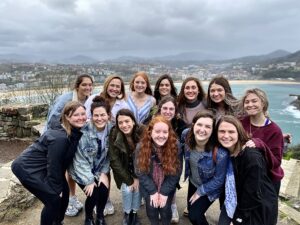 place. As we packed and prepared to leave for it, we heard about more and more programs that were being called back home and that the numbers of the sick in Italy were growing exponentially. There was debate if we would be pulled, too, but the ACU Study Abroad office continually communicated with us that our program would continue as planned, as long as our area was safe and that the US deemed it so. Looking back, our time all together in Spain was one of the high points of our semester, and we could not have ended on a better note.
When we learned that we were going home early, we were blessed to have two whole days left to say goodbye to our temporary home. Souvenirs were bought, scones and pastries were consumed in unhealthy quantities, we had one last breakfast for dinner, and we ran through the parks and meadows that were slowly greeting spring. The last day held flurried packing, tearful conversations, and a bus ride to the airport that came all too soon. I thought back to that first bus ride, where I questioned why on earth I was wanting to do this. Now, I never wanted to leave. Life can be funny that way.
 As I sit here at home, saddened by what these next two months could have held in Oxford, but even more so by the devastation and chaos that the Coronavirus has brought upon everyone, I am still grateful. Friends and family reaching out to see how we are holding up, class Zoom calls that feel a little more like reunions, a virtual breakfast for dinner, and time to sit and dwell on what the Lord has done in us since we left the US back in January. Study Abroad gave me the dearest friends, an abundant atmosphere and culture, and instilled a drive in me to go after and get done ideas that I have. I am so incredibly grateful for this opportunity, in the midst of its interruption, and I am curious to see what the rest of this year will look like. Still, I am eager for the day when I can return again to visit this temporary home.
by Katherine Norris | Feb 20, 2020 | Academics, Accounting, City of Abilene, Current Students, Faith Infusion, Outcomes, Social Entrepreneurship, Student Spotlights
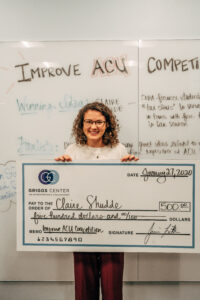
Claire Shudde
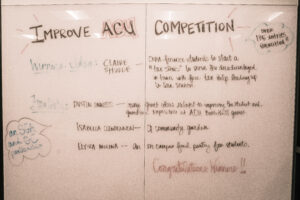
On January 27th, senior chemistry major Claire Shudde entered the Improve ACU Competition and left with a cash prize of $500 and the opportunity to make her idea come to life. The competition was co-hosted by the ACU Student Government Association (SGA) and the Griggs Center for Entrepreneurship and Philanthropy.
Mindy Howard, the Student Engagement Coordinator for the Griggs Center for Entrepreneurship and Philanthropy explained why they chose to create this competition. “We wanted to try and reach a larger sector of the student body and engage them in entrepreneurial thinking. The prompt was simply what are your ideas to improve ACU? We had 139 total entries and the finalists and winner were picked by the SGA student team. There were several really creative ideas submitted. Some of the top ideas included a community garden, a low-cost food pantry for students, and a student led spirit team at the ACU basketball games. Our hope was that students would take a moment to look around and see how their ideas could lead to real change at ACU. Every successful business, initiative or service starts with a great idea.”
Claire told us, “My idea to improve ACU is to have selected accounting and business students help lower income citizens in Abilene file their taxes. Filing taxes isn’t always easy and for people who either don’t have the education or ability to file for themselves, it can be a daunting task. If students at ACU — ideally selected by faculty who have witnessed the student’s desire and ability to serve the community in this way — can help locals file their taxes, they can gain real world experience while also benefiting the community.”
Shudde gave credit where credit is due for the idea. “I got the idea from a friend who attends St. Mary’s University in San Antonio. Their school is situated in an impoverished part of town and the students intentionally work on reaching out and ministering to the community. As a Christian school, I think ACU could follow suit and reach out to the community in this way. There is potential for this to be an incredible ministry in Abilene, and while accounting/finance majors help people with money, other students can minister to the people waiting.”
Claire continued, “I think the best way to establish this would be to partner with ministries like Love and Care or the Mission that are currently working and established. As a senior chemistry major, I am fairly far removed from accounting and finance, so I doubt I could be involved in the actual functioning of the tax clinic. Rather than be hands on myself, I would love to brainstorm with those who are knowledgeable in this area and will be in Abilene longer than me.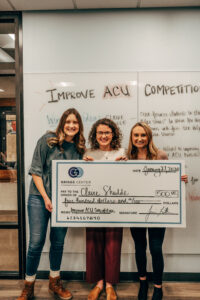 I think breaking the ACU bubble in this way will benefit both the community and the ACU students involved. My hope and prayer is that through simple actions such as helping a single mom file for a tax return, people can experience the love of God. Isaiah 1:17 says ‘Learn to do good, seek justice, correct oppression, bring justice to the fatherless, take up the case of the widow.’ While setting up a tax clinic does not fix all the problems in Abilene, I think it would be a chance for christians to live out this charge. I hope that in a few years I can look back and see ACU taking steps into the community beyond just a tax clinic.”
The ACU community often talks about the “ACU Difference”. Bright minded students who have a passion not only for ACU, but for making ACU and Abilene a greater place, are living, breathing examples of that difference. Congratulations to Claire Shudde on winning the competition! Want to learn more about the Griggs Center for Entrepreneurship and Philanthropy and how you can get involved? Click here to learn more.
by Katherine Norris | Feb 13, 2020 | Academics, COBA Faculty, COBA Staff, Faith Infusion, Special Speakers

Leadership Summit 2020
Leadership Summit 2020 is complete and the students have cleared out and come back to ACU with jaws wide open and a new mindset. This year I (Katie Norris ’22) joined my fellow classmates in experiencing Leadership Summit at Frontier Ranch in Buena Vista, CO in early January. If you don’t know much about Summit, the most important thing to know is that it is a challenging process that pushes you to do the things you are passionate about but haven’t had the courage or tools to step up and do yet. We call this our “River Crossing” on the mountain. Luckily, we didn’t have to cross any actual rivers in the rather icy weather.
My purpose in writing this blog is to recap the trip and give a student insight as to what happens on the mountain that leads so many people to come away from Leadership Summit with a new perspective and motivation.
A typical day at Summit would begin at 8:00 am and end about 9:00 pm with a nice two hour break in the middle of the day. Students spent the time participating in case studies, listening to speaker sessions, interactive breakout sessions, small group processing time, worship, and various activities like archery tag, taking hikes, and the Screamer (picture attached).

The Screamer
What’s beautiful about Leadership Summit is that it is all about utilizing your leadership potential (whether that be a role as a leader in your organization or something as simple as being a son or daughter) and being a servant to the communities you are a part, for their betterment. Not only were we given a charge from Dr. Dennis Marquardt and Dr. Rick Lytle to make an impact using our leadership roles, but we were given astonishing examples of people who have done so themselves and who gave us tools to succeed in our own visions.
This is done through the testimonies of distinguished guest speakers. We spent much of our time listening to accomplished people from different backgrounds speak on a variety of topics. This year, we were blessed with the opportunity to hear Mo Isom Aiken (New York Times best-selling author), April and Mark Anthony (founders of Encompass Home Health and Homecare Homebase ), Kathy Crockett (professor and consultant), Wendy Davidson (President of Away From Home, Kellogg Company), Elise Mitchell (Entrepreneur, CEO, consultant, and executive coach), Carlos Sepulveda (Chairman of Triumph Bancorp, Inc.), Rick Atchley (preaching minister at the Hills Church of Christ), Tim Goeglein (Vice President for External and Government Relations at Focus on the Family in Washington), David Eaton (founder of Axis), Stephen Quinn (Chief Marketing Officer of the CEO Forum), Janeen Uzzell (Global Technology Executive at Wikimedia), and Mike Willoughby (Chief Executive Officer at PFSweb). To show our thanks for the words spoken over us, we sang “The Lord Bless You and Keep You” over each speaker after their session. On top of all of this, one of the perks of Leadership Summit was also the opportunity to sit with these speakers at meals, get to know them, and ask them questions.

Mo Isom Aiken
Each and every River Crossing project was uniquely crafted based off of each individual student’s passions, life journey, and values. In order to bring us to a place where we could recognize each of those factors, we completed assignments before our week on the mountain that allowed us to consider what we truly value based on how we spend our time. We also were asked to write down major points in our life that shape our perspective and what we are passionate about in something called a “Journey Line”. I had no preexisting expectations of what Summit would be like and found some assignments to be what I thought was simple busywork. Dr. Marquardt quickly challenged that idea when we worked through our values session. He presented a statement based off of that assignment that gave the realization that we may not always value what we say we value over other things that we choose to make time for. This made everyone in the room rethink how they spend their time day to day, to think about what they truly value, and what they need to value more.
One really unique experience came from completing a “Journey Line” that showed the points in our life that we felt like were pivotal moments in a “highs and lows” sort of fashion. At the beginning of the week, we were asked to write this “Journey Line” on a giant paper that we hung on the walls where they remained for the week. This was a neat experience as we got to walk around the room during free times and read our peers’ journey lines. In my observations, it gave us a mindset of understanding and an excitement to dig deeper with each other throughout the week.

Archery Tag
We were continually astonished by the relevant and practical speaker sessions that were faith focused. Speaking for everyone at Summit, I can say it was refreshing to hear people boldly talk about the true and hard things in life. As students, we were especially grateful to hear professionals speak more into life than business plans and profit maximization.
Over the course of the week we participated in activities that grew our friendships, relationships, faith, knowledge, and inspiration to do great things. To close out the week-a graduation ceremony. Not quite what you would expect from a business short course. Maybe that’s why we students found it so impactful. God seems to work even on the mountains in life.
by Katherine Norris | Feb 6, 2020 | Academics, COBA Faculty, Marketing

In the fall of 2019, Dr. Mark and Dr. Laura Phillips embarked on a semester long journey with a group of students on a study abroad trip to Leipzig, Germany. If you are interested in studying abroad, or simply hearing about the adventures that happen abroad, Dr. Laura Phillips has given us a beautiful recap of what it looks like to immerse yourself in a different culture for an extended period of time. Thank you to Riley Simpson, junior management major from Dripping Springs, TX, who studied in Germany with the Phillips for the amazing photos in this blog post.
“The students all took 6 hours of German through a local language school that was about a 30-minute walk or a 20 minute tram ride from the villa. We had class in three hour blocks and class met either two or three times per week. The classes were taught by native German speakers, which was great. (I took the German classes with the students.) All the students also took the Global Studies class which covers German history and culture. Mark taught that class and the in-class materials were supplemented with guest speakers and field trips within Leipzig as well as trips to Berlin, Wittenburg (important in the story of Martin Luthur and the reformation), and Weimar (where we visited Buchenwald, a Nazi concentration camp).”
There were also several business classes offered, including: Principles of Marketing, International Business, and Life Design, a class taught by both Mark and Laura as an honors colloquium and one hour business course. Students were allowed to take any online classes they wanted to add to their schedule. Most classes were taught at the villa in Leipzig, but they would also occasionally meet for field trips. These included: Spin Lab, a startup business accelerator, Blüthner Pianos, and the BMW factory 
I asked Mark and Laura to recap their semester abroad and this was Laura’s response:
”How do you recap an entire semester abroad? A few things I can share that may give you a flavor of the trip/experience.
-
- We went to Berlin as a group after the students had been in Leipzig one week. Our trip was three days and we were able to see and do some very interesting things. Even after having lived in Leipzig for only a week, at the end of our Berlin trip multiple students expressed how glad they were to get back “home.”
-
Founded in 1853, Blüthner Piano is one of a handful of ultra high-end piano makers on earth. We learned about the company, oddly enough, at church in Leipzig, where we met an American who worked for Blüthner in California and now heads their marketing efforts. An hour-long series of bus rides (including one stop where some of our people failed to get off) took us to the factory. There we had free access to walk through and see how deluxe pianos have been hand-built since the 1800’s. Today the company is seeing growth in demand from China, even as Europeans and Americans are less interested. It has also added a second line of less expensive pianos for those unwilling to pay the premium their brand can still charge.
-
As American companies and their customers battle back and forth over privacy, the European Union has moved much more quickly to protect consumers. And the demand for privacy is even more vocal in former East Germany, where for decades the government and a vast network of citizen spies kept tabs on everyone. At the height of the Cold War, 1 in 8 East Germans was spying on other East Germans for the secret police; part of the current resistance to Christianity there is because so many clergy were revealed to have been informing. Leipzigers are very uncomfortable having strangers take their pictures, and children are strictly protected (we hosted a group of children from a nearby school for a meal and only the school’s designated photographer was allowed to shoot pictures. American companies doing business here must move carefully in order not to offend.
- Over the course of the semester we all found some favorite cafés, restaurants, and parks.
- We became comfortable interacting with a city where all the signs are in German. Students who traveled outside of Germany for long weekends expressed how comforting it was to get back to the airport or train station in German and hear people speaking German again (even though we still couldn’t understand much of it).
- We had students who used their travel weekends and week to explore other regions of Germany as well as hit a number of other destinations in Europe, but it was cool because they didn’t just explore the normal destinations of London, Paris, Rome. They also went to Budapest, Vienna, Amsterdam, Copenhagen, Dublin, Milan, Pisa, Florence, and some less well-known destinations in Switzerland and Norway. Several of the students even rented cars and took road trips!
- We had a good sized group of students who became very involved at ICF–the church to which Lindsay (who lives on site at the villa) belongs. They became involved and connected even though the services were in German!
- We experienced true German culture by attending a Red Bull soccer game and participating in the crowd chant that occurs after every goal. We had numerous chances to practice the chant because Leipzig won 8-0! We also attended an orchestra concert (the Leipzig orchestra has been a performing group for over 200 years!) and a handball match. Over the course of the semester groups of students attended concerts and/or the ballet (Nutcracker) on their own.
- At one point some students from the Oxford group came to Leipzig to visit. Our students were surprised at how tentative the visitors were because of the language difference (which they hadn’t experienced in Oxford). Until then I don’t think our students realized how much they had grown because of the difference in languages and how comfortable they had become in spite of it. Knowing they can live and thrive in a country that speaks a different language gave them more confidence as they headed out to
explore other destinations.”
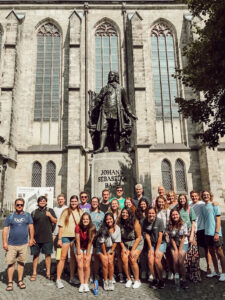
In their time abroad, the Phillips made sure to build time in to go on interesting excursions to different countries and experience different culture, one of these being Greece. “Greece was amazing. It came at a great time in the semester. We had just finished our first “semester” of German and the weather was getting cooler in Germany. It was awesome to take a break from classes and spend 10 amazing warm, sunny days in Greece! We saw super cool archaeological sites like the Acropolis, ancient Corinth, the ancient Olympic stadium in Olympia, the oracle of Delphi, etc. We had very knowledgeable tour guides that helped make each of these sites interesting and meaningful. We had a free day in each destination so we were able to explore the towns, hike, go to the beach, rent a boat, and so on.”
“Whatever we did d uring the day, whether it was together or on our own, we regrouped for a meal together each evening. It was a good time to reconnect and share stories from the day.” Next, they adventured to Prague and integrated what they had learned to what they were seeing. “We took a four day group trip to Prague late in the semester. For this trip the students served as tour guides for the different sites we visited. They prepared their research and then delivered their information to the rest of the group as we took a walking tour around the city. At one site a couple of women from Italy were sitting on a bench nearby. As our student went through her spiel, they held up numbers on their phones, rating her presentation. It was fun to interact with other people who were seeing the same cool sites that we were. In Prague we had our family meal at a Mexican restaurant! It was fun to have some “familiar” food in a far away place!”
(Picture by Laura Phillips
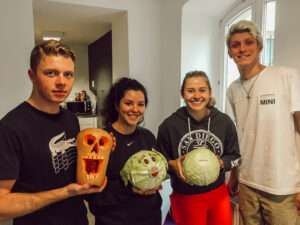
As with anything, there are always cool, funny, interesting, and strange stories to tell. Halloween was no exception to for the bunch. “We planned to have a pumpkin carving activity on October 30th so that afternoon we headed to the store as a very large group to pick out pumpkins. Lindsay said there were plenty in a big box outside the store but when we arrived, there were no pumpkins. We went to two other stores (as a very large group) but no luck. We ended up having to go back to the first store and the students picked out various things, such as small cooking pumpkins, butternut squash, and in one case two cabbages! Needless to say the carvings were interesting and unique and the students did an awesome job of improvising. Halloween isn’t as big of a deal in Germany but the students wanted to trick or treat at the villa. To make this feasible, students could volunteer to be a ‘host’ or they could choose to trick-or-treat or do both or nothing. Everyone who wanted to trick-or-treat had to dress up and then the hosts spread out around the villa. Since just visiting five or six rooms and getting candy would take about 10 minutes, it became a trick-and-treat activity. There was an activity at each ‘house.’ Some of the activities included solving riddles, playing MarioKart, playing pictionary, writing and then reading a Halloween poem, and doing a TikTok. Two of the students dressed up as us!”
And it is no surprise that a few travel issues were involved: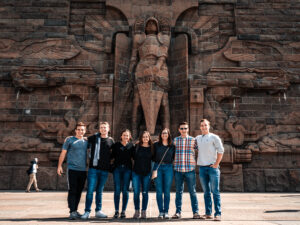
-
-
- “On one of the early weekends, a group of girls made their hostel reservations for the wrong nights and ended up having to sleep in the common room of the hostel the first night.
- A group of guys took a camping trip in Norway. Two of the guys slept outside in hammocks and it was a bit chillier than they were prepared for.
- Coming back from a small German town by myself (with my bicycle) the train I was on split into two pieces. Only one half want back to Leipzig and I was on the wrong half. I discovered this when we arrived at a city I knew was the wrong direction from where I wanted to go. I had to get on another train back to where I started and try again!”
To end their time in Germany, there was a closing ceremony in which many of the students demonstrated their musical talents. “One of the students spoke and then at the end, four of them went up for the closing number and unexpectedly busted out with a very energetic version of ‘I Will Survive’. It caught us all off-guard but was hilarious and so awesome! The students could give you many more funny moments.”
Phillips ended with, ”It was a great semester of exploration, bonding with the group, game nights, devos, group meals, getting lost, being confused…”
-Laura Phillips + a ditto from Mark
