Finding Aid Round Up

We’ve been busy writing finding aids for recent acquisitions and revising finding aids for some materials already in our holdings. You can browse all of our archival holdings on DigitalCommons. See something below that piques your interest or could be useful for your research? Get in touch and let us know what you’re thinking about; we’d love to help!


J. W. Roberts Papers, 1946-1972, MS#25 [Revised Finding Aid]
Born in 1918, J W Roberts began preaching in 1938 as a senior in high school. He attended Freed-Hardeman College from 1936-38 and Abilene Christian College from 1940-42 where he received a M.A. in religious education. Preached in Iraan, Texas, 1938-40; Wichita, Kansas, 1942-45; Indianapolis, Indiana 1945-46; and Perrin, Texas. He preached two summers for the Graham Street Church of Christ in Abilene and two summers for Pepperdine University and Great Lakes Christian College. He was Religious Emphasis speaker at Washington State College in 1963 and Texas A&M in 1964. Roberts was director of Graduate Studies for Bible and Religious Education at Abilene Christian College from 1963 until his death in 1973. He was heavily involved in the Boy Scouts of American for more than 20 years and was a deacon for the College (now University) Church of Christ in Abilene. He also served as moderator for Otis Gatewood in a debate in 1942. He wrote or co-wrote multiple books and commentaries. These papers include a collection of seminar notes, correspondence, course syllabi, gnostic library, septuagintisms, trips, commentaries, reports, articles, research, personal papers, and notes from J W Roberts.

William Newton Short Jr. Papers, 1948-1997, MS#27 [Revised Finding Aid]
William Short was born on February 23, 1943 in Southern Rhodesia, Africa. Graduated from Gilbert Rennie School, Lusaka, Africa and moved to the United States in 1961. Received a BSW at Harding University and began Graduate Studies at Abilene Christian College before receiving his Masters in French, German, and Spanish from the University of North Texas. Short obtained his Doctorate in Foreign Languages from Rice University. Short was a Professor of Languages at McMurry University for 27 years, teaching French, German, and Spanish. He was the Chairman of Modern Languages and served as a sponsor of the Makona Social Club for almost 3 decades. He served as a member at Minter Lane Church of Christ for over 20 years where he taught Bible classes. He traveled the world as a missionary and teacher, taking trips with Let’s Start Talking Ministries and led many International Studies Abroad campaigns. These papers include a collection of autobiographical stories from experiences in Africa and America from Bill Short. Written in the 1990s, Short’s recollections mainly include childhood memories from the late 1940s and 1950s.

Tillit Sydney Teddlie Papers, 1885-1987, MS#29 [Revised Finding Aid]
Tillit Sidney Teddlie was a singing school teacher, composer, publisher, and minister of the Church of Christ. Teddlie was educated in Southern Development Normal in Waco, Texas, a school for advanced instruction in theory and harmony. He also attended what is now North Texas State University. He composed his first song in 1906. During his lifetime, Teddlie taught singing schools for 61 years, composed 130 songs, published 14 song books, and served as a full-time minister, including the Johnson Street Church of Christ (1945–1951), Central Church of Christ in Greenville, Texas, and Churches of Christ in Ennis, Sulphur Springs, Lone Oak and Quinlan. For two years he sang only with Foy E. Wallace, Jr. while traveling across the country for gospel meetings. These papers include notes, scripture, and sermon notes.
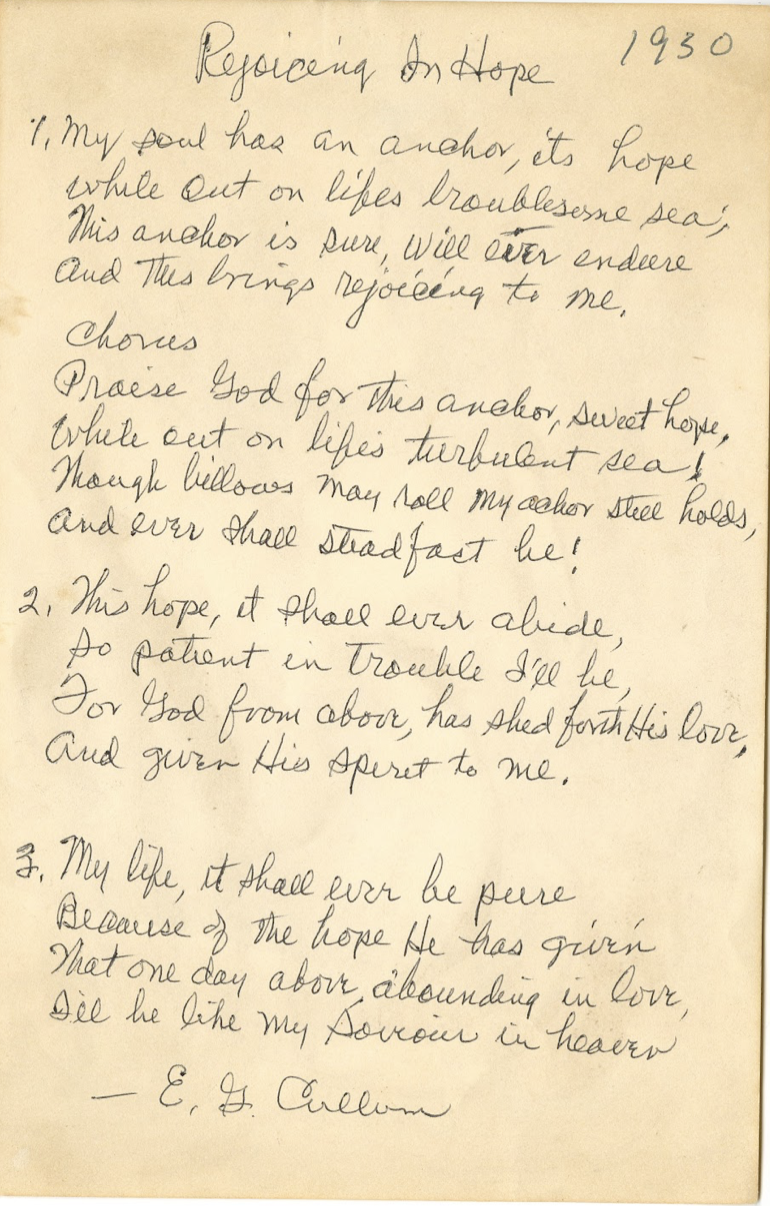
From the Tillit Sidney Teddlie Papers, 1885-1987. Center for Restoration Studies MS#29.

Homer Lee Terry Papers, 1955-1984, MS#30 [Revised Finding Aid]
Homer Lee Terry was born in 1909 in Lindale, Texas. He graduated with honors from Texas A&M in 1936. He began preaching in 1956. The bulk of his preaching occurred between 1956 and 1958 in rural churches in Texas. He preached his last sermon in 1964. This collection contains some of the sermon and Bible class notes of Homer Lee Terry.

David Edwin Harrell, Jr. Papers, 1923-2017, MS#467 [New Finding Aid]
David Edwin Harrell, Jr., was born on February 22, 1930, in Jacksonville, FL. He received a B.A. (1954) from David Lipscomb College, and an M.A. (1958) and Ph.D. (1962) from Vanderbilt University. Harrell served as a professor of history at numerous American universities (1961-2004), finishing his teaching career at Auburn University (1990- 2004). Additionally, he served as a Fulbright Lecturer in India (1976-1977), and as the Director of the American Studies Research Centre in Hyderabad, India (1993-1995). Harrell is a noted social historian of American religious history. His research interests included the Stone-Campbell Movement, Pentecostal traditions, the southern black and white sectarian tradition, and twentieth century American Christianity. Additionally, he wrote biographies of Oral Roberts, Pat Robertson, and Homer Hailey. This collection includes correspondence, presentations, research, and reviews from Harrell’s academic career. Additionally, there are correspondence and reports regarding his work with Churches of Christ.


Stay tuned for more installments of Finding Aid Round Ups!
On the Shelf: New items added to Center for Restoration Studies collections, May 2020

In May our colleagues in Technical Services and Cataloging added 230 items to the Center for Restoration Studies, University Archives, and Rare Books collections.  Among them are books, periodical issues (both bound volumes and many boxes of unbound issues), and a few A/V items in various formats.  Most of the additions this months to ‘unbound periodicals’ are publications by a single congregation, yet the bulletin was intended for wider distribution than the local congregation and contained teaching content rather than strictly news information.  Like last month, nearly all items added in May are not only new to us, the work performed on them reflects original cataloging, which is a tremendous contribution to knowledge about information resources from and about the Stone-Campbell Movement.

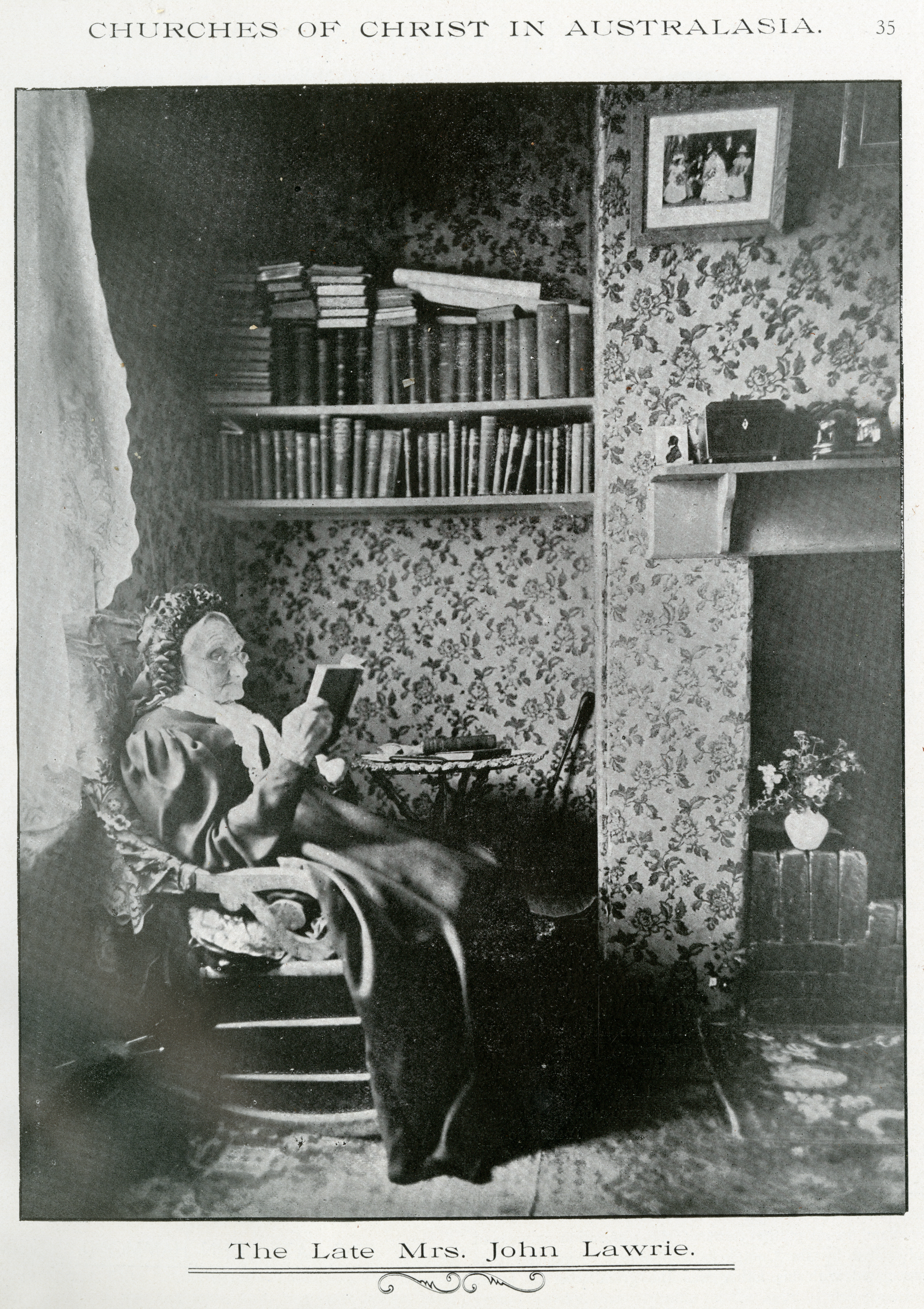
‘The Late Mrs. John Lawrie’ from Jubilee Pictorial History of Churches of Christ in Australasia, 1903, page 31

Our goal is to build a comprehensive research-level collection of print materials by, for, and about the Stone-Campbell Restoration Movement.  But beyond assembly and preservation, a collection should be discoverable by those who need the information.  Collecting and preserving is only part of our task; those objects must be described and made available.  Thanks to the close and careful work of our colleagues upstairs, who describe our holdings, these materials are now discoverable. By discoverable I mean a patron can utilize our online catalog (such as by searching by author, or title, or subject) to find these materials.

230 new items…cataloged, shelved, and ready for research: Continue reading

Traveling with Alexander Campbell to Glasgow: Part 1 – The Homeland

By Carisse Mickey Berryhill, PhD

Alexander Campbell (1788-1866) was born and grew up in Northern Ireland. In 1807, his father Thomas Campbell (1763-1854), a Presbyterian minister, emigrated from Northern Ireland to western Pennsylvania and sent for the rest of the family to join him in 1808.  Shipwrecked on the western coast of Scotland, the family spent a year in Glasgow before joining Thomas in 1809. During that time Alexander studied at the University of Glasgow. In 2019 I set out to visit the places in Ireland and Scotland that are the backdrop for this crucial year in his life. Travel with me as we retrace his journey in three posts: the Homeland, the Interruption, and the University of Glasgow.

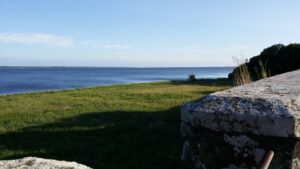
Alexander Campbell was born in Northern Ireland near Ballymena about a mile from Lough Neagh, a huge lake in the center of Northern Ireland.

Jane Corneigle Campbell, Alexander’s mother, had grown up in that area, the only child of a widowed mother. Nearby was Shane’s Castle, a beautiful lake estate with a park where Alexander played as a child. When Alexander was little, his family moved south of the lake to Sheepbridge, where Thomas preached as a probationer.

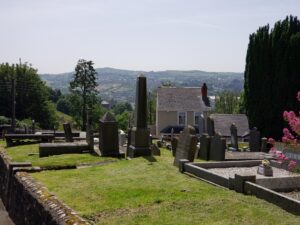
Sheepbridge was in County Down on the old Belfast road about seven miles north of Newry, Thomas’s family home. Several members of Thomas’s family, including his brother Enos, are buried in Newry at the churchyard of St. Patrick’s Church of Scotland.

View from St. Patrick's churchyard across a valley to green hills.

Newry, County Down, Northern Ireland, view to the south from St. Patrick’s Church. Photo by David Mickey Berryhill.

About the time Alexander was old enough to go to school, Thomas moved the family to County Armagh to Market Hill to work with churches in that area and to teach for families there.  Alexander attended an elementary school there. He also attended an academy in Newry taught by his uncles Archibald and Enos Campbell. During this period Thomas avoided involvement with political groups in County Armagh during a time of extreme political tension and armed skirmishes between rival Protestant and Catholic militias.

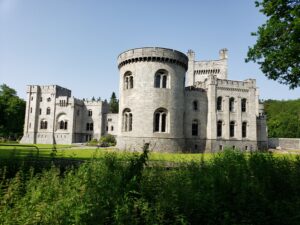
Thomas received an invitation from the Governor, Lord Gosford, who admired his peaceable ministry, to move to the Gosford estate near Market Hill as a tutor to his family, with a residence and salary. Thomas declined because he did not want his children to learn to admire a wealthy lifestyle.

White stone castle with a round tower and arches windows

Gosford Castle near Market Hill, home of  Arthur Acheson, the Earl of Gosford, the governor of Armagh at the time.

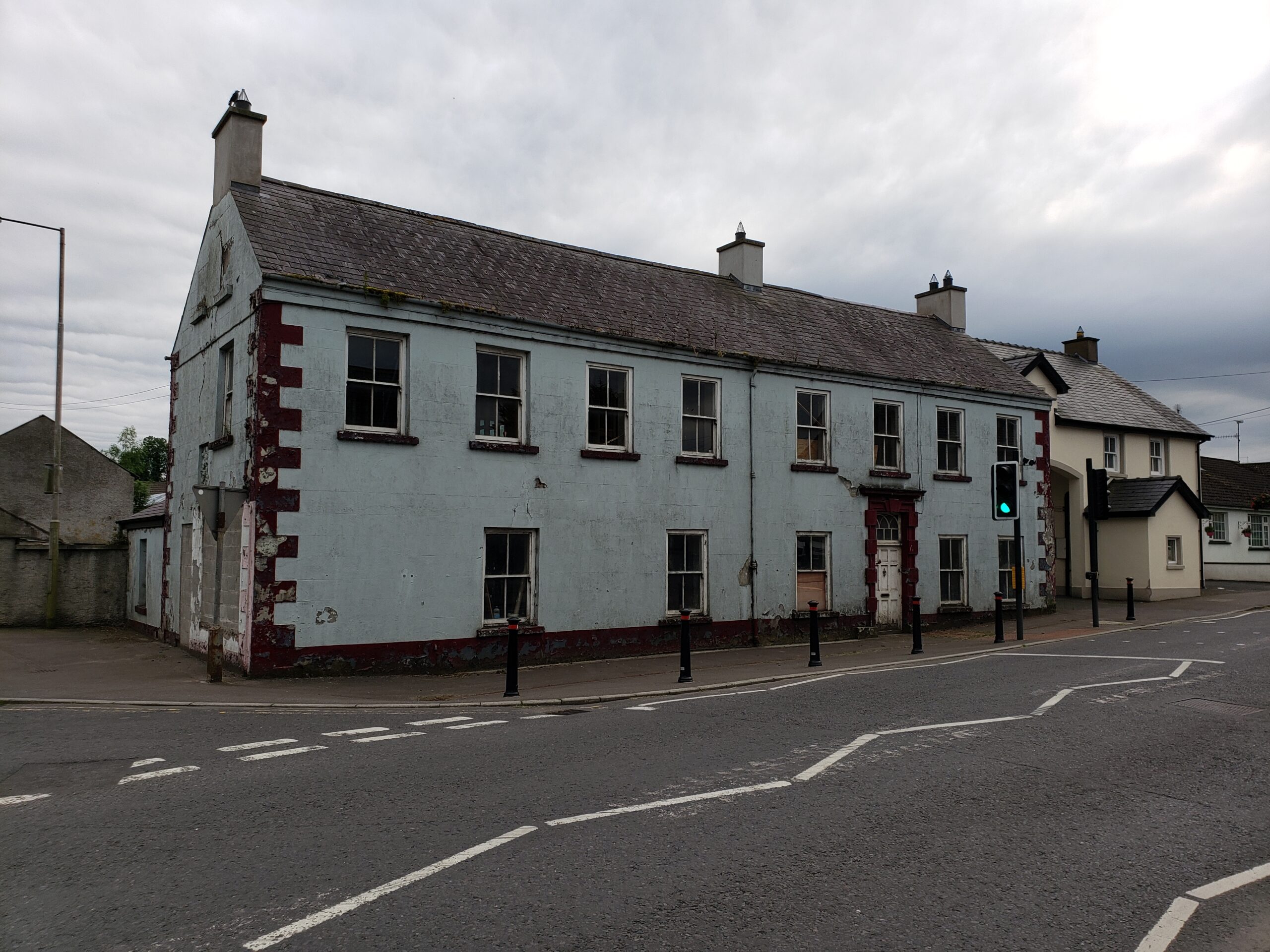
As Alexander approached his teens, his father supervised his education. In 1798, Thomas accepted a call to the Ahorey Presbyterian Church and moved the family about five miles north of Market Hill to a farm in what is now the village of Hamiltonsbawn, a few miles closer to the Ahorey church. Alexander thrived on farm work and outdoor sports and began to develop as a scholar.

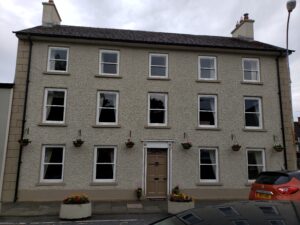
Two story stone house painted light blue with dark red trim near the main road in Hamilstonbawn village

Campbell Farm House now in village of Hamiltonbawn near Market Hill, Armagh, UK. Photo by David Mickey Berryhill.

Also in 1798, Thomas helped found the Evangelical Society of Ulster, begun in Armagh as an interdenominational association to support Bible literacy and gospel preaching. This affiliation proved to be a problem with his Presbyterian supervisors, who insisted he withdraw his membership two years later. At the same time, he was involved in efforts to reconcile two Irish Presbyterian factions.

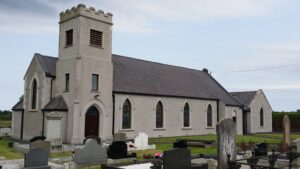
Grey stone church with square corner tower entrance, surrounded by church graveyard.

Ahorey Presbyterian Church, County Armagh, where Thomas Campbell ministered, 1798-1807.

When Alexander was about seventeen, Thomas decided to start a school in Rich Hill to supplement his salary as the pastor of the Ahorey church.The family moved to a house across the town square from the castle of William Richardson, the High Sheriff of Armagh, and brother-in-law of Lord Gosford. Alexander assisted his father in the school, which became successful.

On Sunday evenings, when the Ahorey church had no services, Thomas and Alexander frequently visited the Independent congregation in Rich Hill, where they occasionally heard visiting ministers connected to the independent evangelical movement in Northern Ireland, England, and Scotland. That meeting house is at the bottom of the hill just below the Rich Hill square where the Campbells lived.

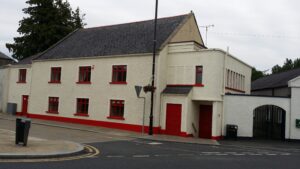
White two story building with red door and red trim.

Meeting house of the Independents in Rich Hill, below the square.

Thomas, his health worn out by his work, decided to relocate to the United States and emigrated in 1807. Alexander managed the Campbell school and helped his mother with his younger siblings. He became the tutor to the young daughters of the Richardson family in the castle just across the Rich Hill square.

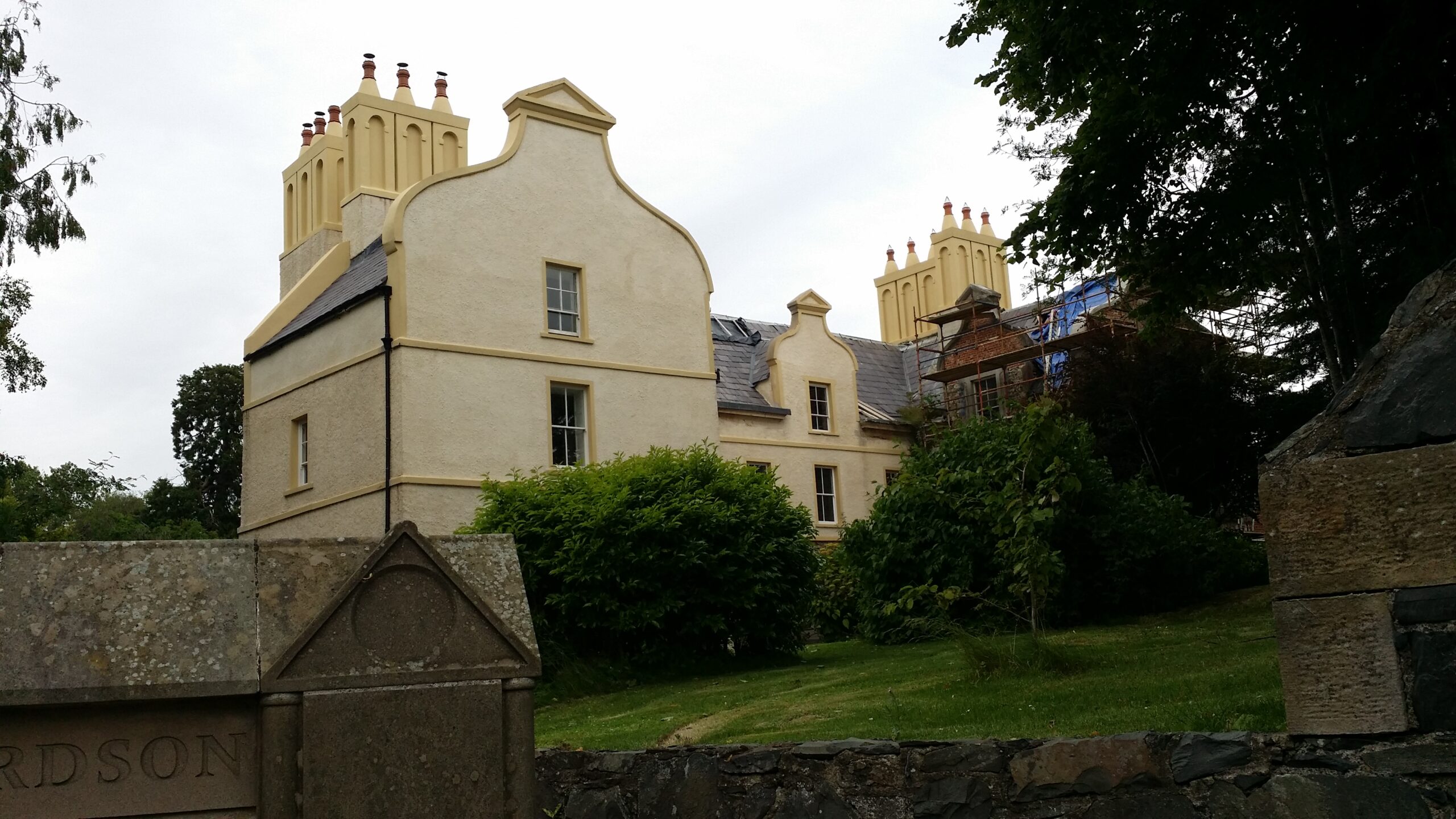
Castle of William Richardson, large U-shaped house in Rich Hill.

William Richardson House, Rich Hill, Armagh, UK

The following year, Thomas, having secured a job with a presbytery, sent for Jane and their seven children to sail to meet him in Washington, Pennsylvania. The letter dated January 1, 1808, arrived in March. They began to get ready to leave, but their departure was delayed when smallpox swept through Rich Hill. By the time everyone in the family had recovered, it was late in the sailing season. In September Alexander went to Londonderry in the northwest of Ulster to arrange their tickets, admiring the old walled city, its history, and its buildings.

Londonderry view of town on the south side of the Foyle River

Londonderry Waterside district on the east side of the River Foyle.

When the time came, the family traveled for four days to the port of Londonderry to embark on their voyage to America. Their ship, the Hibernia, sailed on the first day of October, 1808, bound for Philadelphia. It never arrived.

NEXT: Part 2: The Interruption (coming soon)

Open-Access photographs selected from my trip retracing Alexander’s journey to Glasgow are available for free download at ACU’s Stone-Campbell Teaching Archive for use in teaching. Read more about the Campbell family and Alexander’s life in Memoirs of Alexander Campbell by Robert Richardson (Philadelphia: Lippincott, 1868).